

Important for GS Prelims: Environment
Key Facts
- The International Union for Conservation of Nature (IUCN) is the world’s largest global environmental organization working for nature conservation and sustainable use of natural resources.
- It was established in 1948.
- Headquarters: Gland, Switzerland.
- It brings together governments, NGOs, scientists, indigenous groups, and civil society organizations to support biodiversity conservation.
- India is a member of the IUCN.
Objectives
- Conserve biodiversity and ecosystems.
- Promote sustainable use of natural resources.
- Support environmental policy and governance.
- Provide scientific knowledge for conservation planning.
IUCN Red List of Threatened Species
- Launched in 1964.
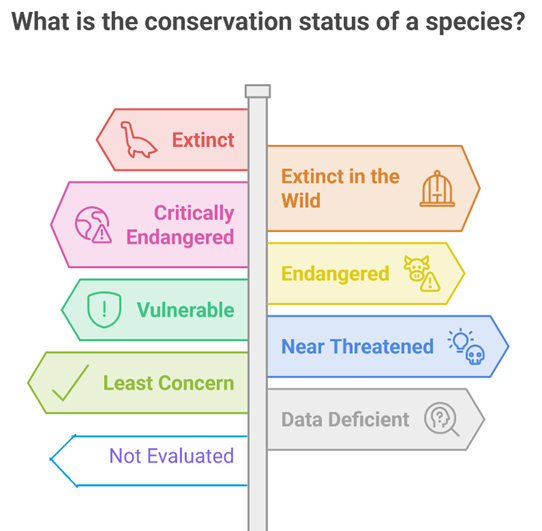
- It is the world’s most comprehensive database on the global conservation status of plant, animal, and fungal species.
- It assesses the risk of extinction of species.
IUCN Green Status of Species
- Introduced in 2021.
- Measures how close a species is to full ecological recovery, not just its extinction risk.
- Complements the IUCN Red List.
IUCN Protected Area Categories
- Category Ia: Strict Nature Reserve
- Category Ib: Wilderness Area
- Category II: National Park
- Category III: Natural Monument
- Category IV: Habitat/Species Management Area
- Category V: Protected Landscape/Seascape
- Category VI: Protected Area with Sustainable Use of Natural Resources
Conclusion:
- The IUCN plays a pivotal role in global biodiversity conservation by providing scientifically credible assessments that guide wildlife protection and environmental policymaking worldwide.
| This concept has been elaborately discussed in the following article: Himachal Farmers Pioneer Sustainable Cultivation of Kutki |