
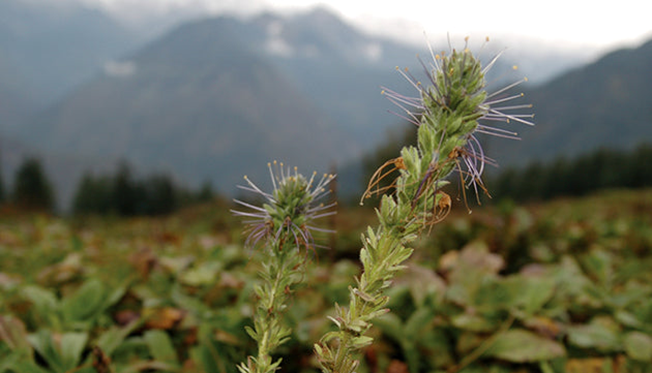
Important for GS Prelims: Environment
Overview
- Scientific Name: Picrorhiza kurroa
- Common Name: Kutki
- Family: Plantaginaceae (formerly placed under Scrophulariaceae)
- It is a small perennial medicinal herb native to the Himalayan region.
- The rhizome (underground stem) is the medicinally valuable part.
Distribution
- Found in the Alpine and Sub-alpine Himalayas.
- Occurs in India, Nepal, Bhutan, Pakistan and southwestern China (Tibet).
- In India, it is mainly found in:
- Jammu & Kashmir
- Himachal Pradesh
- Uttarakhand
- Sikkim
- Arunachal Pradesh
Habitat
- Grows at an altitude of 3,000–5,000 metres above sea level.
- Prefers:
- Cool and moist climate
- Rocky slopes
- Alpine meadows
- Well-drained humus-rich soil
Medicinal Importance
- Widely used in Ayurveda, Siddha and traditional Himalayan medicine.
- Known for:
- Hepatoprotective (protects the liver) properties
- Anti-inflammatory effects
- Antioxidant activity
- Immunomodulatory properties
- Used in the treatment of:
- Liver disorders
- Fever
- Digestive ailments
- Respiratory diseases
Conservation Status
- IUCN Red List: Vulnerable (VU)
- Major threats:
- Overharvesting from the wild
- Habitat degradation
- Climate change
- Slow natural regeneration
Conclusion
Sustainable cultivation and conservation of Picrorhiza kurroa (Kutki) are vital for protecting Himalayan biodiversity while ensuring the long-term availability of this valuable medicinal herb.
| This concept has been elaborately discussed in the following article: Himachal Farmers Pioneer Sustainable Cultivation of Kutki |