
About Sikhism
- Sikhism, known as Gurmat (“the Way of the Guru”), is a monotheistic religion founded in the late 15th century in the Punjab region by Guru Nanak Dev (born in Talwandi, now Nankana Sahib, Pakistan).
- The term Sikh is derived from the Sanskrit word shishya and the Pali root sikkha, meaning “disciple” or “learner.”
- It is the world’s fifth-largest organized religion and was shaped by ten human Gurus, culminating with the Guru Granth Sahib being declared the eternal 11th Guru.
Key Doctrines, Practices, and Rituals
- Core Philosophy: Centers on Ik Onkar (belief in one formless, eternal God), rejection of caste, gender, and ritualistic discrimination, and overcoming five major vices (lust, greed, worldly attachment, anger, and arrogance).
- Three Fundamental Duties: Naam Japna (meditation on God’s name), Kirat Karni (earning an honest livelihood), and Vand Chhakna (sharing with others through Seva and Langar—free community kitchens).
- Five Ks (Symbols of the Khalsa): Kesh (uncut hair), Kanga (wooden comb), Kara (iron bracelet), Kirpan (sword), and Kachera (cotton undergarment).
- Four Rites of Passage: Prescribed under the Sikh Rahit Maryada (code of conduct), these include Naam Karan (naming ceremony), Anand Karaj (marriage), Amrit Sanskar (Khalsa initiation), and Antim Sanskar (funeral).
Major Sikh Gurus and Their Contributions
| Sikh Guru | Period | Key Contributions |
| Guru Nanak Dev | 1469–1539 | Founder of Sikhism; preached monotheism, universal equality, and selfless service. |
| Guru Angad Dev | 1504–1552 | Introduced the Gurmukhi script, standardizing the Punjabi language. |
| Guru Amar Das | 1479–1574 | Established the Manji and Piri systems to organize and strengthen the faith. |
| Guru Ram Das | 1534–1581 | Laid the foundation of Amritsar city as a central spiritual hub. |
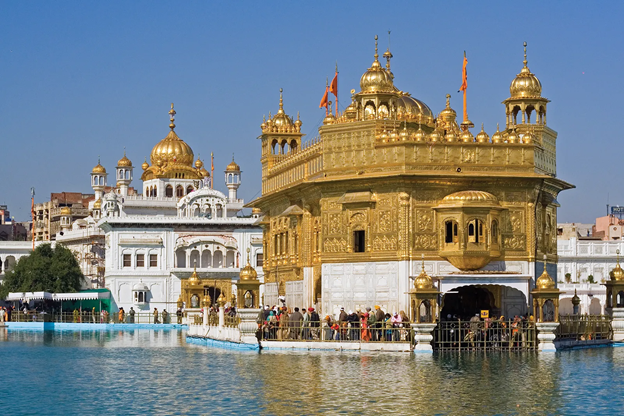
| Guru Arjan Dev | 1563–1606 | Compiled the Adi Granth and constructed the Harmandir Sahib (Golden Temple). |
| Guru Hargobind | 1595–1644 | Constructed the Akal Takht (“Immortal Throne”). |
| Guru Har Rai | 1630–1661 | Focused on missionary work while maintaining a defensive military stance. |
| Guru Har Krishan | 1656–1664 | Revered for his humanitarian service during a smallpox epidemic. |
| Guru Tegh Bahadur | 1621–1675 | Martyred defending religious freedom against Mughal oppression. |
| Guru Gobind Singh | 1666–1708 | Founded the Khalsa (1699), instituted the Five Ks, and declared the Guru Granth Sahib as the eternal Guru. |
Major Institutions and Literature
- Five Takhts (Seats of Divine Authority): Akal Takht (Amritsar), Takht Keshgarh Sahib (Anandpur Sahib), Takht Patna Sahib (Bihar), Takht Hazur Sahib (Maharashtra), and Takht Damdama Sahib (Punjab).
- Prominent Gurudwaras: Harmandir Sahib (Amritsar), Bangla Sahib (Delhi), Hemkund Sahib (Uttarakhand), Kartarpur Sahib (Pakistan), and Patna Sahib (Bihar).
- Key Texts: Guru Granth Sahib (incorporates hymns of Sikh Gurus as well as Hindu and Muslim saints), Dasam Granth (attributed to Guru Gobind Singh), Janamsakhis (biographical accounts of Guru Nanak), and Rehat Maryada (code of conduct).
Conclusion
Sikhism represents a distinct socio-religious tradition that integrates spiritual devotion with egalitarianism, ethical living, and institutional community service. Its enduring legacy of social justice, inclusiveness, and courage continues to shape India’s cultural and philosophical heritage.
| This concept has been mentioned in the following article: Prakash Purab (Guru Purab) of Sri Guru Nanak Dev Ji |