
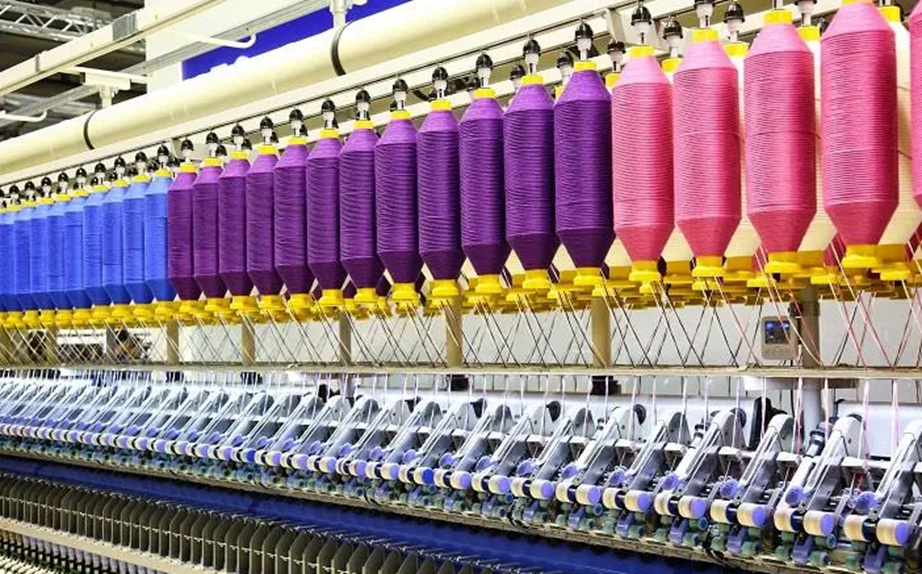
context:- The Union Government has revoked the Quality Control Orders (QCOs) imposed on polyester fibre, yarn, and key raw materials—Purified Terephthalic Acid (PTA) and Mono-Ethylene Glycol (MEG).
The move aims to ease import restrictions and reduce input costs in the man-made fibre (MMF) segment.
The revocation was issued under Section 16 of the Bureau of Indian Standards (BIS) Act
The Indian Textile Industry: An Overview
Economic Significance:
- GDP Contribution: Accounts for 2.3% of India’s GDP, with projections to reach 5% by 2030.
- Industrial & Export Share: Represents 13% of industrial production and 12% of total exports.
- Employment: Provides employment to 4.5 crore workers.
- Export Value: Recorded exports of USD 35.9 billion, with key markets in the US, EU, and UAE.
Global Market Position
- Manufacturing: Possesses the 2nd largest textile manufacturing capacity globally.
- Trade: Ranked as the 6th largest exporter of textiles and apparel in 2023 (3.9% of global trade).
- Market Projection: The domestic market is projected to reach USD 350 billion by 2030.
Production Capabilities
- Cotton: 2nd largest producer globally (23.83% of world production).
- Jute: Largest producer globally.
- Man-Made Fibres (MMF): 2nd largest producer of MMF, including polyester and viscose.
Key Government Initiatives
- Policy Support: Includes the PM MITRA Parks, the Production Linked Incentive (PLI) Scheme, and the National Technical Textile Mission (NTTM).
- Investment: 100% Foreign Direct Investment (FDI) is permitted under the automatic route.