
Context
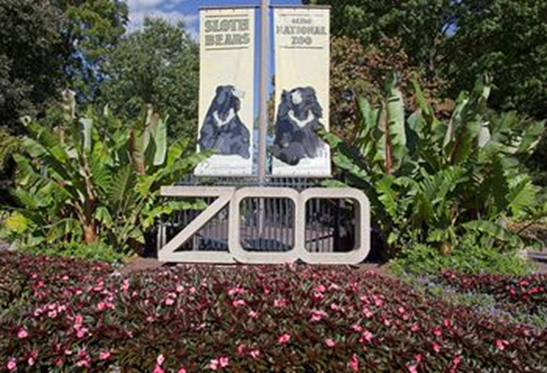
Recently, the National Zoological Park (NZP), popularly known as the Delhi Zoo, has made headlines for transformative Rs. 400-crore redevelopment plan approved by the Delegated Investment Board (DIB) in January 2026.
This comprehensive overhaul aims to modernize animal enclosures with glass viewing panels, double the number of enclosures from 94 to over 200, and establish a new reptile house and butterfly park.
1. Origin and Legal Status
- Establishment: The park was inaugurated on November 1, 1959, after the Indian Board for Wildlife (now National Board for Wildlife) felt the need for a zoo in the national capital in 1952.
- National Status: It was originally called the Delhi Zoo but was renamed the National Zoological Park in 1982 to serve as a “model zoo” for the country.
- Governing Body: It is a subordinate office under the Ministry of Environment, Forest and Climate Change (MoEFCC).
2. Location and Geography
- Heritage Site: The park is situated near the Purana Qila (Old Fort), spanning approximately 176 acres.
- Biodiversity Hub: It lies on a part of the Delhi Ridge, which is the northern extension of the Aravalli Range.
- Design: The layout was designed by Major Weinmann of Sri Lanka and Carl Hagenbeck of West Germany, featuring the famous open-moat enclosures that allow animals to live in a near-natural environment without visible bars.
3. Conservation Breeding Programs (CBP)
The NZP is a designated “coordinating zoo” or “participating zoo” for several critical species identified by the Central Zoo Authority:
- Asiatic Lion: Focus on maintaining a genetically diverse, captive population.
- Royal Bengal Tiger: Known for its successful white tiger breeding lineage.
- Sangai Deer (Brow-antlered Deer): Endemic to Manipur, NZP has been a key site for its captive multiplication.
- Indian Rhinoceros: Participates in the national breeding plan.
- Red Jungle Fowl: Involved in the genetic conservation of this ancestor of domestic poultry.
4. The Central Zoo Authority (CZA)
- Statutory Body: Established in 1992 under the Wildlife (Protection) Act, 1972.
- Mandate: It regulates and monitors all zoos in India, lays down standards for animal housing and healthcare, and provides recognition to zoos.
- Composition: Chaired by the Union Minister for Environment, Forest and Climate Change.





Consider the following statements:
Statement I: The National Zoological Park, New Delhi is administered by the Ministry of Environment, Forest and Climate Change and functions as a model zoo for conservation breeding and public education in India.
Statement II: The Central Zoo Authority is a statutory body established under the Wildlife (Protection) Act, 1972 and is responsible for recognition and regulation of zoos in India, including the National Zoological Park.

Which one of the following is correct in respect of the above statements?
(a) Both Statement I and Statement II are correct, and Statement II explains Statement I
(b) Both Statement I and Statement II are correct, but Statement II does not explain Statement I
(c) Statement I is correct but Statement II is not correct
(d) Statement I is not correct but Statement II is correct

Correct Answer: (b)
Explanation:
STATEMENT 1 IS CORRECT: The National Zoological Park, New Delhi is directly administered by the Ministry of Environment, Forest and Climate Change and is envisaged as a model zoo with emphasis on conservation breeding of endangered species, research, and environmental education.
STATEMENT 2 IS CORRECT: The Central Zoo Authority is a statutory body constituted under the Wild Life (Protection) Act, 1972 to regulate, recognize, and oversee zoos across India, including the National Zoological Park; however, Statement II does not explain Statement I, as administrative control by the Ministry and the regulatory role of the Central Zoo Authority are institutionally distinct functions.