
Context
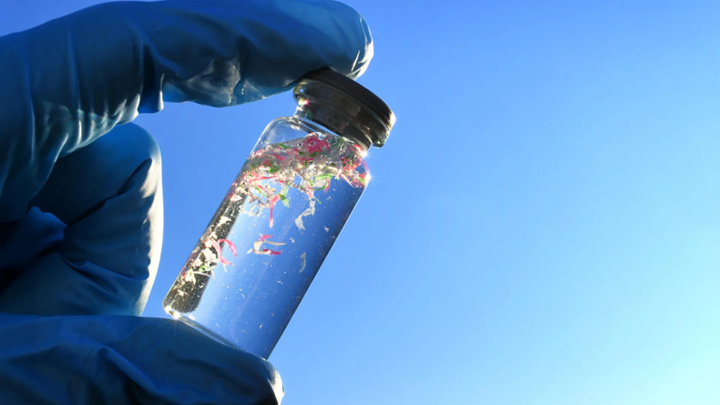
Recently, researchers from the Indian Institute of Science Education and Research (IISER), Kolkata, published a study in the Journal of Hazardous Materials Advances revealing that microplastics in the Sundarbans are acting as a “novel carbon reservoir.” The study highlights how plastic waste, breaking down into nanoplastics, leaches organic carbon into the water, which fuels unnatural bacterial growth and threatens to alter the delicate carbon budget of the world’s largest contiguous mangrove forest.
1. The Sundarbans as a Blue Carbon Sink
- Blue Carbon: This refers to the carbon captured by the world’s ocean and coastal ecosystems, such as mangroves, seagrasses, and salt marshes.
- Sundarbans’ Role: The Sundarbans, situated at the confluence of the Ganga and Brahmaputra, is a highly efficient ecosystem for sequestering carbon dioxide from the atmosphere and storing it in biomass and soil.
- Ecological Threat: The influx of urban waste from upstream brings a high concentration of microplastics (ranging from 5 to 58 particles per liter), particularly during the monsoon due to surface runoff.
2. The “Novel Carbon Reservoir” Phenomenon
- Leaching Carbon: As microplastics (roughly 90% carbon) weather and break down, they release dissolved organic carbon (DOC) into the marine environment.
- Biogenic Carbon: Microbes living on the surface of plastic particles, known as Plastispheres, produce their own carbon, further complicating the natural carbon cycle.
- Impact on Food Web: This artificial carbon source allows bacteria to multiply faster than natural rates, which can disrupt the natural food web and reduce the efficiency of mangroves as carbon sinks.
3. Some Important concept
- Plastisphere: A term used to describe the ecosystems that have evolved to live in human-made plastic environments.
- Microplastics: Plastic particles less than 5mm in diameter.
- Nanoplastics: Extremely small particles (typically less than 1 micrometer) that can penetrate cellular membranes in marine life.
The Sundarbans
- Geographic Confluence: Formed by the delta of the Ganges, Brahmaputra, and Meghna rivers on the Bay of Bengal.
- Largest Mangrove Forest: It is the largest contiguous mangrove forest in the world, with roughly 40% of its area in India (West Bengal) and the remaining in Bangladesh.
- Flora and Fauna:
- Sundari Tree (Heritiera fomes): The dominant mangrove species that gives the forest its name.
- Pneumatophores: Specialized “breathing roots” that grow vertically up from the mud to obtain oxygen in waterlogged soil.
- Royal Bengal Tiger: The Sundarbans is the only mangrove habitat in the world inhabited by tigers.
- Other Species: Estuarine crocodile, Indian Python, Irrawaddy dolphin, and Olive Ridley turtle.
- International Recognition:
- UNESCO World Heritage Site: Designated in 1987 (India) and 1997 (Bangladesh).
- Ramsar Site: The Indian Sundarban Wetland was recognized as a “Wetland of International Importance” in January 2019.
- Biosphere Reserve: Designated under the Man and Biosphere (MAB) Programme.
Q. With reference to the Sundarbans ecosystem, consider the following statements:
Statement-I: Microplastics in the Sundarbans act as a "novel carbon reservoir" by leaching dissolved organic carbon that fuels rapid bacterial growth.
Statement-II: The Sundarbans is the only mangrove forest in the world recognized as a Ramsar site and inhabited by the Royal Bengal Tiger.
Which one of the following is correct in respect of the above statements?
A) Both Statement-I and Statement-II are correct and Statement-II is the correct explanation for Statement-I.
B) Both Statement-I and Statement-II are correct and Statement-II is not the correct explanation for Statement-I.
C) Statement-I is correct but Statement-II is incorrect.
D) Statement-I is incorrect but Statement-II is correct.

Solution: B
STATEMENT-I IS CORRECT: The research by IISER Kolkata confirms that microplastics release dissolved organic carbon as they break down, functioning as an artificial carbon reservoir.
STATEMENT-II IS CORRECT: The Sundarbans is indeed unique for its tiger population within mangroves and holds the Ramsar status. However, the geographic/biological status of Statement-II does not explain the biochemical "carbon reservoir" mechanism described in Statement-I.