
Context
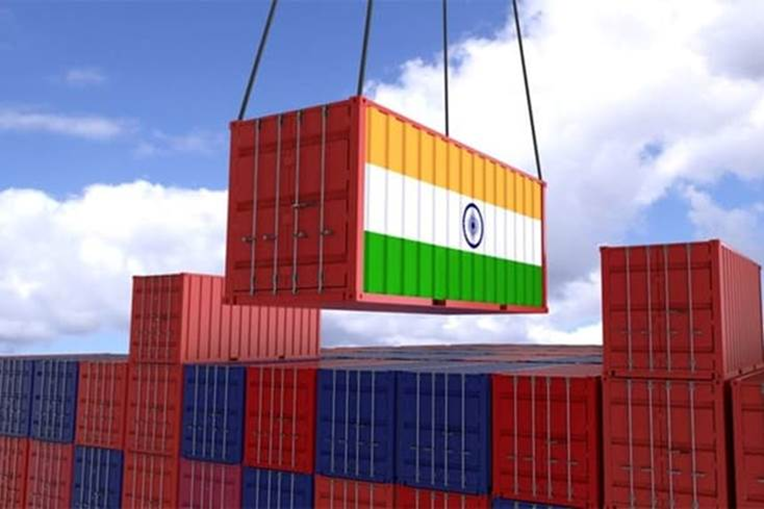
- Recently, the security architecture of West Asia has faced severe destabilization following direct military escalations between Iran and Israel in early March 2026. This conflict has moved beyond proxy warfare to direct strikes on sovereign territories and strategic maritime corridors, including the Strait of Hormuz. Reports indicate that the escalation has triggered “War Risk Surcharges” and significant disruptions in the shipping lanes of the Persian Gulf, directly impacting India’s trade momentum with the Gulf Cooperation Council (GCC) countries.
- The ongoing conflict poses a multi-dimensional threat to the USD 180 billion annual trade with the GCC and Iran.
1. General Impact on Logistics and Costs
- Freight and Insurance: Shipping companies have hiked freight rates by 30–50%. The Indian Rice Exporters Federation has advised members to avoid CIF (Cost, Insurance, and Freight) contracts due to “unacceptable” insurance risks.
- Strait of Hormuz & Bab el-Mandeb: Disruptions here force rerouting via the Cape of Good Hope, adding approximately two weeks to transit times and significantly compressing profit margins.
- Payment & Regulatory Hurdles: Banking sanctions on Iran and heightened KYC scrutiny in the region are causing severe payment settlement delays.
2. Sector-Wise Impact on India’s Exports
2.1 Agricultural Exports (Basmati Rice)
India is the world’s largest exporter, with the Middle East (Saudi Arabia, Iran, Iraq, UAE, and Yemen) accounting for nearly 50% of export value (₹50,000 crore).
- Price Drop: Following the late February 2026 escalation, domestic prices fell by 5–6% as shipments stalled.
- Iran Specifics: India’s exports to Iran (~$1.24 billion) consist largely of rice, tea, and sugar, all of which are now deemed “unviable” due to airspace closures and port congestion.
2.2 Petroleum Product Exports
India leverages its massive refining capacity in Jamnagar, Vadinar, and Paradip.
- Volume at Risk: Approximately 74,000 bpd of refined products flow through the Strait of Hormuz.
- The Paradox: While rising oil prices theoretically benefit refiners, the physical inability to transport products profitably neutralizes these gains.
2.3 Gems, Jewellery, and Diamonds
This sector is critically dependent on Dubai as a global re-export center.
- Supply Chain: About 50–60% of India’s gold imports transit through Dubai.
- Manufacturing Risk: Airspace closures disrupt the pipeline of rough diamonds bound for cutting and polishing centers in Surat and Mumbai.
2.4 Pharmaceuticals
India is the world’s “pharmacy,” but the conflict strains the supply of APIs (Active Pharmaceutical Ingredients).
- Double Squeeze: Sustained disruption adds cost to the processing of Chinese APIs in India for re-export to the Middle East and Iran.
2.5 Textiles, Engineering Goods, and Chemicals
- Textiles: Manufacturers in Tiruppur and Surat face thin margins as freight costs to Europe and North America skyrocket.
- Chemicals: Rising crude prices increase the cost of petrochemical feedstocks, while simultaneously high freight costs compress the margins of export-heavy players.
3. Summary of Major Products and Status
| Gulf Country | Major Export Products | Present Status & Impact |
| UAE | Gems & Jewellery, Refined Petroleum. | Disrupted: Dubai hub operations are hampered by airspace closures and high insurance. |
| Saudi Arabia | Basmati Rice, Engineering Goods. | Stalled: New contracts are being avoided; massive inventory build-up at Indian ports. |
| Iran | Tea, Rice, Pharmaceuticals. | Critical: Trade is at a near standstill due to sanctions and kinetic warfare. |
| Oman | Minerals, Textiles, Engineering. | Strategic Hub: Ports like Duqm are serving as vital alternative landing points. |
Q. With reference to India’s trade dynamics amidst the West Asian conflict in 2026, consider the following statements:

1. The Gulf Cooperation Council (GCC) nations and Iran collectively account for nearly half of India’s total Basmati rice export value.

2. Under CIF (Cost, Insurance, and Freight) contracts, the Indian exporter bears the risk of rising marine insurance premiums during the transit to Gulf ports.

3. Rerouting textile exports from the Red Sea to the Cape of Good Hope route typically adds about one week to the transit time.

How many of the above statements are correct?
(a) Only one
(b) Only two
(c) All three
(d) None

Solution: Answer: (b)

•	STATEMENT 1 IS CORRECT: Saudi Arabia, Iran, Iraq, UAE, and Yemen account for nearly 50% of India's Basmati rice export value (estimated at ₹50,000 crore).
•	STATEMENT 2 IS CORRECT: In a CIF contract, the seller (exporter) is responsible for the cost, insurance, and freight. Therefore, a spike in "War Risk Surcharges" directly reduces the exporter's profit.
•	STATEMENT 3 IS INCORRECT: Rerouting around the Cape of Good Hope adds approximately two weeks (not one) to the transit time, significantly increasing costs.