
Context
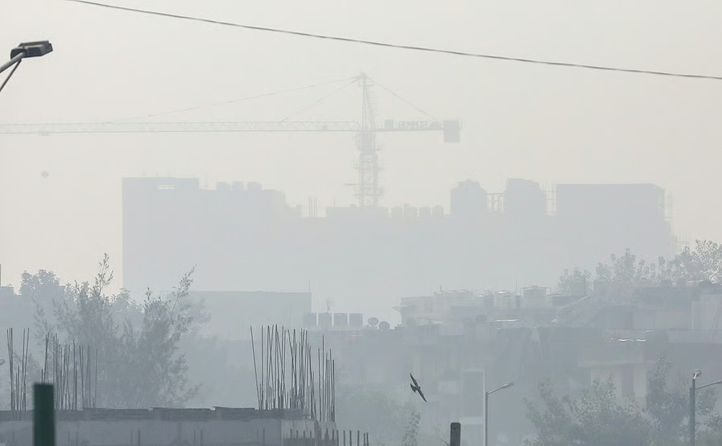
Recently, an air quality analysis by the Centre for Research on Energy and Clean Air (CREA) revealed that 204 out of 238 monitored Indian cities failed to meet the National Ambient Air Quality Standards (NAAQS) for PM 2.5 during the winter season of 2025–26.
This marks a significant deterioration from the previous winter, when 173 cities breached the national limits. The study, based on data from the Central Pollution Control Board (CPCB), identified Ghaziabad as the most polluted city in India, followed by Noida and Delhi, underscoring the persistent failure of current mitigation strategies like the National Clean Air Programme (NCAP) to achieve nationwide clean air targets.
Key Highlights of the CREA 2026 Report
1. Extent of Non-Compliance
- Breach of Standards: 204 out of 238 cities (approx. 86%) recorded PM2.5 levels exceeding the Indian national standard of 60 ug/m3 (24-hour average).
- Global Comparison: Not a single monitored city in India complied with the World Health Organization (WHO) daily safe guideline of 15 ug/m3.
- Regional Clusters: The Indo-Gangetic Plain (IGP) remains the most affected region, with 75 out of 79 monitored cities exceeding the national limits.
2. City Rankings (Winter 2025–26)
- Most Polluted: Ghaziabad topped the list with an average PM2.5 concentration of 172 ug/m3, followed by Noida (166 ug/m3) and Delhi (163 ug/m3).
- Cleanest City: Chamarajanagar in Karnataka was recorded as the cleanest, with an average PM2.5 of 19 ug/m3. Notably, 8 of the top 10 cleanest cities are located in Karnataka.
3. National Clean Air Programme (NCAP) Performance
- The report highlights a “structural disconnect” in the NCAP. Out of 96 NCAP cities with adequate data, 84 failed the national standards.
- Funding Issues: Although nearly ₹13,415 crore has been released since the NCAP’s inception (2019), only about 74% has been utilized.
- Skewed Spending: Approximately 68% of the funds were spent on road dust management, while critical sectors like industrial emission control and public outreach received less than 1% of the allocation.
4. Major Air Pollution Policies of India
- National Clean Air Programme (NCAP): Ministry of Environment, Forest and Climate Change (MoEFCC) launched National Clean Air Programme (NCAP) in January, 2019 with an aim to improve air quality in 131 cities (non-attainment cities and Million Plus Cities) in 24 States/UTs by engaging all stakeholders.
- The programme envisages to achieve reductions up to 40% or achievement of National Ambient Air Quality Standards for Particulate Matter10 (PM 10) concentrations by 2025-26.
- National Ambient Air Quality Standards (NAAQS): These standards, set by the Central Pollution Control Board (CPCB), provide a legal framework to ensure air quality in both industrial and residential areas.
- Indo-Gangetic Plain (IGP) Focus: Special monitoring is carried out in northern Indian states during winter to address pollution, as 75 cities in this region were listed for violating air quality standards in the 2026 report.
Q. With reference to the National Clean Air Programme (NCAP) and India's air quality standards, consider the following statements:

1. The NCAP aims to achieve a reduction of 40% in particulate matter concentrations by 2026, using 2017 as the baseline year.

2. The National Ambient Air Quality Standards (NAAQS) in India cover 12 pollutants, including Carbon Dioxide and Methane.

3. According to the 2026 CREA report, the majority of the cleanest cities in India are located in the Southern Peninsula, specifically Karnataka.

How many of the statements given above are correct?
(a) Only one
(b) Only two
(c) All three
(d) None

Solution: B (Only two)

•	STATEMENT 1 IS CORRECT: The NCAP target was revised in 2022 to aim for a 40% reduction in PM10 and PM2.5 by 2026.
•	STATEMENT 2 IS INCORRECT: While NAAQS covers 12 pollutants (including SO2, NO2, PM10, PM2.5}, Ozone, Lead, CO, NH3, Benzene, Benzopyrene, Arsenic, and Nickel), it does not include greenhouse gases like Carbon Dioxide (CO2) or Methane (CH4).
•	STATEMENT 3 IS CORRECT: The CREA 2026 winter report identified Chamarajanagar as the cleanest city and noted that 8 of the top 10 cleanest cities are in Karnataka.