
After Reading This Article You Can Solve This UPSC Mains Model Questions:
The Transgender Persons (Protection of Rights) Amendment Bill, 2026 attempts administrative clarity but risks deepening structural inequalities. Critically analyse. 15 Marks (GS-2, Social Justice)
Introduction
- The Transgender Persons (Protection of Rights) Amendment Bill, 2026, recently passed by both Houses of Parliament, seeks to modify the 2019 framework governing the rights of gender-diverse individuals in India.
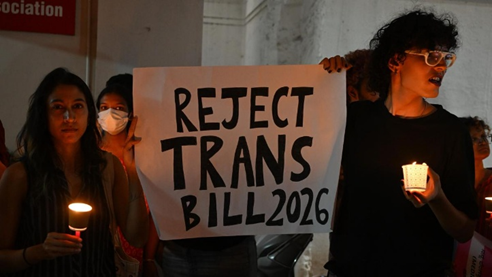
- While the government claims that the Bill seeks to clarify ambiguities and improve implementation of the 2019 Act, critics argue that it deepens conceptual confusion, restricts rights, and ignores core structural crises faced by transgender and intersex communities.
Background: Evolution of Transgender Rights in India
India has taken several progressive steps to recognise the rights of transgender persons. The following points summarise the key developments:
- Landmark NALSA Judgment (2014) In the case of National Legal Services Authority (NALSA) v. Union of India (2014), the Supreme Court recognised transgender persons as the “third gender”.
- It affirmed the right to self-identification of gender.
- It directed the government to treat transgender persons as a socially and educationally backward class.
- It called for reservations in education and public employment.
- The judgment emphasised that gender identity is an intrinsic part of personal dignity and is protected under Articles 14 (Equality), 15 (Non discrimination), 19 (Freedom of Expression) and 21 (Right to Life and Dignity) of the Indian Constitution.
- Transgender Persons (Protection of Rights) Act, 2019: The 2019 Act was enacted to implement the directions of the NALSA judgment. Key features include:
- A broad definition of “transgender person” covering:
- Persons whose gender does not match the sex assigned at birth.
- Trans-men and trans-women.
- Persons with intersex variations.
- Genderqueer individuals.
- Socio-cultural identities such as kinner, hijra, aravani and jogta.
- Prohibition of discrimination in education, employment, health care and public services.
- Provisions for welfare measures.
- Establishment of the National Council for Transgender Persons (NCTP) and State Welfare Boards.
- Penalties for offences against transgender persons.
- A broad definition of “transgender person” covering:
- Limitations of the 2019 Act: Despite its progressive intent, the 2019 Act faced significant criticism for:
- Vague implementation mechanisms.
- Lack of reliable data on the actual number of transgender and intersex persons.
- Failure to clearly separate biological sex from gender identity.
The Transgender Persons (Protection of Rights) Amendment Bill, 2026, was introduced to address these gaps. However, the changes it proposes have sparked fresh debate on whether the Bill truly advances rights or creates new barriers for the affected communities.
Key Provisions of the Transgender Persons (Protection of Rights) Amendment Bill, 2026
The Transgender Persons (Protection of Rights) Amendment Bill, 2026, introduces the following major changes:
- Narrowed Definition: The definition of “transgender person” is restricted to specific socio-cultural identities such as kinner, hijra, aravani, jogta, eunuch, or persons with biologically-defined intersex variations, or those forcibly compelled into such identity through mutilation, castration, amputation, or any surgical, chemical or hormonal procedure.
- It explicitly excludes persons with different sexual orientations and non-heteronormative gender-fluid identities.
- Removal of Self-Identification: The right to self-perceived gender identity under Section 4(2) of the 2019 Act has been removed.
- Medical Board Certification: The simple District Magistrate process is replaced by a medical board headed by the Chief Medical Officer. The District Magistrate issues the certificate only after the board’s recommendation.
- Mandatory Reporting All hospitals must report every transgender-related surgery to the District Magistrate and the concerned authority.
- Stricter Penalties: Rigorous imprisonment of 5 to 14 years (along with fine) is prescribed for forcing adults or children into “transgender presentation” along with begging or servitude.
- Unchanged Institutional Structure: The National Council for Transgender Persons and State Welfare Boards retain their original names and structure.
Significance of the Transgender Persons (Protection of Rights) Amendment Bill, 2026
The Transgender Persons (Protection of Rights) Amendment Bill, 2026 seeks to address implementation gaps while strengthening constitutional safeguards. Its key significance lies in:
- Greater Administrative Clarity: By narrowing definitions, it reduces ambiguity and enables more targeted delivery of welfare schemes.
- Stronger Measures Against Exploitation: Introduces stricter penalties (5–14 years) to curb forced begging, trafficking, and servitude, protecting vulnerable individuals.
- Improved Data and Policy Planning: Medical certification and reporting mechanisms aim to generate reliable data, supporting evidence-based policymaking.
- Alignment with Constitutional Principles: Reflects an effort to balance welfare and regulation while promoting equality and non-discrimination (Articles 14, 15, 21).
Critical Issues and Systemic Flaws in the Bill
Despite its stated objectives, the Bill faces strong criticism on multiple grounds. The main concerns are highlighted below:
1. Deepening Conflation of Sex and Gender
- The Bill continues to include persons with intersex variations under the “transgender person” category.
- Intersex is a biological spectrum (affecting 1-2% globally), while transgender identity is a psychological and social construct.
- It incorrectly refers to male and female as “gender identity” (they are sex identities).
- Failure to separate biological sex and gender identity in official documents creates new administrative and legal problems.
2. Erosion of Self-Determination
- Removal of the right to self-perceived gender identity shifts the framework from self-determination to medical gatekeeping.
- This contradicts the spirit of the NALSA judgment and raises concerns under Article 21 (bodily integrity and privacy).
3. Neglect of Intersex-Specific Needs
- No explicit ban on non-consensual “normalising” surgeries on intersex infants.
- Absence of mandatory genetic counselling by medical geneticists.
- No requirement for India-specific longitudinal studies on long-term effects of gender-affirming surgeries and hormone therapies.
- Inadequate privacy safeguards for mandatory surgery reporting.
4. Legitimisation of Exploitative Structures
- New penalties target only external perpetrators but leave the colonial-era hijra jamath-gharana system largely untouched.
- Internal hierarchies continue to trap gender non-conforming children in bonded labour, begging and prostitution.
- Lack of dedicated policies for rehabilitation, education and protection of minors within these systems.
5. Absence of Intersectionality and Civil Rights
- No intersectional lens for caste, disability, poverty or religion.
- Transgender persons from Scheduled Caste/Scheduled Tribe or disabled backgrounds face compounded discrimination without targeted remedies.
- Complete silence on civil and family rights — marriage, adoption, inheritance, divorce and succession.
6. Contradiction with International Standards
- The Bill conflicts with UN and WHO definitions that treat intersex as distinct variations requiring separate protections.
- It ignores calls to rebrand welfare bodies as National GIESC Welfare Council (Gender Identity/Expression and Sex Characteristics).
- This undermines India’s commitments under the UN CRPD (Convention on the Rights of Persons with Disabilities).
Strategic Way Forward for an Inclusive and Rights-Based Framework
To overcome the limitations and create a more effective and inclusive framework, the following measures are recommended:
- Adopting the GIESC Framework: India should move toward the Gender Identity, Expression, and Sex Characteristics (GIESC) model. This separates biological traits from gender expression, ensuring both groups receive specific, relevant protections.
- Banning Non-Consensual Surgeries: Legislation must explicitly prohibit sex-selective surgeries on infants unless they are life-saving, upholding the right to bodily integrity under Article 21.
- Decentralizing Identification: Identity should be based on self-declaration (as per the NALSA judgment) rather than clinical “certification” by medical boards, which can be humiliating and exclusionary.
- Inclusive Social Security: The government must conduct evidence-based research to provide reservations in education and employment, alongside civil rights like marriage and adoption.
- Rehabilitation of Minors: Instead of just criminalizing begging, the state must create a robust framework for the protection and education of gender-non-conforming children who have been abandoned by their families.
Conclusion
A truly effective framework must be rights-based, scientifically grounded, and centred on dignity, autonomy, and constitutional equality. Only by addressing these structural gaps can the law move beyond superficial reform and ensure genuine empowerment of transgender and intersex persons in India.