
After Reading This Article You Can Solve This UPSC Mains Model Questions:
India’s waste crisis cannot be solved through excessive centralisation alone.” Examine the challenges associated with the Solid Waste Management Rules, 2026 and suggest suitable measures. 15 Marks (GS-3, Environment)
Introduction
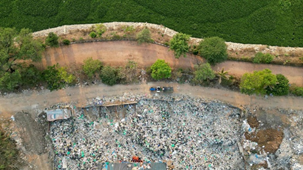
- India’s waste crisis has emerged as a major environmental, public health, and governance challenge, with overflowing landfills, polluted rivers, plastic-clogged drains, and rising air pollution affecting both urban and rural areas.
- While the Solid Waste Management Rules, 2026 aim to strengthen waste governance, their excessive centralisation raises serious concerns regarding federalism, local autonomy, administrative capacity, and practical implementation.
Understanding Waste Management and the Federal Balance in India
A. What is Solid Waste Management?
- Solid Waste Management (SWM) refers to the scientific process of segregation, collection, transportation, recycling, treatment, and safe disposal of waste generated by households, industries, institutions, markets, and commercial establishments.
- Waste management covers different categories of waste such as biodegradable waste, plastic waste, e-waste, sanitary waste, hazardous domestic waste, and construction waste, all of which require separate treatment mechanisms.
- Effective waste management also includes community participation, behavioural change, recycling systems, composting infrastructure, scientific landfills, and environmental monitoring, rather than focusing only on waste collection.
B. Growing Waste Crisis in India
- India generates nearly 1.6 lakh tonnes of municipal solid waste daily, and the quantity is rising rapidly due to urbanisation, consumerism, changing lifestyles, and increasing use of packaged products.
- Although around 70-75% of waste is collected, only a limited proportion is scientifically processed, while large quantities continue to be dumped openly in landfills and dumping grounds.
- Major cities such as Delhi, Mumbai, Bengaluru, Kolkata, and Chennai are facing serious challenges including overflowing landfills, methane emissions, landfill fires, toxic leachate, and severe air and water pollution.
- Rural India is also witnessing increasing waste-related problems because of the spread of plastic waste, sanitary waste, pesticide containers, tourism waste, and electronic waste in villages and ecologically sensitive regions.
C. Solid Waste Management Rules, 2026
- The Solid Waste Management Rules, 2026 have been framed under the Environment (Protection) Act, 1986, which was enacted mainly under Article 253 of the Constitution to implement India’s international obligations under the 1972 Stockholm Declaration.
- Article 253 empowers Parliament to legislate even on matters related to State subjects when international treaty obligations are involved, thereby strengthening the Union’s role in environmental governance.
- However, such constitutional authority should not result in excessive centralisation over matters closely linked with local administration, sanitation, public health, and municipal governance.
- Waste management depends heavily upon local factors such as land availability, settlement patterns, fiscal capacity, infrastructure, and citizen participation, which differ significantly across States and regions.
Importance of Effective and Decentralised Waste Management
1. Effective Waste Management is Essential for Public Health and Environmental Protection
- For Public Health: Improper waste disposal leads to water contamination, spread of diseases, mosquito breeding, and respiratory illnesses caused by open burning and landfill emissions.
- Poor sanitation particularly affects people living near dumping grounds and low-income settlements, where environmental health risks are extremely high. Therefore, scientific waste management is necessary for improving public hygiene, disease prevention, and quality of life.
- For Environmental Protection: Open dumping and unmanaged landfills release large quantities of methane gas, which contributes significantly to climate change and global warming.
- Untreated waste also contaminates groundwater, rivers, lakes, agricultural land, and coastal ecosystems, thereby damaging biodiversity and ecological balance. Effective waste management is therefore essential for pollution control, climate mitigation, environmental conservation, and sustainable urban development.
2. Waste Management Promotes Circular Economy and Resource Efficiency
- Proper segregation, recycling, composting, and scientific processing help convert waste into useful resources such as compost, recyclable materials, bio-energy, and industrial raw materials. This supports a circular economy by reducing pressure on natural resources, improving resource efficiency, generating green jobs, and minimising dependence on virgin raw materials.
3. Decentralised Waste Governance Strengthens Cooperative Federalism and Accountability
- Effective waste governance requires strong cooperative federalism, because waste-management challenges differ significantly across metropolitan cities, hill towns, coastal regions, tribal areas, and rural settlements. The principle of subsidiarity becomes important because governance functions should be performed at the lowest effective level closest to local realities and people’s needs.
- Local governments possess better understanding regarding waste-generation patterns, collection systems, land availability, community participation, and regional ecological conditions. Therefore, decentralised governance improves transparency, local accountability, citizen ownership, and administrative responsiveness, while excessive centralisation often weakens local innovation and reduces States into mere implementing agencies.
Major Challenges in the Solid Waste Management Rules, 2026
1. Excessive Centralisation Weakens Federalism
- The Solid Waste Management Rules, 2026 reflect a highly centralised governance structure where the Union government designs operational frameworks while States and local bodies mainly function as implementing agencies.
- Such an approach weakens cooperative federalism because different States possess varying administrative capacities, fiscal resources, ecological conditions, and governance challenges.
- A uniform national framework may fail to address region-specific realities and reduce opportunities for local innovation and flexibility.
2. One-Size-Fits-All Approach Ignores Ground Realities
- Waste-management challenges differ across India because metropolitan cities, hill towns, coastal regions, tribal areas, and rural settlements face entirely different geographical and infrastructural constraints.
- However, the Rules impose similar compliance expectations without adequately considering differences in infrastructure, fiscal capacity, population density, and administrative strength, which may create unrealistic implementation burdens.
3. Weak Capacity of Rural Local Bodies
- Most Gram Panchayats lack technical staff, digital infrastructure, financial resources, and waste-processing facilities required for advanced waste-management systems.
- Rural waste management should focus more on community awareness, household composting, simplified waste collection, and cluster-based processing systems suited to local realities.
4. Digital Compliance Burden and Weak Financial Support
- Excessive emphasis on digital reporting, audits, and centralised monitoring through CPCB platforms may shift focus from actual service delivery towards paperwork and data entry.
- At the same time, municipalities and Panchayats continue to face financial constraints, weak revenue generation, and dependence on irregular grants, which limit effective implementation of waste-management obligations.
5. Risk of Judicialisation
- Non-implementation of the Rules may increase Public Interest Litigations (PILs) and judicial monitoring, leading to court-driven governance focused more on compliance reports than actual environmental outcomes and citizen participation.
Global Best Practices In Decentralised Waste Management
1. Germany’s Decentralised Recycling Model
- Germany has developed an efficient decentralised recycling system based on strong municipal autonomy, citizen participation, producer responsibility, and strict source segregation practices.
- Local governments are provided flexibility to design region-specific waste systems according to local infrastructure and community needs.
2. Japan’s Community-Centred Waste Governance
- Japan has established highly disciplined community-based waste segregation systems where citizens actively participate in sorting and recycling waste according to strict local guidelines.
- Strong local accountability and social discipline have helped Japan minimise landfill dependence and improve recycling efficiency.
3. Sweden’s Circular Economy Approach
- Sweden has successfully converted large quantities of waste into energy and recyclable resources through advanced processing systems and strong circular economy policies.
- Efficient segregation systems and local innovation have significantly reduced landfill usage across the country.
Way Forward for Building a Sustainable Waste Governance Framework in India
1. National Standards Must Be Balanced with State Flexibility
- The Union government should establish minimum environmental standards while allowing States sufficient flexibility to design waste-management systems according to their own ecological, administrative, social, and fiscal realities. Such a balanced approach would strengthen cooperative federalism while ensuring national environmental commitments are maintained.
2. Local Governments Must Be Financially and Administratively Empowered
- Municipalities and Panchayats require adequate financial support, technical expertise, institutional autonomy, and administrative capacity-building to effectively implement waste-management systems at the grassroots level.
- Waste governance cannot succeed unless local bodies are treated as genuine institutions of self-governance rather than merely implementing agencies dependent upon higher authorities.
3. Different Regions Require Context-Specific Waste Models
- Waste-management systems should be designed according to regional requirements because challenges differ significantly across India.
- Megacities require advanced waste-processing infrastructure, scientific landfill remediation, and metropolitan waste-management authorities due to massive waste-generation volumes.
- In contrast, rural areas and small towns require decentralised systems based on community composting, cluster-level processing facilities, and locally suitable collection mechanisms.
4. Citizen Participation Must Become Central to Waste Governance
- Sustainable waste management depends upon behavioural change, community ownership, and active citizen participation in segregation, recycling, and sanitation practices.
- Institutions such as Ward Committees, Gram Sabhas, Resident Welfare Associations (RWAs), and citizen monitoring systems should become integral parts of local waste governance to improve accountability and public participation.
5. States Should Be Encouraged to Innovate
- States should be encouraged to develop region-specific innovations such as decentralised composting systems, integration of informal waste workers, local recycling markets, and community-driven waste-management models.
- Successful State-level experiments can later be replicated nationally, thereby strengthening both innovation and cooperative federalism.
Conclusion
- India’s waste crisis cannot be resolved solely through centralised regulation, digital compliance systems, and top-down administrative control.
- Sustainable waste governance requires a balanced framework based on cooperative federalism, empowered local governments, adequate financial support, scientific infrastructure, State-level flexibility, and active citizen participation to build cleaner, healthier, and environmentally sustainable cities and villages.