
After Reading This Article You Can Solve This UPSC Mains Model Question
Recurring stampedes in India highlight gaps in governance, institutional capacity, and regulatory enforcement in managing large gatherings. Examine the constitutional and administrative challenges in crowd management, and suggest governance reforms to ensure accountability, coordination, and public safety. 15 Marks (GS-2, Governance)
Introduction
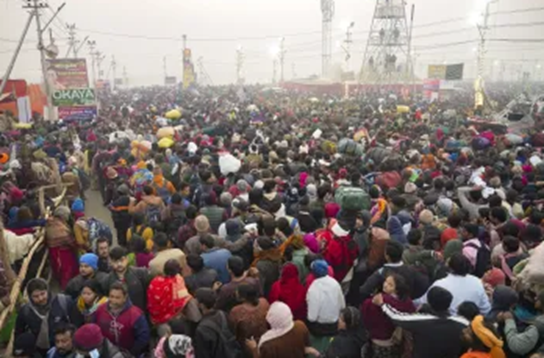
India continues to witness recurring stampedes, highlighting persistent gaps in scientific crowd management despite past experiences. Recent incidents from religious gatherings in Bihar to large public celebrations in Bengaluru (2025) and mass events in Tamil Nadu demonstrate how inadequate planning and sudden crowd surges can turn hazardous. Such occurrences reflect a pattern of preventable tragedies followed by reactive responses.
Legal and Constitutional Status of Stampedes in India
1. Constitutional Framework
- Article 21 (Right to Life): Stampedes violate the right to life and safety; State failure may attract constitutional liability.
- DPSPs (Article 38): Obligates the State to ensure public welfare and safety in mass gatherings, though non-justiciable.
2. Statutory and Legal Provisions
- Disaster Management Act, 2005: Treats stampedes as disasters and mandates preparedness, mitigation, and response mechanisms.
- Indian Penal Code (IPC):
- Section 304A: Death due to negligence
- Sections 336–338: Acts endangering life or causing injury
- Police Acts & Local Laws: Empower authorities to regulate assemblies and maintain public order.
3. Judicial Perspective
- Courts hold the State accountable for lapses in crowd safety during public events.
- The Supreme Court of India mandates risk anticipation and preventive planning as legal duties.
- Directions include compensation to victims and fixing responsibility on officials and organisers.
Understanding Crowd Dynamics and Causes
Crowd dynamics and stampede causes are interconnected, where structural gaps, human behaviour, and administrative failures together shape real-time risks.
1. Nature of Crowds in India
- Emotionally Charged Crowds: Religious or celebrity-driven gatherings reduce risk perception and increase panic under congestion.
- Spontaneous/Semi-Planned Gatherings: Poor anticipation of turnout leads to overcrowding and unsafe density levels.
- Digital Mobilisation: Social media triggers sudden large gatherings, creating unpredictability and administrative unpreparedness.
- Combined Effect: High density, emotional vulnerability, and unpredictability increase disaster risk.
2. Scientific Basis of Crowd Behaviour
- Density Threshold + Infrastructure Gaps: Beyond 5 persons/m², movement stops; poor exits and narrow paths convert crowding into crushing pressure.
- Loss of Individual Identity + Human Factors: Dense crowds reduce self-awareness; rumours and misinformation trigger panic-driven behaviour.
- Trigger Events + Administrative Failure: Minor incidents escalate quickly due to lack of monitoring, regulation, and clear communication.
- Systemic Interaction: Structural, behavioural, and governance failures together produce dangerous crowd conditions.
3. Integrated Causes of Stampedes
- Structural Constraints: Narrow exits and poor design increase density beyond safe limits.
- Administrative Failures: Weak coordination and inadequate personnel allow uncontrolled crowd buildup.
- Human Behaviour: Panic, misinformation, and preferential access create sudden surges and instability.
- Information Gaps: Lack of real-time monitoring and poor estimation delay timely intervention.
Challenges in Crowd Management in India
1. Lack of Institutionalisation
Crowd management is not recognised as a formal discipline in governance or policing, leading to the absence of standard protocols. Training remains largely experience-based rather than grounded in scientific principles and data-driven methods.
2. Inadequate Infrastructure
Many religious and public spaces lack capacity planning, resulting in overcrowding beyond safe limits. The absence of separate entry-exit routes and poor spatial design restrict smooth movement and emergency evacuation.
3. Weak Inter-Agency Coordination
Police, local administration, and event organisers often function in silos, leading to fragmented decision-making. The absence of a unified command system delays timely response during emergencies.
4. VIP Culture and Resource Diversion
Security arrangements for high-profile events divert police personnel away from general crowd management duties. This results in inadequate on-ground presence in high-footfall areas, increasing vulnerability to mishaps.
5. Digital Mobilisation without Regulation
Social media enables rapid and large-scale mobilisation of crowds without prior intimation to authorities. This unpredictability makes it difficult to estimate turnout and plan adequate arrangements.
6. Limited Use of Technology
There is minimal deployment of advanced tools such as CCTV analytics, drones, and AI-based crowd monitoring systems. The lack of predictive technologies limits the ability to anticipate crowd surges and prevent risks proactively.
7. Behavioural and Cultural Factors
Strong faith-driven participation often leads to overcrowding, especially during religious events. Resistance to regulation and reluctance to follow instructions further complicate effective crowd control.
Government Schemes and Policy Initiatives
1. Safe City Project (Ministry of Home Affairs)
- Governance Link: Part of the Nirbhaya Fund initiative.
- Tech-Integration: Uses Integrated Command and Control Centres (ICCC) to monitor high-footfall areas in 8 mega-cities.
2. Aapda Mitra Scheme (NDMA)
- Community Resilience: Trains local volunteers as “First Responders.”
- The “Golden Hour”: In crowd disasters, medical help often can’t reach the center of a crush. Aapda Mitras are trained to provide on-spot basic life support (CPR, trauma care) within the first few critical minutes.
3. PRASHAD & Swadesh Darshan 2.0 (Ministry of Tourism)
- Infrastructure Focus: Specifically addresses the “Religious Crowd” dynamic.
- Standardization: Funds the creation of “Tourist Facilitation Centres” and Queue Management Systems at pilgrimage sites (e.g., Varanasi, Kedarnath).
4. Amrit Bharat Station Scheme (Ministry of Railways)
- Bottleneck Removal: Focuses on the “Station Redevelopment” of 1,300+ stations.
- Specific Fixes: Widening of Foot Over Bridges (FOBs), dedicated entry/exit segregation, and multi-modal integration to ensure “smooth dispersal” of passengers.
Global Best Practices in Crowd Management
Countries with advanced systems integrate science, technology, and governance to minimise risks in mass gatherings.
1. United Kingdom – Scientific Planning and Simulation
- The UK uses advanced crowd modelling tools (e.g., for events like the Glastonbury Festival) to predict movement and congestion points.
- Authorities conduct scenario-based simulations to prepare for emergencies such as evacuations or sudden surges.
2. Japan – Infrastructure Design
- Japan’s metro stations and event venues are designed with segregated entry-exit routes and clearly marked pathways.
- Use of barriers, queue systems, and signage ensures smooth flow and quick evacuation during peak hours or disasters.
3. Singapore – Real-Time Monitoring
- Singapore deploys AI-enabled CCTV systems to monitor crowd density in real time, especially during festivals.
- Drones and integrated command centres help authorities take immediate action when thresholds are breached.
4. Saudi Arabia – Behavioural Interventions (Hajj Management)
- During the Hajj pilgrimage, authorities use nudging techniques like colour-coded routes and visual cues to guide pilgrims.
- Structured scheduling and awareness campaigns reinforce discipline and reduce panic behaviour.
5. Germany – Legal and Regulatory Frameworks
- Germany enforces strict safety regulations, including mandatory risk assessments and crowd capacity limits.
- Event organisers are held legally accountable, ensuring compliance with safety norms and preventive measures.
Way Forward: Building a Robust Crowd Management Framework
1. Institutionalising Crowd Science
Introduce crowd management as a formal subject in police and administrative training, supported by dedicated research centres for data-driven solutions.
2. Capacity Building and Training
Train police, organisers, and volunteers in crowd psychology, emergency response, and communication to handle panic and ensure orderly movement.
3. Infrastructure and Venue Design
Redesign high-footfall spaces with multiple entry-exit points, barriers, and evacuation routes based on scientific capacity norms.
4. Leveraging Technology
Deploy AI-based monitoring, CCTV, GPS tracking, and predictive analytics for real-time crowd assessment and early risk detection.
5. Strengthening Governance and Coordination
Establish a Unified Command System with clearly defined roles for police, administration, and organisers to ensure quick and coordinated response.
6. Regulatory Framework and Accountability
Ensure strict permissions based on capacity assessment and enforce penalties for overcrowding, safety violations, and unauthorized access.
7. Public Awareness, Digital Monitoring, and Resource Optimisation
Promote safe crowd behaviour through awareness campaigns, monitor social media for crowd prediction, and rationalise security deployment to avoid personnel diversion.
Conclusion
Stampedes in India reflect systemic gaps rather than isolated failures, underscoring the need for a paradigm shift in crowd governance. A future-ready approach must integrate crowd science, smart technologies, and institutional coordination into a proactive framework. Leveraging data, behavioural insights, and resilient infrastructure can transform mass gatherings into safe and well-managed events. Ultimately, ensuring crowd safety is central to inclusive development and reflects the State’s commitment to human dignity and life.