
After Reading This Article You Can Solve This UPSC Mains Model Question:
“The debate surrounding Vande Mataram reflects the larger tension between cultural nationalism and constitutional secularism in India.” Discuss. 15 Marks (GS-1, Culture)
Introduction
The recent controversy over mandatory singing of Vande Mataram at government functions has revived debates on Indian secularism, cultural nationalism, constitutional values, and inclusivity. The issue highlights the tension between majoritarian nationalism and India’s pluralistic identity.
Historical Background of Vande Mataram
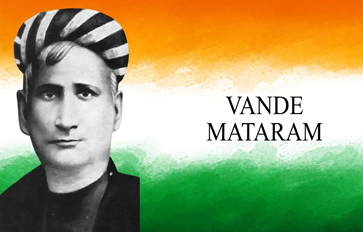
- Literary Origin: It was composed by Bankim Chandra Chatterji in the 1870s and later included in his 1882 Bengali novel, Anandamath, set against the backdrop of the Sannyasi Rebellion.
- Political Debut: The song gained national prominence when Rabindranath Tagore sang it for the first time in a political context at the 1896 Calcutta Session of the Indian National Congress.
- Symbol of Resistance: It became the primary anthem of the Swadeshi Movement (1905) following the Partition of Bengal, serving as a powerful slogan for anti-colonial resistance.
- The 1937 Consensus: To address communal sensitivities regarding later stanzas, a Congress committee (including Nehru and Azad) recommended using only the first two stanzas, which focus on the beauty of the motherland.
- Constituent Assembly Status: On January 24, 1950, President Dr. Rajendra Prasad declared it the National Song, granting it “equal status” with the National Anthem, Jana Gana Mana.
Constitutional and Legal Dimensions of Vande Mataram
- 1950 Presidential Statement: Dr. Rajendra Prasad officially declared Vande Mataram as the National Song on January 24, 1950, granting it “equal status” with the National Anthem despite not being mentioned in the Constitution itself.
- Absence of Statutory Penalties: Unlike the National Anthem, which is protected by the Prevention of Insults to National Honour Act, 1971, there is no specific central statute that penalizes a failure to sing or stand for the National Song.
- Article 51A (Fundamental Duties): While the Constitution mandates citizens to “respect the National Flag and the National Anthem,” it remains silent on the National Song, leading to legal debates over the compulsory nature of its performance.
National Anthem vs National Song
| Aspect | National Anthem | National Song |
| Official Status | Jana Gana Mana | Vande Mataram |
| Constitutional Recognition | Officially adopted | No equal constitutional status |
| Mandatory Respect | Governed by law and conventions | No similar legal obligation |
| Nature | Inclusive civic nationalism | Cultural-national symbolism |
Why is Vande Mataram Controversial?
- Religious Imagery: The later stanzas of the song equate the Motherland with Hindu goddesses like Durga and Lakshmi, which some argue conflicts with the monotheistic tenets of Islam and other faiths.
- Literary Context: In the original novel Anandamath, the song is set within a story depicting a Sannyasi rebellion against Muslim rule, which critics argue carries an inherent anti-Muslim historical bias.
- Communal Sensitivity: While the first two stanzas are purely descriptive of nature, the full song’s historical association with Hindu nationalism has led to long-standing communal polarization.
- Secular State Values: Opposition parties argue that mandating a song with religious undertones at government events undermines the secular and multicultural foundations of the Indian Constitution.
- Mandatory Imposition: Recent 2026 government orders requiring the full version to be played have reignited debate over whether such symbols should be voluntary expressions of patriotism or state-enforced rituals.
Way Forward
- Adherence to the 1937 Consensus: Prioritizing the singing of only the first two stanzas ensures the song remains a unifying tribute to nature and the motherland, avoiding sectarian sensitivities.
- Voluntary vs. Mandatory Participation: Promoting patriotism as a voluntary civic virtue rather than a state-enforced ritual helps preserve the “freedom of conscience” guaranteed under Article 25.
- Inclusive Symbolism: Strengthening the use of pluralistic symbols alongside the National Song reinforces the multicultural identity of India as a “Union of States.”
- Education and Historical Literacy: Clarifying the distinction between the literary context of the 19th-century novel and the political role of the song during the freedom struggle can reduce modern communal friction.
- Judicial Clarity on Protocol: Seeking a definitive Supreme Court guideline on the protocol for National and State songs would prevent inconsistent executive orders and reduce regional-federal friction.
Conclusion
The future of Indian nationalism lies in harmonizing historical symbols with constitutional secularism. A pluralistic approach, respecting both federal identities and national heritage, will ensure social cohesion and preserve the multicultural foundations of the state.