
Context
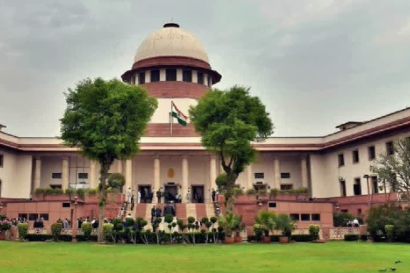
- Recently, the Supreme Court of India issued notice on a plea challenging the appointment of Deepak Prakash, a minister in the Bihar government, on the ground that he was appointed as a minister without being elected to either House of the State Legislature.
- The petition questions whether his appointment is constitutional under Article 164(4) of the Indian Constitution.
Article 164(4) of the Constitution
- Article 164(4) permits a person who is not a member of the State Legislature to be appointed as a Minister.
- However, such a person must get elected or nominated to the State Legislature within six consecutive months from the date of appointment.
- If the person fails to become a member of the Legislature within six months, he/she ceases to hold ministerial office.
Supreme Court’s Earlier Interpretation
- S.R. Chaudhuri Case (2001)
- The Supreme Court ruled that the six-month period cannot be repeatedly used to appoint a non-legislator as a minister without obtaining an electoral mandate.
- Reappointment of a person as minister after the expiry of six months, without becoming a legislator, would be unconstitutional.
Council of Ministers in States: Relevant Constitutional Articles
- Article 163 – Council of Ministers to aid and advise the Governor.
- Article 164 – Appointment, tenure, and responsibilities of Ministers.
- Article 167 – Duties of the Chief Minister towards the Governor.
Appointment of Ministers
- Governor appoints the Chief Minister.
- Other Ministers are appointed by the Governor on the advice of the Chief Minister.
- Council of Ministers is collectively responsible to the Legislative Assembly.
Consider the following statements regarding the Council of Ministers in a State:
1. The Governor appoints the Chief Minister.
2. Other Ministers are appointed by the Governor on the advice of the Chief Minister.
3. The Council of Ministers is collectively responsible to the Legislative Council.
4. Article 164 of the Constitution deals with the appointment of Ministers in States.
Which of the statements given above are correct?
(a) 1, 2 and 4 only
(b) 1 and 3 only
(c) 2, 3 and 4 only
(d) 1, 2, 3 and 4
The correct answer is (a) 1, 2 and 4 only.
Detailed Explanation:
• Statement 1 is correct: According to Article 164(1) of the Indian Constitution, the Chief Minister is appointed by the Governor.
• Statement 2 is correct: The same Article specifies that the other Ministers are appointed by the Governor, but strictly on the advice of the Chief Minister.
• Statement 3 is incorrect: Under Article 164(2), the Council of Ministers is collectively responsible to the Legislative Assembly (Vidhan Sabha) of the State, not the Legislative Council (Vidhan Parishad). This mirrors the Union level, where the Union Council of Ministers is collectively responsible to the Lok Sabha (House of the People).
• Statement 4 is correct: Article 164 comprehensively deals with provisions related to Ministers in a State, including their appointment, tenure, responsibility, qualifications, and oaths.