
Context
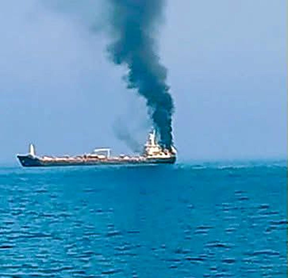
- Recent attacks on neutral merchant ships carrying Indian seafarers during the U.S.–Iran conflict have revived debates on UNCLOS, International Humanitarian Law, maritime neutrality, naval blockades, and protection of civilian shipping.
Two primary legal frameworks governing naval warfare:
- International Humanitarian Law (IHL) / Law of Naval Warfare
- United Nations Convention on the Law of the Sea (UNCLOS), UNCLOS is often called the “Constitution of the Oceans.”
Important Maritime Zones (UNCLOS)
- Territorial Sea (Up to 12 NM): Sovereign territory extending to the airspace and seabed, subject only to the foreign right of innocent passage.
- Contiguous Zone (Up to 24 NM): A buffer zone where the coastal state lacks sovereignty but can enforce customs, fiscal, immigration, and sanitary laws.
- Exclusive Economic Zone (Up to 200 NM): Area where the state has exclusive rights to exploit economic resources, while other nations retain navigation and overflight freedoms.
- High Seas & The Area (Beyond 200 NM): Global commons open to all nations for peaceful use, with deep seabed minerals regulated as the common heritage of mankind.
International Humanitarian Law (IHL)
- Codified primarily in 1949 Geneva Conventions
- Governs conduct of war (Jus in Bello), not legality of war.
Four Core Principles of IHL
- Distinction
- Proportionality
- Military Necessity
- Precaution
Jus ad Bellum vs Jus in Bello
- Jus ad Bellum: Legality of using force (UN Charter)
- Jus in Bello: Conduct during armed conflict (IHL)
Protection of Neutral Merchant Ships
- Neutral merchant vessels are generally protected from attack.
- Civilian objects like:
- Oil tankers
- Container ships
- Food carriers
- Fertilizer ships
- Submarine cables
- Pipelines
are protected unless they become military objectives.
Transit Passage
- Applies through international straits.
- Continues even during armed conflict.
- Codified under UNCLOS Part III (Articles 37–44).
When Can Neutral Merchant Ships Be Attacked?
According to the San Remo Manual (1994), if they:
- Carry contraband
- Violate a lawful naval blockade
- Refuse visit/search after warning
- Make an effective contribution to enemy military action
UN Charter Provisions
- Article 2(4): Prohibits the use of force against another state’s territorial integrity or political independence.
- Article 42: UN Security Council may authorize a blockade.
- Article 51: Recognizes the inherent right of self-defence.
Q. Under the law of naval warfare, which of the following may cause a neutral merchant vessel to lose its protected status?
I. Carrying contraband.
II. Violating a lawful blockade.
III. Refusing visit and search after prior warning.
IV. Making an effective contribution to enemy military operations.
Select the correct answer using the code below:
(a) I and II only
(b) III and IV only
(c) I, II, III and IV
(d) II and IV only
Answer: (c)
Explanation:
Under customary international law and Paragraph 67 of the San Remo Manual on International Law Applicable to Armed Conflicts at Sea, a merchant vessel flying the flag of a neutral state loses its protected status and may be lawfully attacked if it is reasonably believed to be engaged in any of the following activities (after appropriate warnings have been given):
1. Carrying contraband: Transporting goods destined for enemy-controlled territory that have military utility or support the enemy's military effort.
2. Breaching or violating a blockade: Attempting to enter or leave an enemy port or coast under a declared, effective, and impartial naval blockade.
3. Resisting visit and search: Intentionally and clearly refusing to stop, or resisting visit, search, or capture by a belligerent warship after a prior warning.
4. Contributing to enemy operations: Otherwise making an effective contribution to the enemy’s military action (e.g., relaying tactical intelligence, sailing under enemy convoy, or laying mines).