
After reading this article you can answer this UPSC mains model question:
Conservation success cannot be measured merely by an increase in species population. In the context of the Asiatic lion, critically examine why habitat connectivity, genetic diversity, and the establishment of multiple wild populations are essential for long-term species conservation. 15 Marks (GS3 , Environment and Ecology)
Context
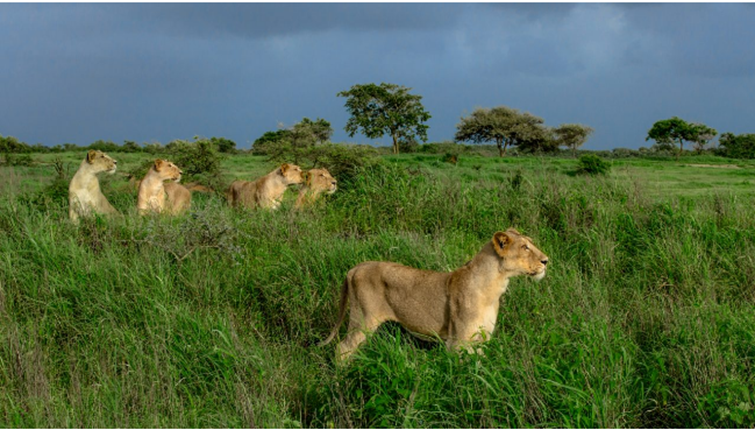
According to recent conservation assessments, the Asiatic lion (Panthera leo persica) population has increased from nearly 100–150 individuals in the 1960s to over 1,000 today, reflecting one of the world’s greatest wildlife conservation success stories. However, almost the entire global population remains confined to the Greater Gir Landscape of Gujarat, exposing the species to risks such as habitat fragmentation, disease outbreaks, climate-induced disasters, human-lion conflict, and genetic bottlenecks.
Introduction
The Asiatic lion, once distributed from Greece and the Middle East to northern India, today survives only in the Greater Gir Landscape of Gujarat, making it one of the world’s most geographically restricted large carnivores.
Efforts under Project Lion, community participation, and strong political commitment have revived its population, the continued confinement of the species to a single ecological landscape violates a fundamental principle of conservation biology—avoiding concentration of an entire species in one location.
Why is the Asiatic Lion Globally Significant?
1. Last Wild Population of Asiatic Lions
- Represents the only surviving wild population of the Asiatic subspecies.
- Extinction would mean the global disappearance of the Asiatic lion.
2. Flagship Species
- Protects the dry deciduous forest ecosystem of western India.
- Conserves numerous associated species through the umbrella effect.
3. Keystone Predator
- Maintains ecological balance by regulating herbivore populations.
- Supports healthy trophic interactions.
4. Cultural Significance
- Symbol of courage and royalty in Indian civilization.
- Associated with:
- Goddess Durga
- Ashoka Pillar (National Emblem)
- Ancient Indian kingdoms
India’s journey to lion conservation initiatives
| Period | Conservation Focus | Key Achievements |
| Late 19th Century | Preventing extinction | Hunting ban by Nawab of Junagadh |
| 1947–1972 | Basic protection | Administrative protection and monitoring |
| 1972–1990 | Legal & habitat conservation | Wildlife (Protection) Act, Gir National Park, anti-poaching |
| 1990–2010 | Scientific & community-based conservation | Population monitoring, habitat restoration, Maldhari participation |
| 2010–2020 | Landscape-level conservation | Expansion beyond Gir, conflict mitigation, disease surveillance |
| 2020–Present | Ecological resilience & species security | Project Lion, technology-driven conservation, climate resilience, focus on second wild population |
Reasons Behind India’s Success in Asiatic Lion Conservation
1. Expansion of Lion Distribution Beyond Gir: From Protected Area to Landscape-Level Conservation
- Reduced population pressure and overcrowding within Gir National Park.
- Enabled natural dispersal into suitable habitats, lowering competition for food and territory
- Example: Gir National Park, Gir Wildlife Sanctuary.
2. Community Participation: Transforming Local Communities into Conservation Partners
- Built trust between local communities and the Forest Department.
- Ensured long-term sustainability of conservation through community stewardship.
- Example: The Maldhari pastoral community has actively contributed through traditional coexistence with lions.
3. Improvement in the Wild Prey Base: Ensuring Ecological Sustainability
- Ensured a stable and adequate food supply for lions.
- Reduced dependence on livestock, thereby lowering human–lion conflicts.
- Example: significant increase in wild herbivore populations, including Chital, Nilgai
4. Strong Protection Measures and Reduction in Poaching
- Significantly reduced illegal hunting and wildlife trafficking.
- Strengthened enforcement of the Wildlife (Protection) Act, 1972, creating a strong deterrent against wildlife crimes.
Why Does the Asiatic Lion Continue to Face Serious Threats?
1. Single Population Risk: The Greatest Threat to Long-Term Survival
- Although the lion population has increased significantly, more than 95% of the world’s wild Asiatic lions remain concentrated within the Greater Gir Landscape of Gujarat. This makes the species highly vulnerable because its entire global population is dependent on a single geographical region.
- Potential Catastrophic Threats are Epidemic disease outbreaks, Large-scale forest fires.
2. Disease Outbreaks: An Emerging Biological Threat
- High population density and close proximity among lions significantly increase the risk of infectious diseases spreading rapidly through the population.
- In 2018, approximately 23 Asiatic lions died in Gir due to Canine Distemper Virus (CDV) and associated protozoan infections.
3. Habitat Fragmentation: Shrinking and Isolated Habitats
- Rapid developmental activities like expansion of road networks, railway lines, mining activities are fragmenting the Greater Gir Landscape, affecting the movement and survival of dispersing lions.
4. Rising Human–Lion Conflict
- As lion numbers have increased, their distribution has expanded beyond protected forests into agricultural fields, grazing lands, villages, and coastal areas.
- Today, nearly half of the Asiatic lion population lives outside Protected Areas, increasing interactions with humans
5. Climate Change: A Growing Threat to Habitat Stability
- Climate change has emerged as a major challenge by altering habitat conditions and increasing the frequency of extreme weather events across western India.
- Rising temperatures and prolonged heatwaves, increased frequency and severity of droughts are affecting survival of Asiatic lions in protected landscapes.
International Best Practices
| African Lion Conservation Multiple protected populations Landscape connectivity Transboundary conservation areas IUCN Guidelines Recommend: Multiple viable populations Meta-population management Long-term genetic monitoring |
Way Forward
1. Adopt a Meta-population Approach
- Establish multiple, geographically separated yet interconnected lion populations.
- Facilitate scientific translocations between habitats to maintain genetic exchange.
2. Establish a Second Free-Ranging Wild Population
- Implement the Supreme Court’s 2013 judgment directing the translocation of Asiatic lions.
- Develop Kuno National Park (Madhya Pradesh) or other scientifically suitable habitats as a second wild population.
3. Strengthen Wildlife Disease Surveillance through a ‘One Health’ Approach
- Conduct routine health screening of all lion populations establish dedicated Wildlife Epidemiology and Disease Surveillance Units.
- Developing an integrated One Health surveillance system, linking wildlife, livestock, and human health agencies.
4. Promote Community-Centric Conservation
- Strengthen and expedite livestock compensation mechanisms.
- Promote eco-tourism with equitable benefit-sharing for local communities.
5. Strengthen Scientific Population Management
- Maintain demographic viability by balancing age and sex structures.
- Use GIS, Artificial Intelligence (AI), drones, GPS collars, camera traps, and real-time telemetry for monitoring.
6. Strengthen Institutional Coordination and Cooperative Governance
- Enhance collaboration among National Tiger Conservation Authority (NTCA), Wildlife Institute of India (WII), Central Zoo Authority (CZA) for improving policy coherence and implementation.
7. Government Initiatives
Several initiatives including Project Lion (2020) , Integrated Development of Wildlife Habitats (IDWH), National Wildlife Action Plan (2017–2031), Wildlife Health Monitoring for conservation of lion population.
Conclusion
- The recovery of the Asiatic lion is a testament to India’s successful model of science-based conservation, strong legal protection, and community participation.
- Going forward, the focus must shift from population recovery to long-term species security by ensuring habitat connectivity, establishing multiple viable populations, and building climate-resilient conservation systems.
| Important Current to Concept on this article Gir National Park and Sanctuary Asiatic lion |