
After Reading This Article You Can Solve This UPSC Mains Model Question:
“India’s growing strategic partnerships with Israel and the Gulf countries must be complemented by a balanced and proactive engagement with Iran, Türkiye and the wider Arab world.” In the context of the changing security architecture of West Asia, critically examine the challenges before India and suggest a suitable way forward. 15 marks (GS2 International Relation)
Context
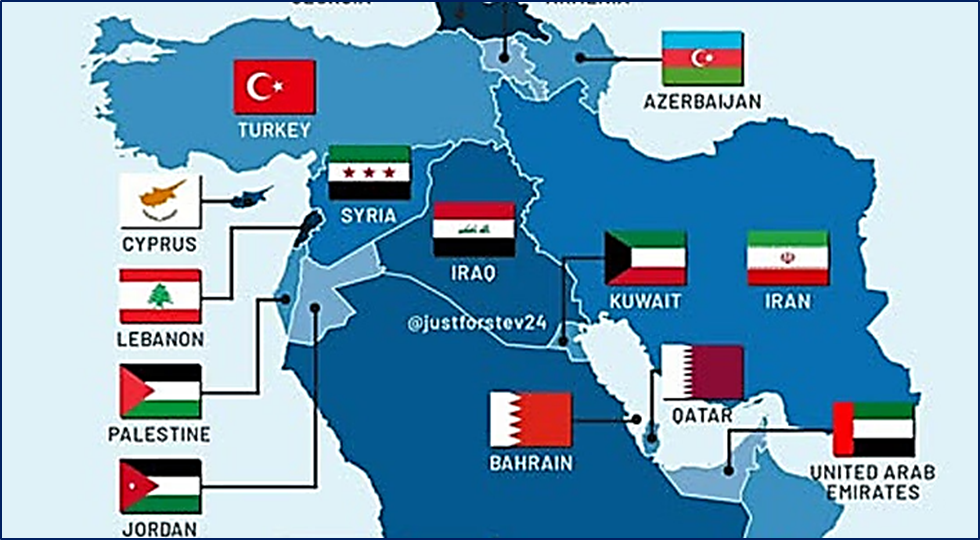
- West Asia is witnessing a major geopolitical realignment, marked by the intensification of the Iran–Israel conflict, changing Gulf security calculations and growing doubts over the reliability of the traditional U.S.-led security architecture.
- Countries such as Saudi Arabia, UAE, Türkiye and Pakistan are increasingly seeking greater strategic autonomy and new security partnerships.
- For India, the developments are significant because West Asia is closely linked with its energy security, diaspora, trade, maritime routes, connectivity projects and strategic interests.
Introduction
West Asia constitutes India’s extended strategic neighbourhood, linking the country’s interests in energy, trade, diaspora, connectivity and maritime security. However, the region’s rapidly evolving security order and the emergence of new power alignments now require India to shift from passive balancing to proactive regional diplomacy and bridge-building.
Importance of West Asia for India
1. Energy Security
- West Asia remains crucial for India’s energy security, as disruptions in the region can affect crude oil prices, inflation, the current account and overall economic stability.
- Stable relations with major energy suppliers help India diversify risks and secure reliable energy supplies.
2. Diaspora and Remittances
- The Gulf region hosts a large Indian diaspora whose remittances, employment and welfare are important for India’s external-sector stability.
- Strong diplomatic relations are therefore essential for protecting the rights, security and economic interests of Indian expatriates.
3. Maritime and Trade Security
- The Strait of Hormuz, Bab-el-Mandeb, Red Sea and Suez Canal are critical maritime chokepoints for India’s energy imports and merchandise trade.
- Instability in these waterways can increase shipping costs, insurance premiums and supply-chain disruptions.
4. Connectivity and Economic Interests
- West Asia is central to India’s connectivity ambitions through IMEC and Chabahar Port, linking India with Europe, Central Asia and Afghanistan.
- Deeper economic engagement can strengthen India’s position as a connectivity and trade hub.
5. Investment and Technology
- Countries such as the UAE and Saudi Arabia are important sources of investment for India’s infrastructure, energy, technology and manufacturing sectors.
- Cooperation with Israel also provides opportunities in defence technology, agriculture, water management and innovation.
6. Counter-terrorism and Security
- Cooperation with West Asian countries is important for combating terror financing, radicalisation, organised crime and transnational terrorism.
- Intelligence and security cooperation can strengthen India’s internal and national security.
India’s Strategic Stance in West Asia
1. Strategic Autonomy
- India avoids becoming part of any rigid regional military bloc and seeks to protect its independent decision-making.
- This allows India to simultaneously engage with countries having competing interests, such as Israel, Iran, Saudi Arabia and the UAE.
2. Multi-Alignment
- India’s approach has shifted from traditional non-alignment towards multi-alignment, where it develops issue-based partnerships with multiple powers.
- I2U2, IMEC, Chabahar and India–Gulf strategic partnerships reflect this approach.
3. Balancing Israel and Iran
- India maintains strong defence and technological relations with Israel, while simultaneously preserving strategic engagement with Iran, particularly through Chabahar.
- This demonstrates India’s attempt to pursue interest-based diplomacy rather than ideological alignment.
4. Deepening India–Gulf Relations
- India has transformed its relationship with Gulf countries from primarily energy and diaspora-oriented engagement to a broader strategic partnership encompassing investment, defence, technology and infrastructure.
- The UAE and Saudi Arabia have therefore become important pillars of India’s West Asia policy.
5. Act East–West Asia Linkage
- India’s engagement with West Asia complements its Indo-Pacific strategy, as maritime security and connectivity extend beyond the Indian Ocean into the Red Sea and Mediterranean.
- This reflects India’s vision of itself as a net security contributor and maritime stakeholder.
Major Challenges for India
1. Strategic Overdependence on Israel/U.S.
- Excessive dependence on one strategic camp could undermine India’s strategic autonomy.
- U.S. policy towards West Asia can change with domestic political developments.
2. Balancing Iran and Israel
- India needs Israel for defence, technology, agriculture, innovation while simultaneously maintaining Iran , Chabahar, Central Asia connectivity, energy and regional access
3. Saudi–UAE Differences
- India has strong relations with both.
- Divergence among Gulf partners makes India’s traditional balancing strategy more complicated.
4. Maritime Vulnerability
- Conflict around Hormuz → Gulf → Bab-el-Mandeb → Red Sea → Suez can disrupt India’s trade and energy security.
5. Fragmented Regional Order
- Multiple competing power centres are emerging.
- Iran, Israel, Saudi Arabia, Türkiye and external powers have overlapping interests. This makes traditional bilateral diplomacy insufficient.
Way Forward: India’s Strategy in West Asia
1. Adopt a Proactive Regional Strategy
- India should move from merely balancing relationships among competing regional powers to actively shaping the emerging West Asian security architecture.
- India should use its good relations with different regional actors to promote dialogue, stability and confidence-building rather than remaining a passive observer.
2. Strengthen India–Saudi Arabia Strategic Partnership
- India should deepen cooperation with Saudi Arabia in defence, energy, investment, infrastructure, technology and critical minerals.
- Stronger India–Saudi relations can provide India with greater strategic leverage and enable it to contribute to regional confidence-building and stability.
3. Preserve Strategic Autonomy through Multi-Alignment
- India should continue simultaneously engaging Israel, Iran, Saudi Arabia, UAE, Qatar, Türkiye, Egypt and Jordan according to its national interests.
- India should avoid rigid military alliances and pursue issue-based alignment, thereby preserving its strategic autonomy.
4. Promote Iran–Arab Confidence-Building
- India can leverage its relatively balanced relations with both Iran and Arab Gulf countries to encourage dialogue and reduce regional mistrust.
- India should promote confidence-building measures, economic cooperation and maritime-security dialogue between competing regional actors.
5. Strengthen Maritime Security Cooperation
- India should enhance maritime cooperation with Egypt, Saudi Arabia, UAE, Oman and Red Sea littoral states to protect its trade and energy routes.
- Greater information sharing, Maritime Domain Awareness (MDA), naval exercises and anti-piracy cooperation can improve the security of Indian shipping.
Conclusion
- India cannot afford strategic passivity in West Asia. Its interests in energy, diaspora, maritime trade, connectivity and national security are too deeply intertwined with the region. India should therefore pursue proactive multi-alignment, strategic autonomy and bridge-building diplomacy, positioning itself not as part of a regional bloc but as a credible stabilising power capable of contributing to a more inclusive and predictable West Asian security architecture.
| Important CTC covered under this article I2U2 Partnership |