
After Reading This Article You Can Solve This UPSC Mains Model Question:
Agrivoltaics can simultaneously address India’s energy transition, rural income and DISCOM-finance challenges. Discuss. 10 Marks (GS 3, Economy)
Context
India faces a dual challenge of rising energy demand and persistent financial stress in agricultural electricity supply. Agricultural consumers often receive highly subsidised electricity, widening the gap between the cost of supply and tariff realisation. At the same time, India needs to rapidly expand renewable energy while improving farm incomes.
Introduction
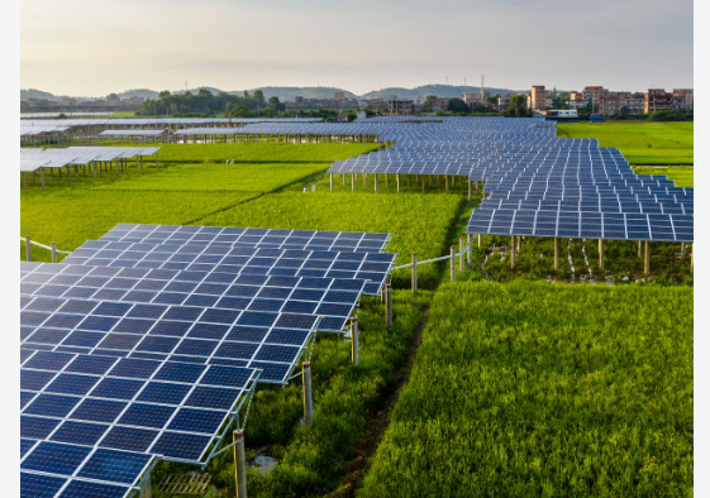
Agrivoltaics (Agri-PV) integrates solar photovoltaic generation with agricultural activities, enabling the simultaneous production of food and clean energy. It offers a pathway to address India’s rising energy demand, agricultural power subsidies and low farm incomes. By enabling farmers to generate and sell electricity, it can shift them from subsidised consumers to energy producers.
Significance: Agri-PV as a Catalyst for Sustainable Agriculture, Energy Security and Rural Transformation
1. Fiscal Sustainability & DISCOM Viability
- Agri-PV can reduce dependence on heavily subsidised agricultural electricity, thereby lowering the financial burden on DISCOMs.
- Distributed generation closer to farms can also reduce procurement and transmission-related costs.
2. Diversification of Farmers’ Incomes
- It enables farmers to earn simultaneously from agriculture and electricity generation, creating an additional and relatively predictable revenue stream.
- Farmers can transition from energy consumers to energy producers and entrepreneurs.
3. Accelerated Renewable-Energy Transition
- Agri-PV expands decentralised solar capacity while reducing dependence on conventional, carbon-intensive electricity sources.
- Generation closer to consumption points can also help reduce transmission losses and distribution pressures.
4. Rural Economic Multiplier
- Higher and diversified farm incomes can increase rural purchasing power, stimulating demand for goods, services and local enterprises.
- This can create a multiplier effect through consumption, investment and employment generation.
5. Cooperative & Inclusive Rural Development
- Solar cooperatives can pool small landholdings, finance, technology and market access, enabling small farmers to participate in the renewable-energy economy.
- The Operation Flood model illustrates how cooperative institutions and catalytic finance can transform fragmented rural production.
6. Circular Bio-Energy Economy
- Agri-PV can be integrated with livestock, enabling solar power generation alongside biogas and organic-manure production from cattle dung.
- This creates multiple revenue streams while promoting resource recycling and sustainable agriculture.
7. Energy Security & Future Demand Management
- With rising electricity demand from AI data centres, industries and electrification, decentralised solar can strengthen India’s energy-supply base.
- Integration with battery or pumped storage and local grids can improve reliability while reducing dependence on vulnerable energy-storage supply chains.
Challenges: Ensuring Sustainable and Inclusive Solarisation
1. Land, Livelihood & Equity Concerns
- Poorly planned solar projects may compete with agriculture, while fragmented holdings can limit small farmers’ participation.
- Agri-PV and cooperative/community models can enable dual land use and broader farmer participation.
2. High Capital & Financing Constraints
- Solar panels, inverters, storage and grid connectivity involve substantial upfront investment, particularly for small and marginal farmers.
- Access to low-cost credit, subsidies and innovative financing models remains critical for viability.
3. DISCOM & Tariff Sustainability
- Poorly designed feed-in tariffs or procurement arrangements can increase the financial burden on already-stressed DISCOMs.
- Tariffs must balance farmer incentives, consumer affordability and DISCOM financial sustainability.
4. Grid Integration & Infrastructure Constraints
- Decentralised solar generation can cause voltage fluctuations, reverse power flows, local congestion and additional balancing requirements.
- Solarisation must be accompanied by smart grids, network upgrades and better forecasting systems.
5. Intermittency & Reliability of Supply
- Solar generation varies with weather and daylight, while emerging loads such as AI data centres and energy-intensive industries require reliable electricity.
- A resilient system therefore requires Solar + Storage + Grid Strengthening, rather than solar generation alone.
6. Critical Minerals & Supply-Chain Security
- Dependence on imported minerals and battery technologies can expose India to price volatility and geopolitical supply-chain disruptions.
- Diversifying storage technologies, promoting battery recycling and domestic mineral-processing capacity can strengthen energy security.
7. Institutional & Implementation Coordination
- Agriculture, power, renewable energy and rural-development programmes often operate through separate institutional frameworks.
- Integrated planning, inter-ministerial coordination and farmer-centric implementation are essential for scaling solarisation effectively.
Committee/Institutional Recommendations
1. CEA — Power-sector planning: Strengthen grid planning, distributed generation integration and storage capacity so that decentralised renewable energy does not undermine grid stability.
2. MNRE — Renewable-energy expansion: Promote decentralised solar generation and innovative models that enable farmer participation and ownership, rather than limiting farmers to land-leasing arrangements.
3. NITI Aayog — Agricultural transformation: The broader objective of agricultural reforms should be income diversification and creation of non-farm revenue streams, making energy generation a potential supplementary source of farm income.
Way Forward: Building a Farmer-Centric and Integrated Rural Energy System
1. Shift from Consumption Subsidies to Productive Energy Support
- Gradually redirect a part of agricultural electricity subsidies towards renewable-energy assets that reduce long-term power costs.
- This can transform subsidies from recurring expenditure into productive investment in rural energy infrastructure.
2. Ensure Economically Viable and Sustainable Tariffs
- Adopt calibrated feed-in tariffs that balance farmer returns, avoided procurement costs and DISCOM financial sustainability.
- Transparent and differentiated tariffs can encourage decentralised generation without creating excessive fiscal burdens.
3. Promote Collective Farmer Ownership
- Encourage FPOs, cooperatives and community-owned solar projects to pool land, capital and generation capacity.
- Collective models can overcome fragmented holdings while allowing farmers to participate as energy producers, not merely land providers.
4. Mobilise Blended and Affordable Finance
- Combine public finance, concessional credit, development finance and private capital to reduce upfront investment requirements.
- Credit guarantees and interest support can further improve access for small and marginal farmers.
5. Build Solar–Storage–Grid Systems
- Design new Agri-PV projects around an integrated model of solar generation, storage and local grid infrastructure.
- This can improve reliability, manage intermittency and enable better utilisation of decentralised renewable power.
6. Strengthen Decentralised Energy Infrastructure
- Upgrade rural distribution networks through smart grids, transformers, smart meters, energy-management systems and local storage.
- Stronger last-mile infrastructure will enable greater renewable-energy penetration while improving supply reliability.
7. Create Integrated Rural Circular-Energy Systems
- Link Agri-PV, livestock, biogas, organic manure and agriculture to create multiple complementary revenue streams.
- The broader objective should be democratisation of renewable-energy ownership, rather than merely solarisation of agricultural land.
Conclusion
Agri-PV provides an opportunity to simultaneously address India’s energy transition, agricultural subsidy burden, DISCOM stress and low farm incomes. Its success, however, will depend on avoiding a narrow infrastructure-centric approach.
| Important Current to Concept From This Article for UPSC Agrivoltaics (Agri-PV) DISCOM |