
After Reading This Article You Can Solve This UPSC Mains PYQ (2024):
Critically analyse India’s evolving diplomatic, economic and strategic relations with the Central Asian Republics (CARs), highlighting their increasing significance in regional and global geopolitics. 15 Marks (GS2, International Relation)
Context
Prime Minister Narendra Modi’s August 29–September 1, 2026 visit to Uzbekistan and the Kyrgyz Republic comes at a time when Central Asia is emerging as a critical arena of India-China strategic competition, connectivity politics, energy security and post-Afghanistan regional security.
Introduction
Central Asia is India’s extended neighbourhood and a strategic bridge between South Asia, Russia, China and Europe. India’s engagement seeks to combine security, connectivity, energy, economic interests and civilisational diplomacy while maintaining strategic autonomy.
Evolution of India–Central Asia Relations
- Post-1991 (Initial Engagement):
- India promptly recognized the independence of all five Central Asian Republics (Kazakhstan, Kyrgyzstan, Tajikistan, Turkmenistan, and Uzbekistan) following the Soviet dissolution.
- Early diplomatic efforts centered on establishing missions, conducting goodwill visits, offering technical assistance, and fostering cultural ties.
- The 2000s (Phase of Limited Engagement):
- Bilateral relations stagnated due to geographical barriers, weak regional connectivity, and low economic engagement.
- India’s strategic focus was diverted toward South Asia, major global powers (US, Russia, EU), and implementing domestic economic reforms.
- 2012 (The Strategic Pivot):
- India launched the “Connect Central Asia Policy”.
- This framework aimed to comprehensively deepen political, economic, security, and cultural cooperation.
- 2015 (Assertive Outreach):
- India initiated a highly assertive diplomatic phase, undertaking comprehensive outreach to all five Central Asian nations to signal a renewed and stronger political prioritization.
- 2019 & 2022 (Institutionalization):
- Relations were officially institutionalized with the launch of the India–Central Asia Dialogue in 2019.
- The relationship reached a strategic peak with the first India–Central Asia Summit in 2022, creating a structured, high-level platform dedicated to advancing regional connectivity, security, and trade.
Significance of Central Asian Region for India
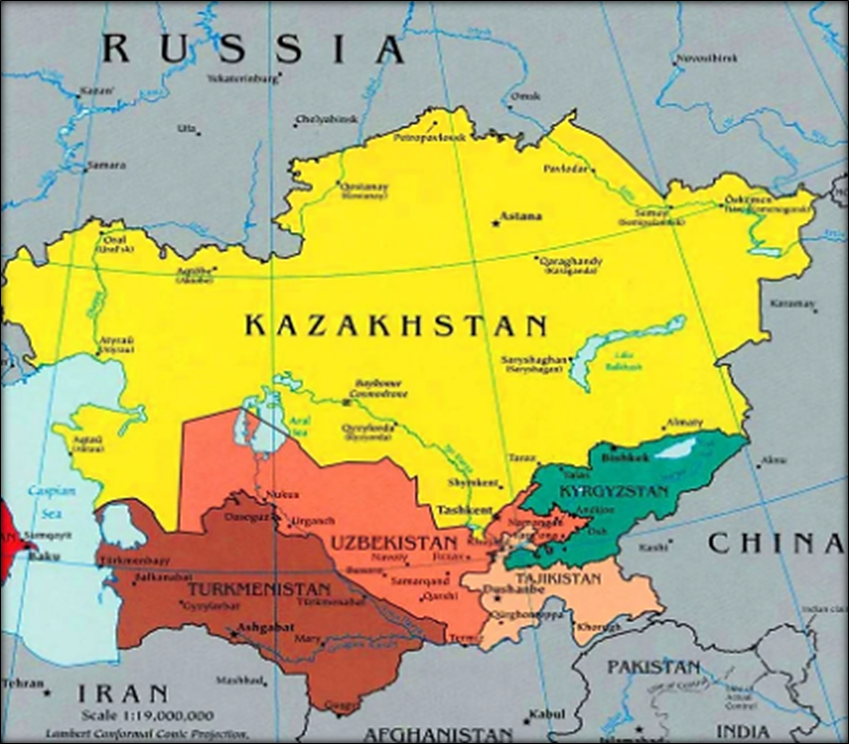
- Geostrategic significance: Central Asia comprising Kazakhstan, Kyrgyzstan, Tajikistan, Turkmenistan and Uzbekistan occupies a pivotal location between Russia, China, Afghanistan, Iran and the Caspian region, making it vital for India’s continental strategy.
- Extended neighbourhood: India considers Central Asia its “extended neighbourhood”, complementing its maritime engagement in the Indo-Pacific with a stronger continental presence.
- Strategic competition: The region has emerged as an arena of competition among China, Russia, Türkiye, Iran, the EU and India, making sustained Indian engagement important for preserving strategic space.
- Countering excessive Chinese influence: China’s expanding Belt and Road Initiative (BRI) presence makes deeper Indian engagement necessary to prevent excessive dependence of Central Asian states on a single external power.
- Strategic autonomy: India’s objective should not be limited to countering China but should involve offering Central Asian countries credible alternatives in connectivity, technology, healthcare, education and capacity building, consistent with India’s policy of strategic autonomy.
- Afghanistan and regional security: Instability in Afghanistan creates risks of terrorism, radicalisation, narcotics trafficking and cross-border extremism, making Central Asia important for India’s security interests.
- Counter-terrorism cooperation: Cooperation with Central Asian states can strengthen intelligence-sharing and collective action against ISIS-K and other extremist networks threatening the wider region.
- Critical minerals and uranium: Central Asia possesses significant uranium and strategic mineral resources, particularly Kazakhstan, making the region relevant to India’s energy security and critical-mineral strategy.
- INSTC: The International North-South Transport Corridor (INSTC) can connect India with Iran, the Caspian region, Russia and Central Asia, thereby strengthening India’s Eurasian connectivity.
- Chabahar–INSTC integration: Greater integration of Chabahar with the INSTC can reduce transportation barriers and improve the commercial viability of India’s engagement with Central Asia.
- Ashgabat Agreement: India’s participation in the Ashgabat Agreement provides another framework for developing multimodal transport connectivity with Central Asian countries.
Importance of Shanghai Cooperation Organisation (SCO)
- Institutional platform: India became a full member of the SCO in 2017, providing an institutional mechanism to engage Central Asia, Russia and China simultaneously.
- Central Asian outreach: The SCO provides India with an important multilateral platform for sustained engagement with the Central Asian republics, complementing bilateral diplomacy.
- Counter-terrorism: The organisation provides a platform for cooperation against terrorism, separatism and extremism, which is particularly important in the context of Afghanistan and extremist networks.
- Afghanistan: The SCO enables India to participate in regional discussions on Afghanistan’s security situation, particularly its implications for terrorism, radicalisation and regional stability.
- Engagement with Russia and China: The organisation allows India to engage both Russia and China within the same institutional framework, supporting dialogue while managing strategic competition.
- Strategic autonomy: Participation in the SCO strengthens India’s multi-alignment and strategic autonomy by preventing its Eurasian engagement from becoming dependent on any single major power.
- Connectivity: The SCO provides a platform for discussing regional connectivity and economic cooperation, complementing India’s bilateral initiatives such as Chabahar and the INSTC.
- 2026 Bishkek Summit: Prime Minister Modi’s participation in the 26th SCO Council of Heads of State meeting in Bishkek reinforces India’s renewed engagement with Central Asia and the wider Eurasian region.
- SCO+ format: The expanding SCO+ format provides India an opportunity to engage a broader group of Eurasian and regional actors and strengthen its multilateral diplomacy.
- Managing geopolitical competition: The SCO allows India to maintain dialogue with China and Russia even amid geopolitical differences, thereby supporting conflict management and diplomatic engagement.
Major Challenges for India
1. Connectivity deficit
- The absence of direct land connectivity through Pakistan remains the biggest obstacle to expanding India-Central Asia trade.
2. Chinese economic dominance
- China has greater geographical proximity, financial resources and infrastructure presence, making it difficult for India to compete purely through large-scale infrastructure investment.
3. Limited economic scale
- Despite political goodwill, India’s trade with Central Asian states remains below its potential because of high transportation costs, limited connectivity and inadequate private-sector penetration.
4. Russia’s continuing influence
- Russia retains substantial historical, military and economic influence in Central Asia.
- India must therefore deepen engagement without being perceived as attempting to displace Moscow.
5. Regional instability
- Afghanistan, terrorism, extremism, border disputes, water disputes and political instability can affect the region’s economic integration.
Way Forward
1. Make connectivity commercially viable
- India should accelerate the integration of Chabahar–INSTC–Central Asian transport networks and focus on reducing logistics costs rather than merely announcing corridors.
2. Move from diplomacy to economic delivery
- High-level visits should translate into business-to-business partnerships, investment projects, banking mechanisms and easier trade procedures.
3. Build critical-mineral partnerships
- India should establish long-term supply chains for uranium and critical minerals through investment, technology partnerships and processing cooperation.
4. Strengthen digital diplomacy
- India can offer Central Asian countries cooperation in UPI-like payment systems, digital identity, fintech, e-governance and digital public infrastructure.
5. Expand security cooperation
- Intelligence-sharing, counter-terrorism training, cyber-security cooperation and joint exercises should be strengthened to address threats emanating from Afghanistan.
6. Leverage civilisational soft power
- India should expand Buddhist, Sufi, educational, cultural and tourism diplomacy to build deeper societal connections.
9. Use SCO strategically
- India should utilise the SCO to promote a rules-based, terror-free and economically connected Eurasian region, while resisting attempts to turn the organisation into an instrument of bloc politics.
10. Institutionalise Central Asian engagement
- India should move from episodic summit diplomacy towards regular India-Central Asia institutional mechanisms, with measurable targets for trade, connectivity, investment, education and security.
Conclusion
India’s Central Asian strategy must evolve from high-level diplomatic outreach to sustained economic and strategic delivery. By combining connectivity, critical-mineral partnerships, counter-terrorism, digital cooperation and civilisational diplomacy, India can secure its interests while respecting Central Asia’s strategic autonomy.
| Important Current To Concept From This Article For UPSC: Shanghai Cooperation Organisation (SCO) |