
Context
- Recently, India’s Defence Minister Rajnath Singh has been scheduled to travel to Bishkek, Kyrgyzstan, on April 27-28, 2026, to participate in the Shanghai Cooperation Organisation (SCO) Defence Ministers’ meeting.
- This high-level visit aims to address pressing regional security challenges, including terrorism and extremism, amidst rapidly shifting global alignments. The meet is significant as it provides a platform for India to engage in bilateral discussions with member states to enhance strategic partnerships and reinforce its commitment to Eurasian stability.
1. Overview and Evolution
The SCO is a permanent intergovernmental international organization established to ensure security and maintain stability across the vast Eurasian region.
- Genesis: It evolved from the Shanghai Five (1996), which consisted of China, Russia, Kazakhstan, Kyrgyzstan, and Tajikistan.
- Establishment: The SCO was officially founded on June 15, 2001, in Shanghai, with the addition of Uzbekistan.
- Charter: The SCO Charter was signed in 2002 and entered into force in 2003, serving as the organization’s fundamental legal document.
2. Membership and Expansion
The SCO has transitioned from a Central Asian centric group to a major Eurasian power bloc.
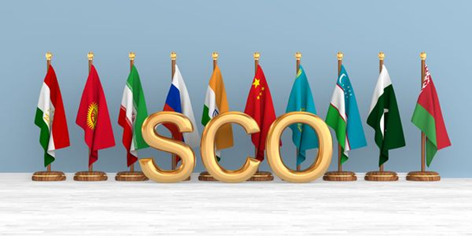
- Current Members (10): China, Russia, Kazakhstan, Kyrgyzstan, Tajikistan, Uzbekistan, India, Pakistan, Iran (joined 2023), and Belarus (joined 2024).
- India and Pakistan: Both countries became permanent members during the Astana Summit in 2017.
- The 2025 Reform: The summit in Tianjin streamlined the organization by merging “Observer States” and “Dialogue Partners” into a single Partner Status category to enhance operational efficiency.
3. Institutional Structure
The SCO operates through several specialized bodies to handle political and security mandates.
- Council of Heads of State (CHS): This is the supreme decision-making body that meets annually to define the organization’s primary goals.
- Secretariat: Based in Beijing, China, it provides administrative and technical support.
- Regional Anti-Terrorist Structure (RATS): Headquartered in Tashkent, Uzbekistan, it is a permanent organ focused on combating the “three evils”: terrorism, separatism, and extremism.
- Official Languages: The working languages of the organization are Russian and Chinese.
4. Key Principles and Strategic Focus
- Shanghai Spirit: The organization is guided by principles of mutual trust, mutual benefit, equality, and respect for cultural diversity.
- Security Focus: A major portion of SCO’s activity involves intelligence sharing and joint military exercises, such as the “Peace Mission” series.
- Economic Connectivity: The SCO serves as a platform for discussing energy security and the development of transit corridors, though India remains cautious of projects like the Belt and Road Initiative (BRI).
5. Current Leadership (2025–2026)
- Chairmanship: The Kyrgyz Republic currently holds the chairmanship for the 2025–2026 period.
- Theme: The motto for the current tenure is “25 Years of the SCO: Together Towards Sustainable Peace, Development, and Prosperity.”
Q. Consider the following statements regarding the Shanghai Cooperation Organisation (SCO):
Statement I: The Regional Anti-Terrorist Structure (RATS), a permanent organ of the SCO, is headquartered in the same city as the SCO Secretariat.
Statement II: Belarus became the tenth full member of the SCO during the summit held in 2024.
Which one of the following is correct in respect of the above statements?
A) Both Statement I and Statement II are correct and Statement II is the correct explanation for Statement I.
B) Both Statement I and Statement II are correct and Statement II is not the correct explanation for Statement I.
C) Statement I is incorrect but Statement II is correct.
D) Statement I is correct but Statement II is incorrect.
Solution: C
• STATEMENT I IS INCORRECT: While the SCO Secretariat is located in Beijing, China, the RATS executive committee is headquartered in Tashkent, Uzbekistan.
• STATEMENT II IS CORRECT: Belarus officially joined as the 10th full member in 2024, following Iran's induction in 2023, expanding the organization's footprint into Eastern Europe.