
Context
- According to Reserve Bank of India (RBI) data, the central bank’s special USD-INR forex swap facility– introduced on June 8 to cushion forex outflows from high global oil prices and foreign capital flight—mobilised over $136 billion ($1,36,377 million).
Break-up of the $136 Billion Mobilised
- FCNR(B) deposits – $127,226 million (the largest share)
- OFCBs (Overseas Foreign Currency Borrowings) – $5,260 million
- ECBs (External Commercial Borrowings) – $3,891 million
Strategy used by the RBI
1. Closing Short Forward Dollar Positions
- The RBI holds an outstanding short forward dollar position of roughly $137 billion (contracts where it committed to sell dollars at a future date).
- Market experts note the RBI can prioritise using these fresh FCNR(B) dollar inflows to settle those contracts directly instead of rolling them over.
2. Protecting Spot Reserves
- Delivering dollars from these swap receipts enables the central bank to defend the rupee and meet future obligations without directly depleting spot foreign exchange reserves.
Key Financial & Economic Concepts
1. Foreign Currency Non-Resident (Bank) [FCNR(B)] Deposits
- Term deposits maintained in designated foreign currencies (e.g., USD, GBP, EUR) by Non-Resident Indians (NRIs) and Overseas Citizens of India (OCIs).
- Key Feature: Foreign exchange risk is borne by the bank (or central bank scheme), not the depositor. Principal and interest are fully repatriable.
2. USD-INR Forex Swap Facility
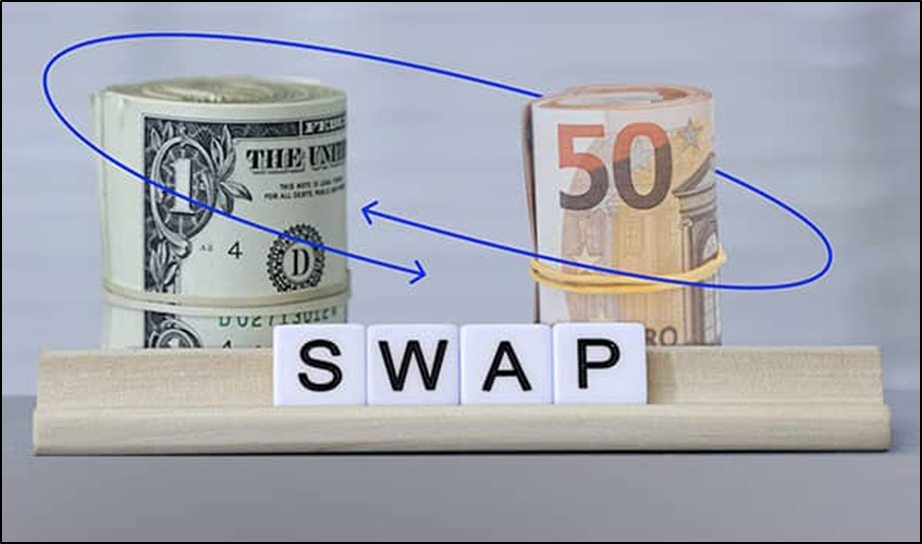
- A monetary tool where the RBI buys foreign currency (USD) from commercial banks in exchange for domestic currency (INR) at the prevailing spot rate, while simultaneously agreeing to sell back the dollars at a future date (forward rate).
- Purpose: Injects Rupee liquidity into the domestic banking system while augmenting central bank foreign exchange reserves.
3. Short Forward Dollar Position
- Currency derivative contracts where the central bank agrees to sell dollars at a predetermined rate at a future date.
- Strategic Utility: Defends the domestic currency against depreciation without immediately drawing down spot foreign exchange reserves. As per industry analysis, RBI may utilise incoming foreign currency deposits to settle/close these outstanding short forward obligations.
4. Liquidity & Call Rate Management
- Large foreign currency inflows converted to domestic currency lead to surplus Rupee liquidity in the banking system.
- RBI Action: The central bank absorbs surplus Rupee liquidity to prevent short-term money market call rates from falling below the policy repo rate, controlling inflationary pressures.
Impact on Domestic Liquidity and the Banking Sector
I. Rupee Influx & Inflation Risk:
- Forex operations can inject rupee liquidity into banks.
- Excess liquidity may push the call money rate below the repo rate and create inflationary pressures.
II. Sterilisation Measures: RBI absorbs surplus liquidity through tools such as the Standing Deposit Facility (SDF) and repo operations to maintain its monetary-policy stance.
III. Benefits for Banks:
- Greater access to stable, relatively low-cost funds can reduce dependence on costly wholesale deposits.
- This can support domestic credit growth over the medium term.
| Important Current to Concept (CTC) from this article for UPSC Foreign Currency Non-Resident (Bank) [FCNR(B)] Overseas Foreign Currency Borrowings (OFCBs) External Commercial Borrowings (ECBs) |
Q. With reference to the Reserve Bank of India’s (RBI) USD-INR forex swap operations and foreign currency accounts, consider the following statements:
1. Under a USD-INR buy/sell swap, the immediate injection of foreign exchange into the RBI’s reserves simultaneously drains primary Rupee liquidity from the domestic banking system.
2. In a Foreign Currency Non-Resident (Bank) [FCNR(B)] deposit account, the exchange rate fluctuation risk is borne by the commercial bank rather than the depositor.
Which of the statements given above is/are correct?
A) 1 only
B) 2 only
C) Both 1 and 2
D) Neither 1 nor 2
Answer: B
Explanation
• Statement 1 is incorrect: In a buy/sell forex swap, the RBI purchases US dollars from banks and pays them in Rupees. This injects primary Rupee liquidity into the banking system, rather than draining it.
• Statement 2 is correct: FCNR(B) accounts are held directly in foreign currencies (like USD or EUR). The bank must return the principal and interest in that foreign currency, so the bank bears the exchange rate risk.