
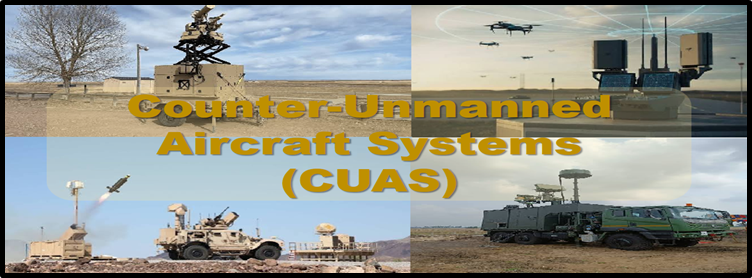
About Counter-Unmanned Aircraft Systems (C-UAS)
- Counter-Unmanned Aircraft Systems (C-UAS) are integrated systems designed to detect, identify, track and neutralise unauthorised or hostile drones/UAVs.
- They are increasingly important because small drones can fly at low altitude, have a small radar signature and may evade conventional air-defence systems.
Why C-UAS are needed
- Difficult to detect: Small, low-flying drones can evade conventional air-defence systems, creating a need for C-UAS.
- Drones can be used for surveillance, reconnaissance, smuggling and delivering harmful payloads, requiring dedicated countermeasures.
- Large numbers of drones can overwhelm conventional defences, making C-UAS essential for layered protection.
The Architecture of C -UAS
A C-UAS system detects, tracks, identifies, assesses and neutralises hostile drones.
| Layer | Major technologies | Purpose |
| Detection | Radar, RF sensors | Locate possible drone |
| Tracking | Radar + EO/IR cameras | Follow its movement |
| Identification | EO/IR, RF/COMINT | Distinguish drone from birds/other objects |
| Command & Control | C2/C3 system | Fuse sensor information and coordinate response |
| Neutralisation | Soft-kill / hard-kill measures | Stop or disable the drone |
Challenges
C-UAS faces challenges in detecting and distinguishing small, slow-moving drones, especially in urban/cluttered environments and against birds, while also dealing with autonomous drones and swarms.
It must also respond rapidly to drones that may operate without conventional navigation or communication links.
Conclusion
C-UAS has become a frontline necessity as drones reshape battlefield and internal-security threats. India is building an indigenous, layered counter-drone ecosystem through SAKSHAM, D4, Bhargavastra and Sudarshan Chakra, aligned with the National Counter Rogue Drone Guidelines.
| This concept has been elaborately discussed in the following article – Indian Air Force DRONATHON Initiative |