
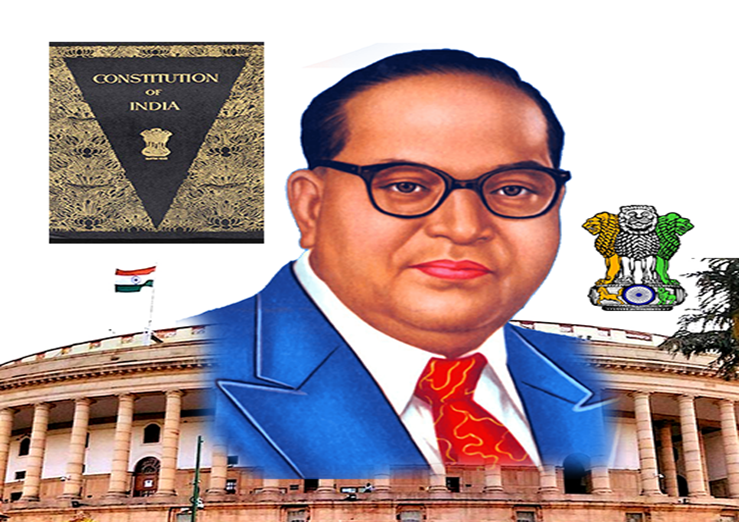
About B.R Ambedkar
Born in 1891 into a marginalized Dalit family, Dr. Ambedkar overcame severe discrimination to become the chief architect of the Indian Constitution. He dedicated his life to the annihilation of caste and the creation of a strong, rights-based democratic republic.
Early Life & Education
- Academic Excellence: He was among the first Dalit students at Mumbai’s Elphinstone High School.
- Global Exposure: He pursued higher education at Columbia University and the London School of Economics, equipping him to fight social injustice legally and intellectually.
Social Contributions & Political Mobilisation
- Social Upliftment: Founded the Bahishkrit Hitkarini Sabha (1924) to promote education and socio-economic awareness among Dalits.
- Anti-Caste Movements: Led the Mahad Satyagraha (1927) and the Kalaram Temple Entry Movement (1930) to demand equal civic and religious rights.
- Political Rights: Advocated for Dalit representation at the Round Table Conferences, leading to the Poona Pact (1932), which secured reserved legislative seats.
- Political Platforms: Established the Independent Labour Party (1936) and the Scheduled Castes Federation (1942) to protect working-class interests.
Economic Contributions
- Currency & RBI: His book, The Problem of the Rupee (1923), recommended a managed currency system that directly influenced the creation of the Reserve Bank of India (RBI).
- Financial Federalism: Laid the constitutional groundwork for the Finance Commission (Article 280) to ensure fair tax distribution between the Centre and the States.
- Infrastructure & Welfare: As Labour Member (1942–46), he pushed for state-led welfare and multipurpose river projects like the Damodar Valley Corporation.
Constitutional Contributions
- Drafting the Constitution: As Chairman of the Drafting Committee, he embedded justice, liberty, equality, and fraternity into the nation’s core framework.
- Protecting Rights: Introduced Article 32 to guarantee the judicial protection of Fundamental Rights and ensured the formal abolition of untouchability.
- Democratic Vision: Favored a strong central government and parliamentary democracy to protect minority rights and maintain national unity.
Ambedkar vs. Gandhi: Ideological Differences & Similarities
- Differences in Approach: Ambedkar sought the complete destruction of the caste system through legal reforms, while Gandhi favored gradual moral reform within the Hindu framework.
- Vision of Democracy: Ambedkar supported a strong central democracy, whereas Gandhi envisioned decentralized Gram Swaraj (village self-rule).
- Shared Goals: Despite different methods, both leaders were deeply committed to social justice, uplifting the marginalized, and uniting the nation against colonial rule.
Conclusion
Dr. B.R. Ambedkar famously warned that political democracy cannot survive without social democracy. His legacy of constitutional morality and institutional safeguards remains the guiding force for building a truly equal and just India.
| This concept has been elaborately discussed in the following article — The Role and Relevance of Public Intellectuals in Strengthening Democracy |