
After Reading This Article You Can Solve This UPSC Mains Model Question:
“The conservation of the pygmy hog is inseparable from the conservation of India’s threatened alluvial grassland ecosystems.” Discuss the ecological significance of the pygmy hog, the threats to its survival, and the conservation measures required for its long-term recovery. 15 marks (GS 3 Environment)
Context
The pygmy hog’s recovery in Assam demonstrates that species conservation cannot succeed through captive breeding alone; its long-term survival depends upon restoring dynamic alluvial grassland ecosystems.
Introduction
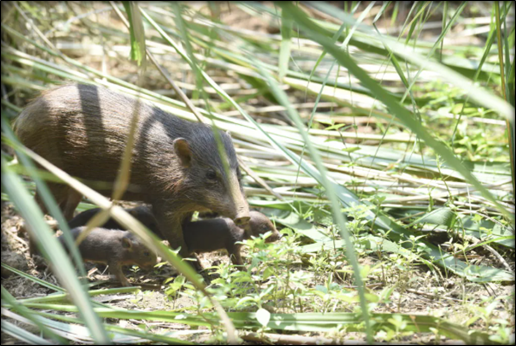
The pygmy hog (Porcula salvinia), the world’s smallest wild suid, is Critically Endangered and confined to Assam, making its conservation an important test of ecosystem-based wildlife management.
Present Situation
- Extremely restricted distribution: The species historically occupied tall, wet grasslands along the Himalayan foothills, but its wild distribution has contracted drastically, with Manas National Park remaining its principal stronghold.
- Small and difficult-to-monitor population: Estimates have generally placed the wild population in the 150–250 range, although precise enumeration remains difficult because the animal is secretive and inhabits dense grasslands.
- Captive breeding has created an insurance population: The Pygmy Hog Conservation Programme (PHCP), launched in 1995, developed captive-breeding facilities in Assam and subsequently reintroduced captive-bred individuals into protected grasslands.
- Significant recovery through reintroduction: Between 2008 and 2023, around 170 captive-bred pygmy hogs were released at different sites in Assam, demonstrating the feasibility of conservation breeding combined with habitat restoration.
- Recent rewilding continues: In 2026, 15 captive-bred pygmy hogs were released into Kuribeel grasslands of Manas, returning the species to an area associated with its original conservation efforts.
Factors Responsible for the Threat
- Conversion of grasslands: Alluvial floodplains have been converted for agriculture, settlements, tea plantations and infrastructure, reducing the continuous grassland habitat required by pygmy hogs.
- Flood-control interventions: Embankments and other flood-control measures can modify the natural flooding, sediment deposition and vegetation dynamics of floodplains, thereby altering suitable grassland habitats.
- Invasive vegetation: Invasive plants can replace native tall grasses, reducing food availability and the dense vegetation required for foraging, nesting and concealment.
- Unsustainable fire regimes: Dry-season burning, when poorly timed or excessively extensive, can destroy the dense grass cover required by pygmy hogs; conversely, complete fire suppression can allow woody vegetation to invade grasslands.
- Habitat fragmentation: Fragmentation isolates small populations, restricts dispersal and increases vulnerability to local extinction and genetic erosion.
Challenges Faced by the Ecosystem
- Grassland–forest succession: Alluvial grasslands are naturally dynamic; excessive suppression of ecological processes can allow shrubs and trees to encroach, converting grassland into woodland.
- Balancing fire ecology: Fire is an ecological process in many grasslands, but inappropriate timing, frequency or intensity can eliminate the vegetation structure needed by pygmy hogs and other grassland specialists.
- Multiple-species conservation dilemma: Grassland management must simultaneously accommodate species such as the Bengal florican, hispid hare, hog deer and greater one-horned rhinoceros, rather than focusing exclusively on one flagship species.
- Small isolated populations: Concentration of the remaining population in limited habitats increases vulnerability to disease outbreaks, extreme floods, fires, demographic fluctuations and stochastic events.
- Monitoring difficulty: The animal’s small size, secretive behaviour and dense habitat make conventional population estimation difficult, necessitating camera traps, field signs, telemetry and genetic monitoring.
Ecological Significance of the Pygmy Hog
- Indicator species: The pygmy hog is closely associated with healthy tall, wet alluvial grasslands; therefore, its population trends can signal broader degradation of floodplain ecosystems.
- Umbrella-species potential: Conserving its grassland habitat can simultaneously protect several threatened species, including the Bengal florican, hispid hare and hog deer, generating wider biodiversity benefits.
- Soil ecosystem functions: Its rooting and foraging behaviour disturbs and aerates soil while searching for roots, tubers, invertebrates and other food, contributing to nutrient cycling.
- Seed dispersal: Its feeding and movement behaviour can contribute to seed dispersal, thereby supporting vegetation dynamics within grassland ecosystems.
- Grassland conservation indicator: Recovery of the pygmy hog therefore represents more than saving a rare mammal; it indicates progress towards restoring the ecological integrity of the Brahmaputra–Terai alluvial grassland landscape.
Government and Conservation Initiatives
- Pygmy Hog Conservation Programme (1995): Established through collaboration involving conservation organisations and government agencies, the PHCP combines research, captive breeding, habitat management, reintroduction and community participation.
- Captive breeding: Six wild pygmy hogs were brought into the breeding programme in the 1990s, establishing a founder population from which subsequent captive-bred animals were produced.
- Habitat restoration: Conservation programmes have worked to create and restore open grasslands, including through invasive-species removal and planting of native grasses.
- Reintroduction programme: Earlier releases included 116 captive-bred hogs across Sonai Rupai, Orang and Barnadi between 2008 and 2018, demonstrating the use of multiple protected landscapes rather than relying exclusively on one site.
- Legal protection: The pygmy hog receives Schedule I protection under India’s Wildlife (Protection) Act, 1972, providing the highest level of statutory protection under the Act.
Way Forward
- Adopt ecosystem-first conservation: Shift from merely increasing captive numbers towards restoring the entire alluvial grassland–floodplain ecological process on which wild populations depend.
- Restore habitat connectivity: Reconnect fragmented grasslands and strengthen buffer zones around Manas, Orang and Sonai Rupai, enabling dispersal and reducing isolation.
- Restore native vegetation: Establish nurseries for indigenous grass species and systematically remove invasive plants, as demonstrated by recent habitat-restoration work at Manas.
- Improve scientific monitoring: Combine camera trapping, radio/GPS telemetry, environmental DNA and genetic sampling to obtain more reliable population estimates and understand dispersal.
- Landscape-level planning: Integrate pygmy-hog conservation with management of Bengal florican, rhino, hog deer and hispid hare, converting species-specific programmes into grassland ecosystem restoration.
Conclusion
The pygmy hog symbolises the health of India’s threatened floodplain grasslands; securing its future therefore requires moving beyond captive breeding towards landscape restoration, ecological connectivity and adaptive management.
| Important Current To Concept From This Article: Pygmy hog Manas National Park Orang National Park Sonai Rupai Wildlife Sanctuary |