
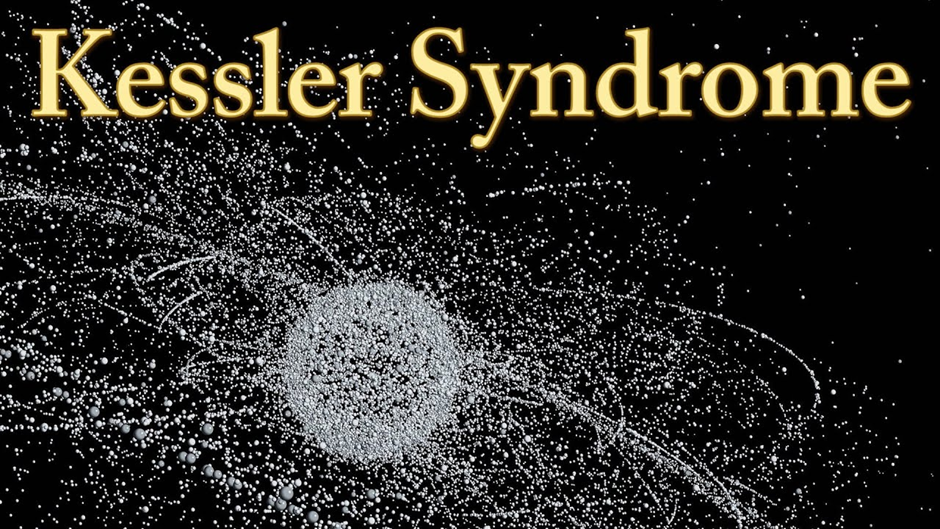
About Kessler Syndrome
- Proposed by NASA scientist Donald J. Kessler in 1978, it describes a theoretical tipping point in Low Earth Orbit (LEO) where the density of space objects reaches a critical mass, triggering a self-sustaining cascade of collisions.
- Mechanism: Each collision fragments existing objects, exponentially increasing the debris field and the mathematical probability of subsequent impacts, potentially rendering LEO entirely unusable for future generations.
Primary Catalysts of Orbital Congestion
- Mega-Constellations: The rapid, unregulated deployment of large-scale commercial satellite networks (e.g., Starlink, OneWeb).
- Kinetic ASAT Testing: Destructive Anti-Satellite missile tests (e.g., China 2007, Russia 2021) that intentionally shatter satellites, instantly creating thousands of trackable debris fragments.
- Abandoned Infrastructure: Defunct satellites and spent upper rocket stages that remain in orbit without propulsion, prone to fragmentation from fuel/battery explosions.
- Absence of Space Traffic Management: A lack of binding international regulatory frameworks governing orbital slot allocation and mandatory end-of-life disposal.
Prominent Incidents of Orbital Debris Proliferation
- Chinese ASAT Test (2007): The deliberate kinetic destruction of the Fengyun-1C satellite, which generated over 3,000 trackable fragments in a single event.
- Cosmos-Iridium Collision (2009): The first accidental hypervelocity impact between an active commercial satellite and a defunct military asset, practically validating the Kessler threat.
- Russian ASAT Test (2021): The kinetic interception of the Cosmos 1408 satellite, producing a high-density debris cloud that immediately endangered the International Space Station (ISS).
Strategic & Economic Implications
- Global Infrastructure Collapse: Severe LEO degradation threatens the total disruption of global GPS navigation, secure military communications, telecommunications, and synchronized financial markets.
- Manned Spaceflight Threat: Drastically increases the fatal risk to astronauts aboard the ISS and future manned missions.
- Exploration Bottleneck: Excessive debris makes launch windows narrower and dramatically increases the insurance and operational costs of deep-space exploration.
Global & Indian Mitigation Strategies
- Active Debris Removal (ADR): Development of kinetic and non-kinetic capture technologies (nets, harpoons, robotic arms, electrodynamic tethers), spearheaded by missions like ESA’s ClearSpace-1.
- Controlled Deorbiting: Implementing mandatory post-mission disposal protocols using drag sails or reserved fuel to guide defunct assets back into the atmosphere for burn-up.
- India’s IS4OM & Project NETRA: The ISRO System for Safe and Sustainable Space Operations Management (IS4OM), supported by the NETRA observational network, enhances India’s indigenous Space Situational Awareness (SSA) and collision avoidance capabilities.
- Multilateral Governance: Adherence to the UN Space Debris Mitigation Guidelines and collaboration via the Inter-Agency Space Debris Coordination Committee (IADC).
Conclusion
The Kessler Syndrome is no longer merely a theoretical construct but an escalating, mathematically probable threat driven by aggressive militarization and commercial orbital congestion. Preventing the permanent loss of Earth’s critical orbital real estate requires immediate, binding international traffic management frameworks and urgent investment in Active Debris Removal (ADR) technologies.
| This Concept Has Been Mentioned In This Article: The Weaponisation of Space: Strategic Realities and Global Governance |