
Context
- A walkathon will be held in Munnar, Idukki district of Kerala, on 1 October 2026 to commemorate conservationist G. Rajkumar, who worked to create awareness about the conservation of Neelakurinji. The event brings attention to the unique high-altitude ecosystem of the Western Ghats.
About Neelakurinji
- Scientific name: Strobilanthes kunthiana
- Family: Acanthaceae; Genus: Strobilanthes
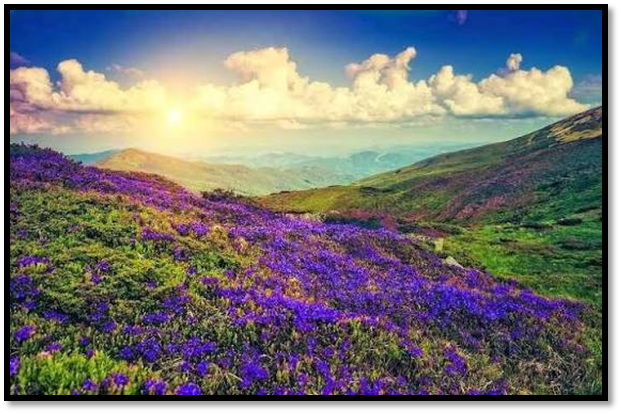
- Flowering Cycle: Exhibits a unique gregarious mass-flowering cycle occurring once every 12 years.
- Life Strategy: Plants with such long-interval blooming cycles are termed plietesials. It is semelparous (monocarpic), meaning the shrub flowers and fruits only once in its lifetime and dies shortly after.
- Habitat & Distribution: Endemic to the high-altitude montane grasslands (Shola-grassland ecosystems, often called “sky islands“) of the Western Ghats across Kerala, Tamil Nadu, and Karnataka.
- Conservation Status: Classified as Vulnerable under the IUCN Red List criteria.
- Protected Areas: Safeguarded locally in regions like the Kurinjimala Sanctuary (Idukki district, Kerala) and Eravikulam National Park.
- The last major flowering in the Munnar–Eravikulam region occurred in 2018, with the next major cycle expected around 2030.
About Eravikulam National Park
- Located in Idukki district, Kerala.
- It is an important natural habitat of Neelakurinji.
- The park is also famous for the Nilgiri Tahr.
- Its landscape consists largely of high-altitude grasslands interspersed with sholas.
- Anamudi, the highest peak of the Western Ghats, lies within the park.
About Kurinjimala Wildlife Sanctuary
- Location: Idukki district, Kerala, near Vattavada and Kottakamboor.
- Established: 2006.
- Purpose: Long-term protection of Neelakurinji (Strobilanthes kunthiana) and its habitat.
- Area: About 32 sq km.
- Ecosystem: Shola forests and grasslands, forming part of the southern Western Ghats protected-area network.
| Important CTC from this article for UPSC: Shola-grassland ecosystems Eravikulam National Park |
Q. Consider the following statements regarding Neelakurinji:
1. Neelakurinji is scientifically known as Strobilanthes kunthiana.
2. It is associated with the high-altitude shola-grassland ecosystems of the Western Ghats.
3. Its mass flowering generally occurs every 12 years.
4. Kurinjimala Wildlife Sanctuary is located in Idukki district of Kerala and was established for the conservation of Neelakurinji and its habitat.
Which of the statements given above are correct?
A. 1 and 2 only
B. 1, 2 and 3 only
C. 2, 3 and 4 only
D. 1, 2, 3 and 4
Answer: D. 1, 2, 3 and 4
• Statement 1 is correct: Neelakurinji is Strobilanthes kunthiana.
• Statement 2 is correct: It is associated with high-altitude shola-grassland habitats of the Western Ghats.
• Statement 3 is correct: It is famous for mass flowering approximately once every 12 years.
• Statement 4 is correct: Kurinjimala Wildlife Sanctuary in Idukki, Kerala, was established in 2006 for the long-term conservation of Neelakurinji and its habitat.