
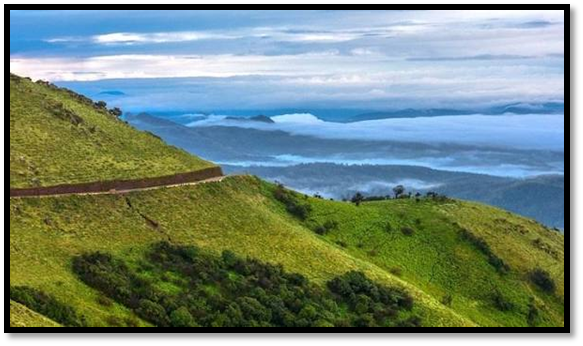
About
- Location: High-altitude southern Western Ghats, mainly 1,200–2,200 m in the Nilgiri, Anamalai and Palani hills.
- Significance: Rich in endemism and biodiversity and crucial for water regulation and catchment functions.
Key Ecological Features
- Vegetation: Short, dense evergreen Shola forests occur in sheltered valleys, while montane grasslands dominate exposed slopes and ridges.
- Climate: Cool, high-rainfall climate, frequent cloud cover and occasional frost.
- Soils: Soils are often acidic and rich in organic matter.
- Hydrological Role: Sholas act as natural water reservoirs, absorbing monsoon rainfall and releasing it gradually into rivers such as the Cauvery and Periyar.
- Biodiversity: Rich in endemics and specialized fauna, including Nilgiri Tahr, Nilgiri Pipit and Lion-tailed Macaque.
- Floral Significance: Contains unique/relict species, including Rhododendron, reflecting past climatic changes.
Conclusion
- Shola–grassland ecosystems are unique high-altitude habitats of the southern Western Ghats, combining evergreen forest patches and montane grasslands and playing an important role in biodiversity conservation and watershed regulation.
| This concept has been elaborately discussed in the following article – The Twelve Year Bloom of Neelakurinji |