
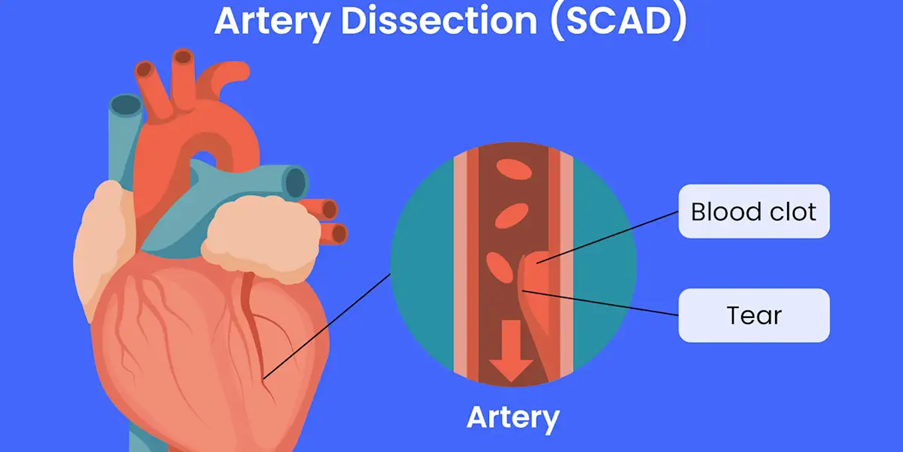
About SCAD?
- SCAD is a non-atherosclerotic condition where the inner layer of a coronary artery spontaneously tears, trapping blood inside the lining and compressing the lumen. This completely obstructs oxygen flow to the heart muscle, unlike a conventional heart attack triggered by cholesterol plaque rupture.
- Target Demographic: The condition is highly gender-specific, disproportionately affecting young women, who account for 80% to 90% of total cases. It represents up to one-third of all myocardial infarctions in women under the age of 50.
- Clinical Presentation: Patients present with classical acute coronary syndrome symptoms, including severe chest discomfort (in over 90% of cases), elevated cardiac biomarkers, and ST-segment ECG changes, despite the absence of metabolic syndrome markers like diabetes or smoking.
Etiological Factors and Physiological Triggers
- Hormonal Influence: High or fluctuating levels of estrogen and progesterone alter the cellular matrix, causing the degradation of collagen within arterial walls.
- Postpartum Vulnerability: Approximately 5% to 10% of cases occur postpartum, predominantly within the first week after delivery, frequently involving multiple coronary vessels.
- Underlying Arteriopathies: SCAD is heavily correlated with Fibromuscular Dysplasia (FMD), an idiopathic, non-atherosclerotic vascular disease causing abnormal arterial cell growth, aneurysms, and dissections.
- External Stressors: Up to two-thirds of cases are preceded by extreme external triggers. Severe emotional stressors are predominantly seen in women, whereas intense physical exertion or heavy lifting is more commonly reported in men.
Therapeutic Protocols
- Conservative Strategy: Spontaneous healing occurs in most non-occlusive cases. Standard angioplasty and stenting are generally avoided unless vessel flow is fully occluded, as mechanical intervention carries a severe risk of extending the dissection flap.
- In-Hospital Monitoring: The condition carries an estimated 15% risk of early extension or deterioration within the first few days, requiring mandatory acute inpatient observation.
- Pharmacotherapy: Beta-blockers form the mainstay of long-term therapy to reduce arterial shear stress. Routine statin therapy is not automatically indicated unless the patient has underlying atherosclerosis.
Conclusion
SCAD highlights a critical blind spot in traditional cardiovascular risk profiling, proving that heart attacks are not solely lifestyle-mediated metabolic events. Incorporating gender-sensitive diagnostic criteria and conservative therapeutic approaches is vital to preventing mortality in young, otherwise healthy demographics.
| This Concept has been discussed in the following article: The Hidden Heartbreak: The Silent Cardiac Crisis Challenging Traditional Medicine |