
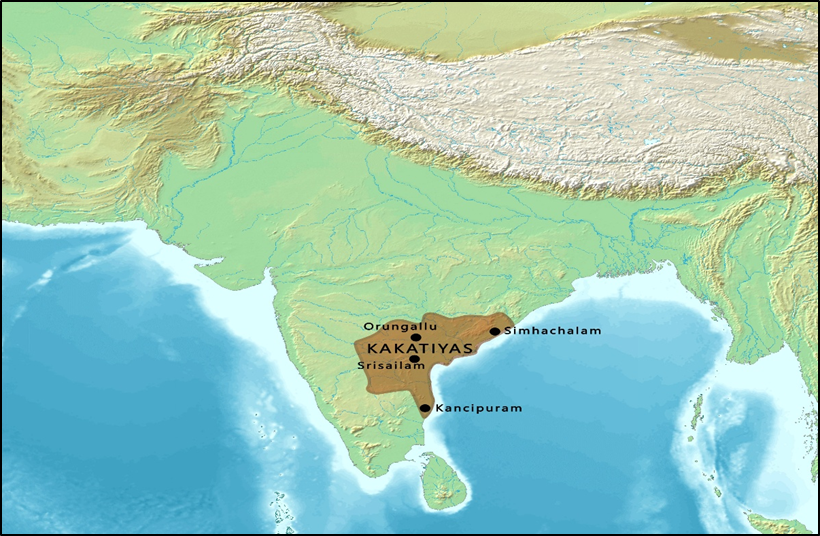
About the Kakatiya Dynasty
- Origins & Capital: Initially served as feudatories of the Western Chalukyas of Kalyani before establishing an independent kingdom; capital was shifted from Anumakonda (Hanamkonda) to Orugallu (modern Warangal) by King Ganapati Deva.
- Geographical Core: Ruled the eastern Deccan (modern Telangana and Andhra Pradesh) from the 12th to the early 14th century.
- Prominent Rulers:
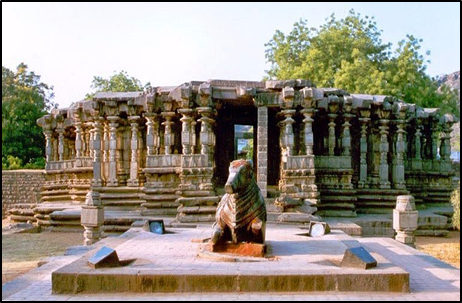
- Rudradeva (Prataparudra I): Established sovereign Kakatiya rule; built Thousand Pillar Temple; authored Nitisara.
- Ganapati Deva: Longest reign (1199–1262 CE); issued Motupalli Pillar Inscription (Abhaya Sasanam) to promote seafaring trade.
- Rudrama Devi: Defended the realm against Yadavas; praised by Venetian traveller Marco Polo.
- Prataparudra II: Final prominent ruler; fell to invasions by the Delhi Sultanate (Tughlaq forces) in 1323 CE.
Key Administrative & Architectural Features
- Nayankara System: Land parcels assigned to warrior chiefs (Nayakas) in exchange for military service (later adapted by Vijayanagara).
| Thousand Pillar Temple |
- Chain-of-Tanks Irrigation: Interconnected reservoir network (e.g., Ramappa, Pakhal, Laknavaram lakes) transforming semi-arid land into fertile agrarian belts.
- platforms (Upapitha), intricate lathe-turned pillars, and sandbox foundations.
- Monuments & Treatises: Ramappa Temple (Palampet), Thousand Pillar Temple (Hanamkonda), Warangal Fort gateways (Kakatiya Thoranam), and the classical dance treatise Nrtta Ratnavali by Jayapa Senani.
Conclusion
Through agrarian expansion via tank networks, institutional maritime trade, and distinct architectural engineering, the Kakatiyas established the foundational socio-cultural framework of the medieval Deccan.
| This concept has been discussed elaborately in the following article: Ramappa Temple: The Heritage Site Under Threat from Proposed Coal Mine |