
Context
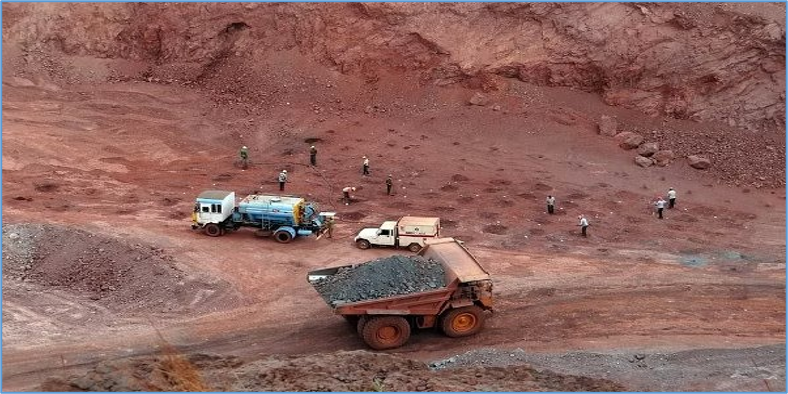
- Recently, Parliament passed the Mines and Minerals (Development and Regulation) Amendment Act, 2026, which expands the Centre’s regulatory powers over mining and curbs the fiscal powers of States.
Key Changes Under the 2026 Amendment
- Expanded Central Purview: Extends the Union Government’s regulatory authority beyond mines and mineral development to include mineral-bearing lands.
- Taxation Restrictions: Prohibits States from imposing fresh levies on mineral rights and mineral-bearing lands except under conditions prescribed by the Centre.
- Cancellation of Uncollected Dues: Mineral taxes imposed by States but not fully collected before the Act came into force are cancelled.
- Centre’s Rationale: Aims to harmonize varied State-level levies, curb escalation in domestic mineral extraction costs, and reduce reliance on mineral imports.
Constitutional provisions: Centre vs. State Powers
| Seventh Schedule Entry | Constitutional Power & Scope |
| Entry 54 (Union List) | Empowers Parliament to regulate mines and mineral development to the extent declared expedient in the public interest. |
| Entry 23 (State List) | Gives States regulation of mines and mineral development, but expressly subject to the provisions of Entry 54 of the Union List. |
| Entry 50 (State List) | Taxes on mineral rights, subject to limits imposed by Parliament |
| Entry 49 (State List) | Exclusive State power to levy taxes on lands and buildings (which the 2024 Supreme Court ruling held cannot be curbed via Entry 54). |
The 2024 Supreme Court Verdict vs. 2026 Amendment
- 2024 SC Ruling: A 9-judge Constitution Bench held that royalty is not a tax and affirmed that States have the constitutional power to tax mineral-bearing lands under Entry 49 of the State List, which cannot be restricted by Parliament via Entry 54.
- 2026 Conflict: The 2026 amendment brings mineral-bearing lands directly under central regulatory conditions, setting up fresh constitutional challenges by several States (Karnataka, Telangana, Kerala, Himachal Pradesh).
Why are States Concerned?
- Mineral-rich States derive substantial revenue from:
- Mineral royalties
- Taxes and levies
- Mining-related economic activity
- Any reduction in State-level taxation powers could therefore affect State finances and fiscal autonomy.
| State Fiscal Exposure High-Dependency States: Mineral receipts constitute 85% of non-tax revenue in Jharkhand and 80% in Odisha. Moderate/Low Dependency: Karnataka (48%), Madhya Pradesh (41%), Rajasthan (39%), Telangana (11%), and Chhattisgarh (6%). |
| Important Current to Concept (CTC) from this article for UPSC: What is the MMDR Act? |
Q. With reference to the legislative and fiscal powers over mines and minerals under the Constitution of India, consider the following statements:
1. State legislative power under Entry 23 of the State List is subject to parliamentary legislation under Entry 54 of the Union List.
2. Entry 50 of the State List empowers State legislatures to levy taxes on mineral rights, subject to limitations imposed by Parliament.
3. Taxes on lands and buildings under Entry 49 of the State List are expressly subject to laws made by Parliament under the Union List.
Which of the statements given above are correct?
(a) 1 and 2 only
(b) 2 and 3 only
(c) 1 and 3 only
(d) 1, 2, and 3
Answer: (a) 1 and 2 only
Explanation:
• Statement 1 is correct: Entry 23 of List II (State List) provides for the regulation of mines and mineral development, but it is explicitly subject to Entry 54 of List I (Union List).
• Statement 2 is correct: Entry 50 of List II grants States the power to tax mineral rights, subject to any limitations enacted by Parliament by law relating to mineral development.
• Statement 3 is incorrect: Entry 49 of List II (Taxes on lands and buildings) is an exclusive State power and is not constitutionally subordinated to parliamentary laws under Entry 54 of the Union List.