
Context
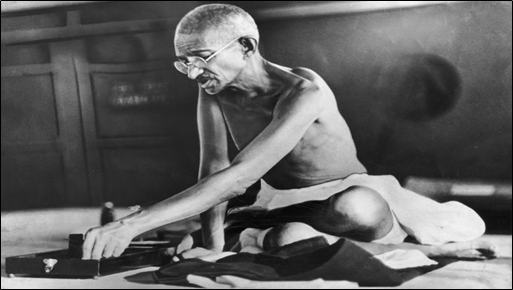
Recent detentions of peaceful protesters in Delhi have brought back focus on Mahatma Gandhi’s historic court statement during his 1922 sedition trial under colonial rule.
The Great Sedition Trial of 1922: Key Historical Aspects
- The Trial & Charge: On March 18, 1922, Mahatma Gandhi was tried before the Ahmedabad District and Sessions Judge, C.N. Broomfield. He was charged with sedition for publishing three articles criticizing the British rule in his weekly journal, Young India.
- Co-Accused: Shankarlal Ghelabhai Banker, the editor and publisher of Young India, was tried alongside Gandhiji. Both pleaded guilty and were sentenced to six years’ imprisonment.
- Philosophy of Dissent & Disaffection:
- Gandhiji famously remarked that “affection cannot be manufactured or regulated by law”.
- He argued that if a person or system lacks affection, one should be free to give the fullest expression to their disaffection, provided there is no contemplation, promotion, or incitement of violence.
- He defined non-violence as a “voluntary submission to the penalty for non-co-operation”.
- He warned against “violent non-co-operation,” stating that it “only multiplied evil”.
Constitutional Evolution of the Right to Assembly and Dissent
- Article 19 Framework: Post-Independence, the principle of non-violent dissent was enshrined in Article 19 of the Constitution, which guarantees Freedom of Speech and Expression [Article 19(1)(a)] and the Right to Assemble Peacefully without Arms [Article 19(1)(b)].
- Reasonable Restrictions: The State can only regulate these rights by imposing “reasonable restrictions” in the interest of public order and sovereignty/integrity of India, rather than imposing blanket bans.
- Key Supreme Court Precedents on Dissent & Assembly:
- Himat Lal K. Shah v. Commissioner of Police, Ahmedabad (1972): A Constitution Bench affirmed that while prior to the Constitution the right to assemble could be abridged by law, post-Constitution it cannot be abridged except by imposing reasonable restrictions. The State can only make regulations in aid of the right of assembly.
- Anita Thakur v. Government of Jammu and Kashmir (2016): The Supreme Court recognized organized, non-violent protest marches as a key weapon during the Freedom Struggle and held that the right to peaceful protest is a fundamental right under the Constitution.
| Important Curent to cocenpt (CTC) from this article for UPSC Is the Right to Protest a Fundamental Right Right to Protest and Limits on Police Powers |
Q. With reference to the right to peaceful protest in India, consider the following statements:
1. Article 19(1)(b) guarantees the right to assemble peacefully and without arms.
2. The right to peaceful assembly is absolute and cannot be restricted by the State.
3. The Supreme Court recognised the constitutional importance of peaceful protest in Anita Thakur v. Government of Jammu and Kashmir (2016).

Which of the statements given above are correct?
(a) 1 only
(b) 1 and 2 only
(c) 1 and 3 only
(d) 1, 2 and 3

Answer: (c) 1 and 3 only

Explanation:
• Statement 1 is Correct: Article 19(1)(b) of the Indian Constitution guarantees all citizens the right to assemble peacefully and without arms, subject to reasonable restrictions under Article 19(3).
• Statement 2 is Incorrect: The right to peaceful assembly is not absolute. Under Article 19(3), the State may impose reasonable restrictions in the interests of public order and the sovereignty and integrity of India.
• Statement 3 is Correct: In Anita Thakur v. Government of Jammu and Kashmir (2016), the Supreme Court recognised the constitutional importance of peaceful protest and addressed the issue of excessive police force against protesters.