
After Reading This Article You Can Solve This UPSC Mains PYQ (2014)
Drought has been recognized as a disaster in view of its spatial expanse, temporal duration, slow onset and lasting effects on vulnerable sections. With a focus on the September 2010 guidelines from the National Disaster Management Authority (NDMA), discuss the mechanisms for preparedness to deal with likely El Nino and La Nina fallouts in India 15 Marks (GS 3, Environment)
Context
A severe southwest monsoon deficiency 35% in Karnataka and 53% in Andhra Pradesh has triggered an acute agrarian crisis, prompting both states to declare widespread drought and petition the Centre for National Disaster Response Fund (NDRF) assistance.
Introduction
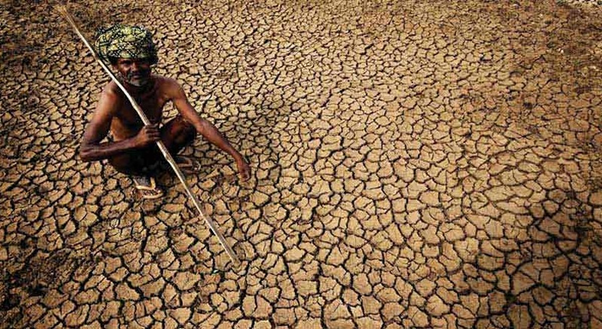
Drought is a slow-onset disaster characterized by a prolonged precipitation deficit. The India Meteorological Department (IMD) classifies a meteorological drought when seasonal rainfall falls below 75% of the Long Period Average (LPA). With 51% of India’s agricultural land being rain-fed, the current El Niño-induced crisis necessitates a structural shift from reactive disaster relief to proactive climate resilience.
Understanding the Four Stages of Drought
Drought progresses systematically through four interlinked stages:
- Meteorological: An initial rainfall deficit of 25% or more below normal.
- Agricultural: Depleted soil moisture that suppresses crop yields, even during moderate rainfall deficits.
- Hydrological: The receding of surface water reservoirs and plummeting groundwater tables.
- Socio-Economic: The terminal stage where severe water scarcity actively disrupts livelihoods, employment, and regional economies.
Primary Drivers of Drought in India
- Climatic Anomalies: Erratic southwest monsoon distribution (which supplies 75% of annual rainfall), occurrences of El Niño, and rising ambient temperatures amplifying evaporation rates.
- Environmental Degradation: Widespread deforestation, soil erosion, and the destruction of wetlands, which collectively diminish the natural water-retention capacity of the landscape.
- Anthropogenic Pressures: The unsustainable extraction of over 250 billion cubic meters of groundwater annually, inefficient flood-irrigation practices, and the illogical cultivation of water-intensive crops (like sugarcane) in arid geographies.
Geographical Vulnerability Map
Approximately 68% of India’s net sown area remains inherently drought-prone. Highly vulnerable zones include:
- Western India: The naturally arid climates of Rajasthan and Gujarat.
- Central India: Regions of Maharashtra and Madhya Pradesh experiencing high groundwater depletion.
- Southern Peninsula: The rain-shadow regions of Karnataka, Telangana, and Andhra Pradesh.
- Eastern Plateau: Tracts of Jharkhand and Odisha suffering from poor soil water retention.
Cascading Impacts of Drought
- Ramifications on Agriculture and Food Security
- Yield Contraction: Severe droughts historically precipitate a 10-40% reduction in staple and commercial crop production.
- Livestock Attrition: Acute shortages of drinking water and fodder degrade livestock health and dairy output, severely impacting supplementary rural incomes.
- Nutritional Deficits: Reduced food availability triggers localized malnutrition spikes (often rising by 10-15% in affected districts).
- Input Scarcity: Farmers face systemic shortages of quality seeds and fertilizers, handicapping recovery for subsequent cropping seasons.
- Socio-Economic Repercussions
- Macroeconomic Drag: Widespread agrarian failure can contract India’s overall GDP growth by an estimated 0.5% to 1.0%.
- Rural Distress and Migration: Complete crop failure drives rural unemployment, mounting agrarian indebtedness, and distress migration to urban centers.
- Resource Conflicts: Heightened competition over depleting drinking water and irrigation reserves frequently exacerbates local social tensions.
The NDMA Framework on Drought Management
The National Disaster Management Authority (2010) established a comprehensive, data-driven framework to institutionalize drought mitigation:
- Monitoring & Early Warning: Mandates the creation of Drought Monitoring Cells using satellite data and soil moisture sensors for real-time alerts.
- Water Management: Prioritizes rainwater harvesting, micro-irrigation, and watershed development to secure local water availability.
- Community Capacity Building: Involves local bodies and NGOs in preparedness planning, alongside targeted afforestation and fodder management strategies.
Persistent Administrative Challenges
- Fragmented Governance: Overlapping administrative jurisdictions and delayed verification by Inter-Ministerial Central Teams (IMCT) stall the release of critical NDRF funds.
- Exclusion Errors in Relief: Current compensation mechanisms structurally favor formal landowners, bypassing vulnerable tenant farmers and landless laborers.
- Policy Inertia: State governments rely on non-binding advisories rather than enforcing strict limits on water-guzzling crops.
- Data Deficits: A lack of localized, real-time metrics on aquifer health hampers precision early warning.
Strategic Way Forward
- Mandate Agro-Climatic Zoning: Transition from issuing advisories to enforcing strict crop-alignment policies, disincentivizing water-intensive agriculture in historically arid belts.
- Scale Micro-Irrigation Infrastructure: Universalize drip and sprinkler irrigation in drought-prone districts through enhanced capital subsidies and technical extension services.
- Prioritize Decentralized Aquifer Management: Abandon reliance on ecologically disruptive mega-projects in favor of localized groundwater recharge and scientific watershed management.
- Ensure Inclusive Safety Nets: Restructure agricultural insurance and direct benefit transfers (DBT) to provide verifiable financial cover to tenant farmers and agricultural labor.
- Leverage Precision Technology: Integrate GIS mapping and space-based technologies to automate early warning systems and trigger rapid administrative relief protocols.
- Mainstream Risk Mitigation: Incorporate drought resilience into routine state budgetary planning, Panchayati Raj development funds, and corporate social responsibility (CSR) initiatives.
Conclusion
As the specter of climate change broadens drought-like conditions across South Asia, India’s agrarian policy requires a paradigm shift. Enduring economic and food security depends not on managing the aftermath of monsoon failures, but on institutionalizing uncompromising water discipline and strictly aligning agricultural practices with local ecological realities.
| Important Current to Concept (CTC) from this Article for UPSC: El Niño |