
Context
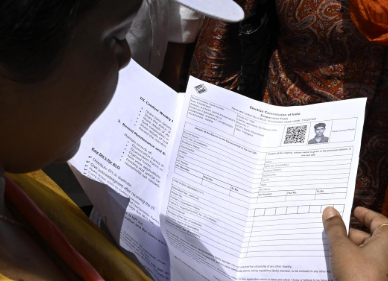
- A petition has been filed in the Supreme Court challenging the requirement for electors whose names were deleted during the Special Intensive Revision (SIR) to submit Form 6 for re-inclusion in electoral rolls.
What is Special Intensive Revision (SIR)?
- SIR is a process undertaken by the Election Commission of India (ECI) for the intensive verification and revision of electoral rolls.
- It aims to improve the accuracy of electoral rolls by verifying voter details and identifying entries requiring correction, deletion or inclusion.
What is Form 6?
- Form 6 is the prescribed application form for the inclusion of a person’s name in the electoral roll.
- It is used by eligible citizens seeking registration as electors, subject to the applicable electoral registration rules and procedures.
- Form 6 is therefore an important instrument for voter registration and electoral participation.
- The petition challenges its use for previously registered electors whose names were deleted during the SIR.
Key Issues Raised in the Petition
- Inconsistency in Declaration: Form 6 requires applicants to declare that they are seeking inclusion in the electoral roll for the first time, which the petitioners argue is factually incorrect for previously registered electors.
- Risk of Legal Penalties: The petition argues that such applicants could face penalties under Section 31 of the Representation of the People Act, 1950, which provides for punishment for making false declarations in connection with electoral registration.
- Legality of Additional Declaration: The petition challenges an additional declaration linking applicants to previous SIR electoral rolls, arguing that it lacks statutory authority.
- Re-inclusion of Deleted Electors: The petition raises concerns about the procedure available to individuals whose names were removed during the revision process but who seek restoration of their electoral registration.
Legal and Constitutional Provisions
- Article 324: Vests the Election Commission of India with the power of superintendence, direction and control of elections, subject to the Constitution and applicable laws.
- Article 326: Provides for elections to the Lok Sabha and State Legislative Assemblies on the basis of adult suffrage, subject to constitutional conditions.
- Article 327: Authorises Parliament to enact laws concerning elections to Parliament and State Legislatures, including the preparation of electoral rolls, subject to the Constitution.
- Article 328: Empowers State Legislatures to make laws on elections to their respective legislatures, provided such laws do not conflict with laws made by Parliament.
- Representation of the People Act, 1950: Provides the statutory framework for electoral rolls, voter registration and related procedures.
- Section 31 of the RPA, 1950: Prescribes punishment for making false declarations in connection with the preparation, revision or correction of electoral rolls.
Significance
- Electoral Inclusion: Raises questions about ensuring that eligible citizens are not unfairly excluded from electoral rolls.
- Procedural Fairness: Highlights the need for consistency between registration procedures and the actual circumstances of applicants.
- Rule of Law: Raises questions about the statutory basis of additional declarations required during electoral revision.
- Electoral Integrity: Underscores the need to balance accurate electoral rolls with accessible procedures for eligible voters.
- Judicial Oversight: Brings the legality and implementation of electoral registration procedures under judicial scrutiny.
Q. With reference to the Special Intensive Revision (SIR) of electoral rolls and Form 6, consider the following statements:
1.	Form 6 is used by eligible citizens to apply for inclusion in the electoral roll.
2.	Article 324 vests the Election Commission of India with the power of superintendence, direction and control of elections.
3.	Section 31 of the Representation of the People Act, 1950, provides for punishment for making false declarations in connection with electoral registration.
4.	Article 328 empowers State Legislatures to make laws relating to elections to their respective legislatures without any restrictions imposed by Parliament.
Which of the statements given above are correct?
(a) 1 and 2 only
(b) 1, 2 and 3 only
(c) 2, 3 and 4 only
(d) 1, 2, 3 and 4
Answer: (b) 1, 2 and 3 only
Statement 1 is correct. Form 6 is the application for inclusion of a name in the electoral roll, used by new voters and by eligible citizens not yet registered.
Statement 2 is correct. Article 324 vests the superintendence, direction and control of the preparation of electoral rolls and the conduct of elections in the Election Commission of India.
Statement 3 is correct. Section 31 of the Representation of the People Act, 1950 punishes false declarations made in connection with electoral roll registration (imprisonment up to one year, or fine, or both).
Statement 4 is incorrect. Article 328 lets a State Legislature make provision on matters relating to elections to its House(s), but only “in so far as provision in that behalf is not made by Parliament.” So it is subject to Parliament’s laws, not free of restrictions. Parliament’s power under Article 327 takes precedence.