
Context
- The Delhi government has made Aadhaar details mandatory for domestic consumers seeking electricity subsidies under its power subsidy scheme.
About the Electricity Subsidy Scheme
Key Features
- Implementing authority: Delhi Government.
- Funding source: Consolidated Fund of Delhi.
- Beneficiaries: Eligible domestic electricity consumers in Delhi.
- Implementing agencies: Five power distribution agencies:
- BSES Rajdhani Power Limited (BRPL).
- BSES Yamuna Power Limited (BYPL).
- Tata Power Delhi Distribution Limited (TPDDL).
- New Delhi Municipal Council (NDMC).
- Military Engineer Services (MES).
- New requirement: Submission of Aadhaar details for availing electricity subsidy.
- Alternative provision: Consumers awaiting Aadhaar can apply using their Aadhaar Enrolment ID.
Objectives of Aadhaar-Based Identification
- Beneficiary Identification: Establishes the identity of consumers receiving electricity subsidies.
- Simplified Benefit Delivery: Reduces dependence on multiple identity documents.
- Transparency and Efficiency: Seeks to improve the administration and delivery of subsidies.
- Public Awareness: Directs implementing agencies to publicise the new requirement among beneficiaries.
Significance of the Move
- Targeted Welfare Delivery: Helps identify eligible beneficiaries and improve the administration of public subsidies.
- Administrative Efficiency: Can simplify verification and reduce duplication in beneficiary records.
- Fiscal Accountability: Supports monitoring of expenditure financed through public funds.
- Digital Governance: Reflects the use of digital identity systems in the delivery of government welfare benefits.
Concerns and Challenges
- Exclusion Risks: Authentication or enrolment-related difficulties may create barriers for eligible beneficiaries.
- Implementation Clarity: The notification does not specify a deadline for existing beneficiaries or a separate procedure for consumers already receiving the subsidy.
- Privacy and Data Security: Collection and processing of Aadhaar details require appropriate safeguards for personal data.
- Accessibility: Alternative arrangements are important for consumers facing digital, technological or documentation barriers.
About Aadhaar
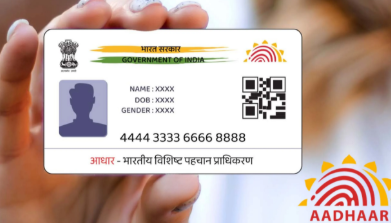
•	Aadhaar is a 12-digit unique identification number issued by the Unique Identification Authority of India (UIDAI) to residents of India who satisfy the prescribed verification process.
•	Nodal Ministry: Ministry of Electronics and Information Technology (MeitY).
•	Legal Basis: Aadhaar (Targeted Delivery of Financial and Other Subsidies, Benefits and Services) Act, 2016.
•	Nature: Aadhaar is proof of identity and not proof of citizenship or domicile.
•	Biometric Information: Includes fingerprints, iris scans and a photograph, along with demographic information such as name, date of birth and address.
•	Voluntary and Mandatory Use: Aadhaar is generally voluntary, but its use may be made mandatory for specified subsidies, benefits or services under applicable law, subject to constitutional and judicial safeguards.
Constitutional and Legal Significance
•	In K.S. Puttaswamy (Retd.) v. Union of India (2018), the Supreme Court upheld the Aadhaar Act in part while placing limits on its use.
•	The Court recognised privacy as a fundamental right and restricted mandatory Aadhaar requirements in certain contexts.
Which statement about Aadhaar is correct?
(a) It is proof of domicile.
(b) It is proof of citizenship.
(c) It is proof of identity, not citizenship or domicile.
(d) It is issued by the Election Commission of India.
Correct Answer: (c) It is proof of identity, not citizenship or domicile.
Q. Which statement about Aadhaar is correct?
(a) It is proof of domicile.
(b) It is proof of citizenship.
(c) It is proof of identity, not citizenship or domicile.
(d) It is issued by the Election Commission of India.

Correct Answer: (c) It is proof of identity, not citizenship or domicile.

Explanation: Aadhaar is a 12-digit unique identification number issued by the Unique Identification Authority of India (UIDAI). It serves as proof of identity but does not confer citizenship or establish domicile.