
Context
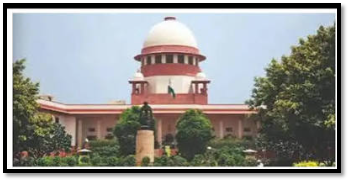
Recently, the Supreme Court held that ordinary private citizens can file criminal complaints against electoral candidates for providing false information or concealing information in nomination affidavits.
Key Highlights of the Judgment
- Bench: Justices Dipankar Datta and Sheel Nagu.
- Right to Complain: Any private citizen can lodge a complaint against a candidate under Section 125A of the Representation of the People Act (RPA), 1951.
- No Restriction to Public Servants: The law does not require complaints to be filed exclusively by public servants or competent authorities.
- Objective: To promote electoral transparency, accountability and informed voting.
Section 125A of the Representation of the People Act, 1951
- Deals with failure to furnish required information or providing false information in election-related affidavits.
- Candidates are required to disclose relevant information, including:
- Assets and liabilities.
- Educational qualifications.
- Criminal antecedents.
- Nature of offence: Non-cognisable and bailable.
- Punishment: Imprisonment up to six months, or fine, or both.
Section 195 of the Code of Criminal Procedure (CrPC)
- The Court held that the restriction under Section 195 CrPC does not prevent a private citizen from filing a complaint for an offence under Section 125A of the RPA, 1951.
- Key Principle: Courts can take cognisance of an alleged offence under Section 125A on a complaint filed by a private individual.
Significance
- Strengthens citizen participation in electoral accountability.
- Promotes transparency in candidate disclosures.
- Helps protect the purity of elections and informed voter choice.
- Reinforces the role of voters in checking electoral malpractice.
Q. With reference to Section 125A of the Representation of the People Act, 1951, consider the following statements:

1. It deals with providing false information or concealing required information in election-related affidavits.
2. An offence under this section is non-cognisable and bailable.
3. Only a public servant can file a criminal complaint under this section.
4. The punishment may extend to six months' imprisonment, or a fine, or both.

Which of the statements given above are correct?

(a) 1 and 2 only
(b) 1, 2 and 4 only
(c) 2, 3 and 4 only
(d) 1, 2, 3 and 4

The correct answer is (b) 1, 2 and 4 only.

Explanation:
• Statement 1 is correct: Section 125A of the Representation of the People Act (RPA), 1951 deals with penalties for failing to furnish information, giving false information, or concealing information in candidate affidavits/nomination papers required under Section 33A.
• Statement 2 is correct: An offence under Section 125A is a non-cognisable and bailable offence as per the Schedule of the Code of Criminal Procedure (CrPC).
• Statement 3 is incorrect: Any voter/private individual can file a criminal complaint under Section 125A. The Supreme Court has held that Section 195(1) of CrPC (which requires complaints by public servants) does not apply to Section 125A of the RPA.
• Statement 4 is correct: Under Section 125A, a person convicted of the offence is punishable with imprisonment for a term which may extend to six months, or with a fine, or both.