
About World Network of Biosphere Reserves (WNBR)
- The World Network of Biosphere Reserves (WNBR) is a global network of designated Biosphere Reserves established under UNESCO’s Man and the Biosphere (MAB) Programme.
- It serves as a platform for international cooperation, knowledge-sharing and exchange of best practices among Biosphere Reserves.
- The MAB Programme was launched in 1971 to promote a balanced relationship between humans and nature.
- The first Biosphere Reserves were designated in 1976.
- Comprises 797 Biosphere Reserves across 145 countries.
- Cover approximately 5% of Earth’s terrestrial surface.
- Support more than 60% of the world’s terrestrial vertebrate species richness.
Objectives of WNBR
- Biodiversity Conservation: Protects ecosystems, species and genetic diversity.
- Sustainable Development: Promotes environmentally sustainable economic activities and livelihoods.
- Scientific Research: Encourages research, ecological monitoring, education and training.
- Community Participation: Involves local and indigenous communities in natural resource management.
- International Cooperation: Facilitates exchange of knowledge, experience and conservation practices among member countries.
Governance and Designation of WNBR
- UNESCO: Administers the MAB Programme and coordinates the global network.
- MAB International Coordinating Council (MAB-ICC): Main governing body of the MAB Programme, comprising 34 UNESCO Member States.
- National Governments: Nominate Biosphere Reserve sites for international recognition.
- Designation: The MAB-ICC approves the designation of Biosphere Reserves based on established criteria under the MAB Programme.
- Periodic Review: Biosphere Reserves undergo periodic review, generally every 10 years, to assess whether they continue to meet the required criteria.
India and the World Network of Biosphere Reserves
- India has 18 nationally notified Biosphere Reserves, of which 13 are included in UNESCO’s WNBR.
- India’s first Biosphere Reserve was Nilgiri, established in 1986 and included in WNBR in 2000.
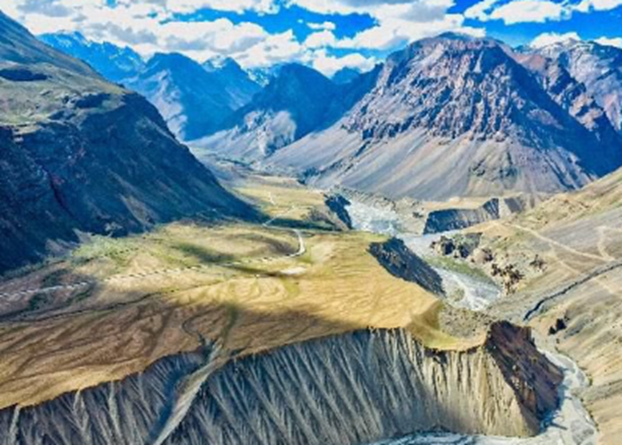
- India’s latest addition to the WNBR was the Cold Desert Biosphere Reserve (Himachal Pradesh) in September 2025.
13 Biosphere Reserves of India included in WNBR
| Biosphere Reserve | State(s) |
| Nilgiri | Tamil Nadu, Kerala, Karnataka |
| Gulf of Mannar | Tamil Nadu |
| Sundarbans | West Bengal |
| Nanda Devi | Uttarakhand |
| Nokrek | Meghalaya |
| Great Nicobar | Andaman and Nicobar Islands |
| Similipal | Odisha |
| Pachmarhi | Madhya Pradesh |
| Achanakmar-Amarkantak | Madhya Pradesh, Chhattisgarh |
| Agasthyamalai | Kerala, Tamil Nadu |
| Khangchendzonga | Sikkim |
| Panna | Madhya Pradesh |
| Cold Desert | Himachal Pradesh |
Conclusion
The World Network of Biosphere Reserves provides an international framework for integrating biodiversity conservation with sustainable development. It promotes cooperation among countries, scientific research and community participation to achieve a harmonious relationship between humans and nature.
| This concept has been mentioned in the following article: Biosphere Reserves in India |