
About the Deep Ocean Mission
- Launch: Launched in September 2021 by the Government of India.
- Approval: Approved by the Cabinet Committee on Economic Affairs (CCEA) on 16 June 2021.
- Ministry: Ministry of Earth Sciences (MoES).
- Implementing Agency: Ministry of Earth Sciences acts as the nodal ministry for implementation.
- Nature: A Central Sector Scheme and multi-ministerial, multi-disciplinary mission.
- Budget: ₹4,077 crore for a period of five years (2021–2026).
- Objective: Develop deep-sea technologies, explore ocean resources and promote their sustainable utilisation in support of India’s Blue Economy.
Major Components and Features
1. Development of Technologies for Deep-Sea Mining and Manned Submersible
- Development of indigenous technologies for deep-sea mining, underwater vehicles and robotics.
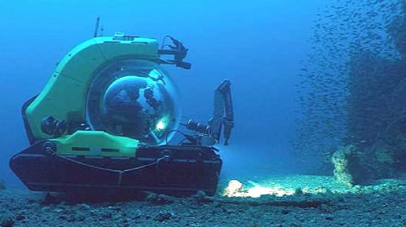
- Development of MATSYA-6000, a manned submersible designed to carry three people to a depth of 6,000 metres.
- Exploration of polymetallic nodules in the Central Indian Ocean Basin (CIOB).
2. Ocean Climate Change Advisory Services
- Development of ocean observation systems and climate models.
- Provides climate-related information and future projections to support climate assessment and forecasting.
3. Exploration and Conservation of Deep-Sea Biodiversity
- Exploration of deep-sea flora, fauna and microorganisms.
- Promotes bioprospecting and sustainable utilisation of marine biological resources.
4. Deep Ocean Survey and Exploration
- Identification of potential mineral-rich areas in the deep ocean.
- Exploration of hydrothermal sulphide deposits along mid-oceanic ridges.
5. Energy and Freshwater from the Ocean
- Studies ocean-based renewable energy resources.
- Explores Ocean Thermal Energy Conversion (OTEC)-based desalination technologies for freshwater production.
6. Advanced Marine Station for Ocean Biology
- Establishment of advanced research facilities for marine biology.
- Promotes scientific research, capacity building and development of marine-based technologies.
Important Technologies and Initiatives
1. Samudrayaan Mission
- India’s first manned deep-ocean mission, launched on 5 November 2021 under the Deep Ocean Mission.
- Aims to facilitate human exploration of deep-sea resources using an indigenous manned submersible.
2. MATSYA-6000
- An indigenously developed manned submersible designed to carry three aquanauts up to 6,000 metres below sea level.
- Developed by the National Institute of Ocean Technology (NIOT), Chennai.
3. Polymetallic Nodules
- Mineral-rich deposits found on the ocean floor.
- Contain valuable metals such as manganese, nickel, cobalt and copper.
- The mission aims to develop technologies for their exploration and sustainable utilisation in the Central Indian Ocean Basin.
Significance of the Deep Ocean Mission
- Blue Economy: Supports sustainable utilisation of ocean resources.
- Resource Security: Helps explore critical minerals and reduce dependence on imports.
- Technological Self-Reliance: Promotes indigenous development of deep-sea exploration and mining technologies.
- Biodiversity Conservation: Enhances understanding and conservation of deep-sea ecosystems.
- Climate Research: Strengthens ocean observation and climate forecasting capabilities.
- Economic Development: Creates opportunities in marine biotechnology, ocean engineering and related industries.
Conclusion
The Deep Ocean Mission is a strategic initiative to strengthen India’s capabilities in deep-sea exploration, marine research and resource utilisation while promoting technological self-reliance and sustainable development of the Blue Economy.
| This concept has been mentioned in the following article: Matsya-6000: Advancing India’s Deep-Ocean Capabilities |