
Context
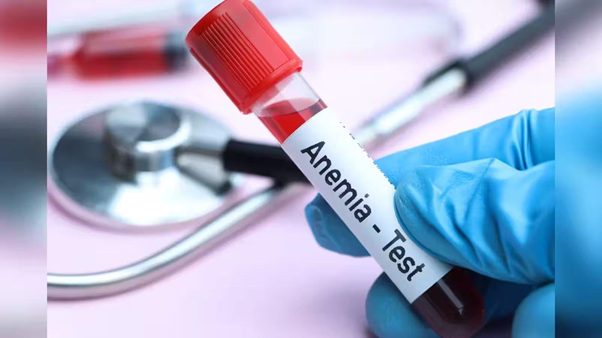
- The Ministry of Health and Family Welfare released findings from the SAMPADA (2023–2025) survey, reporting a decline in anaemia prevalence across age and gender groups in India compared to the National Family Health Survey-5 (NFHS-5).
About the SAMPADA Survey (2023–2025)
- Full Form: Survey for Assessment of Markers of Population Health, Activity, Diet and Anthropometry.
- Implementing Agencies: Conducted by the Indian Council of Medical Research (ICMR) and the Department of Health Research (DHR) under the Ministry of Health and Family Welfare.
- Coverage: Surveyed over 2 lakh individuals from over 81,000 households across 183 districts in 35 States and Union Territories.
- Methodology Shift: Uses venous blood sampling analysed via automated analysers—a gold-standard method—replacing the capillary (finger-prick) test previously used in NFHS for greater accuracy.
- Key Findings (SAMPADA vs. NFHS-5):
- Children: 41.8% (down from 64% in NFHS-5).
- Women: 56% (down from 57%).
- Pregnant Women: 44% (down from 52%).
- Men: 19% (down from 25%).
- Disaggregated & Severity Data: Prevalence stands at 31% in children (5–9 years), 46% in adolescent girls, 55% in adult women (up to 59 years), 56% in women above 60 years, and 58% in lactating women; nearly half of all cases among women, adolescent girls, and children are mild.
About Anaemia
- Definition: A blood disorder marked by a reduced red blood cell (RBC) count or insufficient haemoglobin (the oxygen-carrying protein in RBCs), impairing oxygen delivery to body tissues.
- Primary Causes: Iron deficiency, Vitamin B12 or folate deficiency, chronic diseases (e.g., kidney disease), blood loss (such as menorrhagia), worm infestation, dietary inhibitors (e.g., wheat retarding iron absorption), and inherited genetic disorders.
- Anaemia in Pregnancy: Anaemia during the first 100 days of pregnancy increases the risk of Congenital Heart Disease (CHD) in the fetus due to impaired oxygen delivery and insufficient iron, folate, and Vitamin B12 needed for fetal heart development.
- Major Forms of Anaemia:
- Iron-Deficiency & Vitamin-Deficiency Anaemia: Caused by inadequate iron, Vitamin B12, or folate needed for RBC and haemoglobin production.
- Aplastic & Fanconi Anaemia: Conditions involving bone marrow failure leading to low blood cell production (Fanconi is a rare genetic disorder).
- Sickle Cell Anaemia: A genetic disorder producing misshapen RBCs that obstruct blood flow.
- Thalassemia: An inherited disorder causing abnormal haemoglobin production and RBC destruction.
- Hemolytic Anaemia: Characterised by the rapid destruction of RBCs due to infections or autoimmune diseases.
Key Government Initiatives
- Anaemia Mukt Bharat (AMB): Focuses on reducing anaemia through Iron and Folic Acid (IFA) supplementation, deworming tablets, and targeted life-course interventions.
- Mission Utkarsh: A joint initiative of 15 central ministries/departments launched as a pilot across five aspirational districts in five states to control anaemia among approximately 95,000 adolescent girls using Ayurvedic interventions.
| Important CTC from this Article- SAMPADA Survey |
                                    MCQ

Q. With respect to anaemia and national health surveys in India, consider the following statements:
I. The SAMPADA survey conducted by ICMR and DHR relies on venous blood sampling rather than the finger-prick method to assess anaemia prevalence.
 II. Aplastic anaemia is a genetic disorder characterised by the production of abnormal haemoglobin that leads to red blood cell destruction.
Which of the statements given above is/are correct?
(a) I only
(b) II only
(c) Both I and II
(d) Neither I nor II
Correct Answer: (a) I only

Explanation:
• Statement I is correct: The SAMPADA (2023–2025) survey, conducted by the Indian Council of Medical Research (ICMR) and the Department of Health Research (DHR), uses venous blood sampling with automated analysers instead of the capillary finger-prick test previously used in NFHS.
• Statement II is incorrect: Aplastic anaemia is a rare condition where the bone marrow fails to produce enough red blood cells (often linked to autoimmune diseases or chemical exposure); the inherited disorder characterised by abnormal haemoglobin production and RBC destruction is Thalassemia.

                                    PYQ (2023)

Q. Consider the following statements in the context interventions being undertaken under Anaemia Mukt Bharat Strategy:
1.	It provides prophylactic calcium supplementation for pre-school children, adolescents and pregnant women.
2.	It runs a campaign for delayed cord clamping at the time of child-birth.
3.	It provides for periodic deworming to children and adolescents.
4.	It addresses non-nutritional causes of anaemia in endemic pockets with special focus on malaria, hemoglobinopathies and fluorosis.
How many of the statements given above are correct?
A. Only one
B. Only two
C.Only three
D.All four