
After Reading This Article You Can Solve This UPSC Mains Model Question:
Hydropower development in the Himalayas involves a delicate balance between energy security and ecological sustainability. In the context of the Teesta Stage-VI tunnel disaster, examine the vulnerabilities of Himalayan hydropower projects and suggest measures for building disaster-resilient infrastructure. 15 marks (GS 3, Environment)
Context
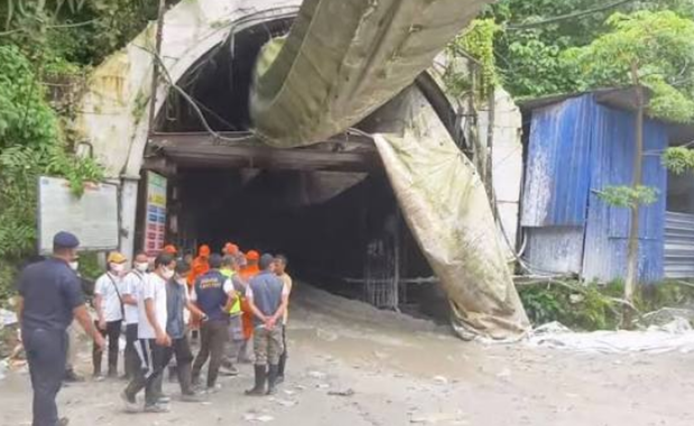
A methane gas burst inside the under-construction Teesta Stage-VI Hydroelectric Project tunnel in Sikkim’s Namchi district killed several workers.
Introduction
The Teesta Stage-VI tunnel accident is not merely an industrial accident but a reminder of the complex interaction between development, fragile ecology, geological risks, and worker safety. It highlights the need to reconcile India’s clean energy ambitions with environmental sustainability and disaster resilience.
Why are Himalayan Hydropower Projects the Need of the Hour, Yet Highly Vulnerable?
1. Strategic Energy Potential vs Geological Fragility
The Himalayas possess immense hydropower potential essential for India’s clean energy transition, but their young, seismically active geology makes dams and tunnels highly susceptible to landslides, earthquakes, and structural failures.
2. Infrastructure Expansion vs Hidden Geological Hazards
Rapid development of tunnels, roads, and hydropower projects is crucial for energy security and regional connectivity, yet underground excavation may encounter methane pockets, fault zones, aquifers, and weak rock strata, posing serious safety risks.
3. Climate Goals vs Climate-Induced Risks
Hydropower supports India’s net-zero and renewable energy ambitions, but glacial retreat, GLOFs, extreme rainfall, and flash floods are increasing the vulnerability of Himalayan infrastructure.
4. Regional Development vs Ecological Fragility
Hydropower drives economic growth, employment, and energy access in Himalayan states; however, multiple dams, tunnelling, deforestation, and unplanned development can destabilise fragile ecosystems and heighten disaster risks.
Recurring Incidents Highlighting Infrastructure Risks
- Teesta Stage-VI Tunnel, Sikkim (2026): A methane gas burst during tunnel excavation killed several workers, highlighting the risks of underground construction in the fragile Himalayas.
- Silkyara Tunnel Collapse, Uttarkashi, Uttarakhand (2023): A tunnel collapse trapped 41 workers for 17 days, exposing deficiencies in geological assessment, engineering design, and emergency preparedness.
- Illegal Coal Mine Explosion, Meghalaya (2026): A methane gas explosion at an illegal coal mine killed around 30 workers, exposing poor mine safety standards, inadequate gas monitoring, and weak regulatory enforcement.
Challenges Associated with Himalayan Hydropower Projects
1. Geological and Climate Vulnerability
- The young, seismically active Himalayan terrain, coupled with hidden fault lines, methane pockets, and weak rock strata, makes tunnelling and dam construction inherently risky.
- Climate change has intensified hazards through glacial retreat, GLOFs, extreme rainfall, and flash floods, increasing the likelihood of infrastructure failures.
2. Worker Safety and Disaster Preparedness
- Inadequate gas detection systems, ventilation, safety drills, and occupational safety protocols expose workers to fatal risks during underground construction.
- Weak emergency response mechanisms, rescue infrastructure, and real-time monitoring delay disaster mitigation and increase casualties.
3. Environmental and Ecological Degradation
- Hydropower projects fragment river ecosystems, destroy habitats, obstruct fish migration, and reduce ecological connectivity, threatening Himalayan biodiversity.
- Large-scale tunnelling, blasting, and deforestation destabilise mountain slopes, increasing landslides, erosion, and long-term ecological fragility.
4. Weak Environmental Governance
- Poor compliance with Environmental Clearance (EC) conditions, inadequate geological investigations, and limited cumulative impact assessments undermine sustainable project execution.
- Weak post-clearance monitoring, compliance audits, and inter-agency coordination reduce accountability and increase environmental risks.
5. Technical and Project Planning Deficiencies
- Inadequate geological modelling, hazard mapping, and risk assessment often fail to identify subsurface hazards before construction begins.
- Deficiencies in tunnel alignment, engineering design, and construction methodology lead to delays, cost overruns, and increased accident risks.
6. Socio-Economic Challenges
- Hydropower projects often displace local communities, disrupt livelihoods, and increase disaster vulnerability in ecologically sensitive regions.
- Frequent delays, rising construction costs, and financial distress of developers reduce project viability and burden public finances, as seen in the Teesta Stage-VI takeover by NHPC.
7. Institutional and Policy Challenges
- Fragmented coordination among agencies such as MoEFCC, CEA, GSI, NDMA, and State authorities leads to gaps in planning, monitoring, and disaster management.
- The recurrence of incidents like the Silkyara Tunnel collapse (2023), Meghalaya mine explosion (2026), and Teesta tunnel accident (2026) indicates systemic governance failures rather than isolated events.
Committee Recommendations on Himalayan Hydropower Projects
1. Ravi Chopra Committee (2014) – Sustainable Basin-Level Hydropower Development
- Recommended basin-level planning, cumulative impact assessments, ecological flow (E-flow) maintenance, and restricting hydropower projects in ecologically fragile Himalayan regions.
2. High Powered Committee (Char Dham) & NDMA – Disaster-Resilient Infrastructure
- Emphasised minimising hill cutting and tunnelling, integrating multi-hazard risk assessments, strengthening landslide mitigation, early warning systems, and disaster preparedness.
3. Kasturirangan Committee, NGRBA & GSI – Scientific Environmental Governance
- Advocated identifying ecologically sensitive areas, conducting rigorous geological investigations, maintaining environmental flows, and ensuring continuous environmental monitoring before and during project execution.
Way Forward for Sustainable Himalayan Hydropower Development
1. Scientific and Risk-Informed Planning
- Undertake advanced geological mapping, 3D seismic imaging, geophysical surveys, and hazard assessments before project approval to minimise geological risks.
2. Strengthen Environmental Governance
- Ensure strict compliance with Environmental Clearance (EC) conditions through independent audits, third-party inspections, and transparent monitoring.
3. Adopt Basin-Level Integrated Planning
- Shift from project-wise approvals to Integrated River Basin Management (IRBM), Cumulative Environmental Impact Assessment (CEIA), and Strategic Environmental Assessment (SEA).
4. Build Climate-Resilient Infrastructure
- Incorporate GLOF risk assessment, climate projections, and nature-based disaster mitigation measures into the design and operation of hydropower projects.
5. Enhance Tunnel and Worker Safety
- Deploy continuous gas detection, automated ventilation, real-time monitoring systems, emergency escape infrastructure, and regular safety drills to protect workers.
6. Strengthen Institutional Coordination and Disaster Preparedness
- Improve coordination among MoEFCC, CEA, GSI, NDMA, and State agencies with robust early warning systems and comprehensive emergency response plans.
7. Promote Sustainable and Community-Centric Development
- Balance energy security with ecological conservation by protecting biodiversity, ensuring local community participation, fair rehabilitation, and long-term environmental sustainability.
Conclusion
The Teesta Stage-VI tunnel disaster underscores that development in the Himalayas must be ecology-led, science-driven, and disaster-resilient rather than engineering-centric. Achieving India’s clean energy goals requires robust environmental governance, scientific planning, worker safety, climate resilience, and community participation, ensuring that development remains both sustainable and safe.
| Impoartant Current to Concept (CTC) from this article for UPSC Teesta River Glacial Lake Outburst Floods (GLOFs) |