
About Digital Public Infrastructure (DPI)
- Digital Public Infrastructure (DPI) refers to open, interoperable and inclusive digital systems that enable individuals, businesses and governments to securely access and deliver a wide range of services.
- DPI typically consists of shared digital building blocks such as digital identity, payments, data exchange and interoperable platforms.
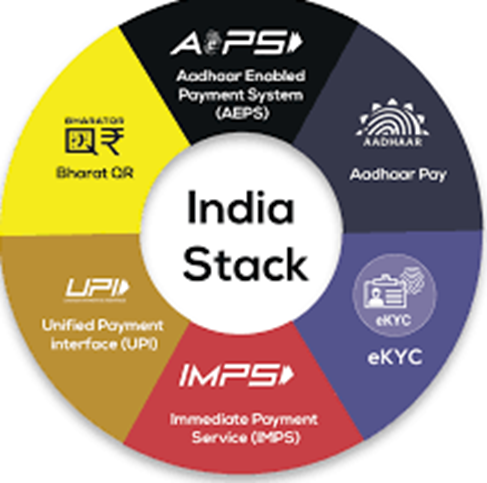
- India has developed one of the world’s most extensive DPI ecosystems through platforms such as Aadhaar, UPI, DigiLocker, Account Aggregator and the India Stack.
- DPI aims to promote financial inclusion, efficient service delivery, innovation and economic participation.
- Unlike a single digital platform, DPI functions as a foundational ecosystem on which multiple public and private services can be built.
I. Major Components of India’s DPI Ecosystem
- Digital Identity: Aadhaar provides a foundational digital identity infrastructure for authentication and identity verification.
- Digital Payments: UPI enables interoperable, real-time digital payments between bank accounts.
- Digital Documents: DigiLocker enables citizens to securely access and share digital documents.
- Data Empowerment: The Account Aggregator framework enables individuals to share financial data with consent.
- Digital Commerce: Open Network for Digital Commerce (ONDC) seeks to promote interoperability and competition in digital commerce.
- Digital Health: Ayushman Bharat Digital Mission (ABDM) provides digital infrastructure for the health ecosystem.
- Digital Education: Platforms such as DIKSHA support digital learning and educational content delivery.
II. DPI & India’s Global Digital Leadership
- India Stack: A set of interoperable digital infrastructure and application programming interfaces that supports identity, payments, data sharing and other digital services.
- G20 Presidency: India highlighted Digital Public Infrastructure as an important tool for achieving inclusive and sustainable development.
- G20 Framework for DPI: The G20 New Delhi Leaders’ Declaration (2023) endorsed the development of a G20 Framework for Systems of Digital Public Infrastructure.
- Global South: India has promoted DPI as a model that can be adapted by developing countries according to their domestic requirements.
- India’s DPI Approach: Emphasises open standards, interoperability, inclusion, scalability and public-interest digital infrastructure.
III. Challenges Associated with DPI
- Digital Divide: Differences in internet access, digital literacy and device ownership can exclude vulnerable groups.
- Data Privacy: Large-scale digital systems require strong safeguards for personal data and user consent.
- Cybersecurity: Greater digital dependence increases exposure to cyberattacks and system disruptions.
- Exclusion Risks: Authentication or connectivity failures can affect access to essential services.
- Interoperability Challenges: Effective DPI requires coordination, common standards and cross-platform compatibility.
- Governance: Strong institutional mechanisms are necessary to ensure accountability, transparency and responsible use of data.
Conclusion
Digital Public Infrastructure represents a shift from isolated digital applications towards shared, interoperable and population-scale digital foundations. India’s experience with Aadhaar, UPI, DigiLocker, Account Aggregator and other platforms demonstrates how DPI can support financial inclusion, efficient governance, innovation and economic growth. However, its long-term success depends on ensuring privacy, cybersecurity, accessibility, interoperability and inclusion.
| This concept has been elaborately discussed in the following article – Unified Payments Interface (UPI) |