
Context
- Drop shipping highlighted the rapid growth of this e-commerce model through social media and AI-powered tools, while raising concerns about delivery delays, counterfeit products, consumer protection, and data privacy, making it relevant for digital commerce regulation and consumer rights.
What is Dropshipping?
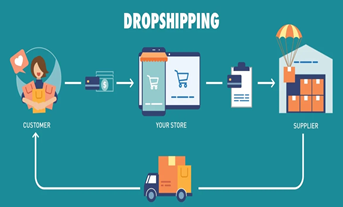
- Dropshipping is an online business model where the seller does not keep any products in stock. When a customer buys something, the seller purchases the item from a third-party supplier, who then ships it directly to the customer. The online seller acts only as a middleman.
The 3-Step Process
- The Customer buys an item from an online store and pays full price.
- The Online Store passes the customer’s details and a lower wholesale payment to the supplier.
- The Supplier packs the item and ships it directly to the customer.
Traditional Store vs. Dropshipping
- Traditional Store: Buys products in bulk upfront, stores them in a warehouse, and handles the shipping when an item sells. (High startup cost, higher profit).
- Dropshipping Store: Holds zero inventory. Only buys an item after a customer pays for it. The supplier handles the shipping. (Low startup cost, lower profit).
Legal Rules in India
- GST Registration: The seller must register for GST if their business sales cross the standard legal limits (₹40 lakh for goods).
- Import Export Code (IEC): If the seller sources products from foreign suppliers to sell in India, they must get an IEC license from the government.
- Consumer Protection Rules, 2020: Dropshippers are treated as e-commerce platforms. They are legally responsible for clear pricing, honest descriptions, and resolving customer complaints.
Q. Consider the following statements regarding the "Dropshipping" business model:
1. The online seller sells products directly to consumers without ever owning or storing the physical stock.
2. In India, dropshipping businesses do not have to follow the Consumer Protection (E-Commerce) Rules.
Which of the statements given above is/are correct?
(a) 1 only
(b) 2 only
(c) Both 1 and 2
(d) Neither 1 nor 2
Correct Answer and Solution
Correct Answer: (a) 1 only
• STATEMENT 1 IS CORRECT: The main feature of dropshipping is that the online seller manages only the website and marketing. They never handle or store the actual physical inventory.
• STATEMENT 2 IS INCORRECT: Dropshipping businesses are classified as e-commerce entities in India. They must strictly follow the Consumer Protection (E-Commerce) Rules to protect online buyers.