

After Reading This Article You Can Solve This UPSC Mains Model Question:
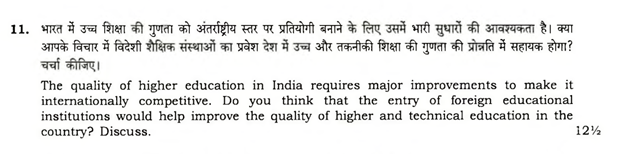
The quality of higher education depends not only on infrastructure but also on the availability of qualified faculty. Evaluate the challenges associated with faculty recruitment in India’s premier institutions and suggest reforms. 15 Marks (GS- 2, Governance)
PYQ
Context
RTI data obtained from 79 Centrally Funded Technical Institutes (CFTIs) reveal that 35.2% of sanctioned faculty positions remain vacant, raising concerns about the quality of higher education despite India’s expanding technical education ecosystem.
Introduction
India’s premier institutions such as the IITs, NITs, IIMs, IIITs, and IISERs play a crucial role in producing skilled human capital, driving innovation, and supporting economic growth. However, persistent faculty shortages threaten teaching quality, research output, and India’s aspirations of becoming a global knowledge hub.
Key Findings from RTI Data
- Overall Vacancy Situation
- Out of 20,279 sanctioned faculty posts, 7,132 posts (35.2%) remain vacant.
- Nearly one in every three teaching positions is unfilled.
- 16 institutions reported vacancy levels above 50%.
- Indian Institutes of Technology (IITs)
- 35% of 11,019 sanctioned posts remain vacant.
- 9 out of 20 IITs reported vacancies exceeding 35%.
- IIT Kharagpur recorded the highest vacancy level:
- 824 vacancies out of 1,600 sanctioned posts (over 50%).
- National Institutes of Technology (NITs)
- 27.9% of 5,432 sanctioned posts remain vacant.
- NIT Andhra Pradesh reported the highest vacancy rate (68%).
- High vacancies also observed in:
- NIT Srinagar
- NIT Sikkim
- NIT Tiruchirappalli
- Indian Institutes of Management (IIMs)
- 32.3% of 1,741 sanctioned posts remain vacant.
- Four IIMs reported vacancies above 50%.
- IIM Mumbai reported nearly 59% vacancies.
- Indian Institutes of Information Technology (IIITs)
- Highest vacancy ratio among all institutions.
- 53.5% of sanctioned faculty posts remain vacant.
- Eight IIITs reported vacancy levels above 50%.
- Indian Institutes of Science Education and Research (IISERs)
- Around 32% of sanctioned posts remain vacant.
Significance of Faculty Availability in Higher Education
1. Quality of Teaching and Learning
- Adequate faculty availability ensures effective classroom instruction, academic mentoring, and personalized guidance for students.
- Persistent vacancies increase the teacher-student ratio, reducing learning outcomes and overall educational quality.
2. Research and Innovation
- Faculty members are the primary drivers of research, innovation, patents, publications, and technological advancement.
- Shortages of qualified faculty weaken research productivity and limit India’s capacity for knowledge creation.
3. Achieving NEP 2020 Objectives
- The National Education Policy (NEP) 2020 aims to build world-class multidisciplinary institutions and a vibrant research ecosystem.
- Faculty shortages undermine these goals by affecting academic excellence, innovation, and institutional capacity.
4. Global Competitiveness
- Strong faculty strength is essential for improving university rankings, attracting international collaborations, and enhancing academic reputation.
- Large vacancies reduce institutional competitiveness and limit India’s emergence as a global education hub.
5. Human Capital Development
- Premier technical institutions play a crucial role in producing skilled engineers, scientists, managers, and entrepreneurs.
- Inadequate faculty strength can compromise the quality of graduates, affecting employability and economic productivity.
Causes of Persistent Faculty Vacancies
1. Lengthy Recruitment Processes
- Faculty recruitment often faces delays due to lengthy procedures involving advertisements, screening, interviews, and administrative approvals.
- Bureaucratic bottlenecks result in prolonged vacancies and slow replacement of retiring or departing faculty members.
2. Shortage of Qualified Candidates
- The supply of highly qualified PhD holders, particularly in emerging and interdisciplinary fields, remains inadequate.
- Increasing global demand for skilled academics has intensified competition for talent across universities and research institutions.
3. Attractive Private and Overseas Opportunities
- Better salaries, superior research facilities, and greater career prospects in the private sector and foreign universities attract talented academics.
- This brain drain reduces the pool of qualified candidates available for recruitment in Indian institutions.
4. Rapid Expansion of Institutions
- The establishment of new IITs, NITs, IIITs, and IISERs has significantly increased the demand for qualified faculty.
- Recruitment efforts have not kept pace with institutional expansion, leading to persistent staffing shortages.
5. Research Infrastructure Constraints
- Limited research funding, inadequate laboratory facilities, and insufficient institutional support discourage top academic talent.
- Heavy administrative responsibilities often reduce the attractiveness of academic careers and affect faculty retention.
6. Geographical Challenges
- Institutions located in remote or less-developed regions face difficulties in attracting and retaining quality faculty.
- Concerns related to housing, schooling for children, healthcare facilities, and overall quality of life discourage potential recruits.
Implications of Faculty Vacancies in Higher Education
1. Academic Implications
- Faculty shortages increase the teaching workload on existing staff, affecting the quality of instruction and mentoring.
- Reduced faculty availability limits individual attention to students and slows curriculum revision, pedagogical reforms, and academic innovation.
2. Research Implications
- A shortage of faculty adversely affects research productivity, resulting in fewer publications, patents, and technological innovations.
- It also reduces participation in international collaborations, interdisciplinary research, and global academic networks.
3. Institutional Implications
- Persistent vacancies make it difficult for institutions to maintain accreditation standards and prescribed faculty-student ratios.
- They also hinder efforts to improve institutional reputation, attract talent, and achieve higher global rankings.
4. Economic Implications
- Weak research and academic ecosystems can undermine India’s innovation capacity and long-term knowledge economy goals.
- Poor-quality human capital formation may reduce competitiveness in technology-driven and knowledge-intensive sectors.
Government Initiatives
1. Mission Mode Recruitment Drive
- The Ministry of Education launched special Mission Mode recruitment drives in September 2022 and October 2025 to accelerate the filling of vacant faculty positions in Central Higher Educational Institutions (CHEIs).
- These drives aim to streamline recruitment processes and reduce long-pending vacancies across premier institutions.
2. Continuous Recruitment Process
- The Ministry has emphasized that faculty recruitment is a continuous and ongoing exercise, undertaken regularly as vacancies arise.
- Institutions are encouraged to initiate timely recruitment to ensure minimal disruption to teaching and research activities.
3. Faculty–Student Ratio Norms
- To maintain academic quality, the government prescribes a faculty-student ratio of 1:10 for IITs and 1:12 for NITs.
- These norms are periodically reviewed to align faculty strength with institutional expansion and student enrolment.
4. Recruitment Progress
- As of January 2026, around 17,878 faculty positions had reportedly been filled across Central Higher Educational Institutions under the Mission Mode recruitment initiative.
- This reflects the government’s efforts to strengthen teaching capacity and improve the quality of higher education in India.
Way Forward to Address Faculty Vacancies
1. Fast-Track Faculty Recruitment
- Recruitment procedures should be simplified, digitised, and made more transparent to reduce delays in appointments.
- Establishing fixed timelines for each stage of recruitment can ensure timely filling of vacant positions.
2. Improve Faculty Incentives
- Competitive salaries, adequate research grants, housing support, and other benefits can help attract and retain quality faculty.
- Performance-linked incentives can encourage excellence in teaching, research, innovation, and academic leadership.
3. Strengthen the Research Ecosystem
- Greater investment in laboratories, research infrastructure, innovation hubs, and interdisciplinary studies is essential to attract top talent.
- Stronger industry-academia collaboration can enhance research opportunities, funding, and practical relevance of academic work.
4. Develop a Robust Academic Talent Pipeline
- Expanding doctoral and post-doctoral fellowships can increase the pool of qualified candidates for academic positions.
- Encouraging young researchers to pursue academic careers can help meet the growing demand for faculty in higher education institutions.
5. Address Regional Imbalances
- Special incentives should be provided to attract faculty to institutions located in remote and underserved regions.
- Improving housing, healthcare, schooling, and other welfare facilities can enhance faculty retention in such areas.
6. Leverage Global Talent and Expertise
- India should facilitate the recruitment of overseas Indian scholars and distinguished foreign faculty members.
- Promoting international academic exchanges and collaborative research can enrich the quality and global outlook of higher education institutions.
Conclusion
Faculty are the backbone of higher education. Addressing faculty vacancies is essential for improving educational quality, advancing research, achieving NEP 2020 goals, and strengthening India’s knowledge-driven economy and global competitiveness.