
After Reading This Article You Can Solve This UPSC Mains Model Question:
The Street Vendors (Protection of Livelihood and Regulation of Street Vending) Act, 2014 seeks to balance livelihood security with public interest. Discuss the challenges in its implementation and suggest measures for inclusive urban governance. 15 Marks (GS 2, Polity)
Context
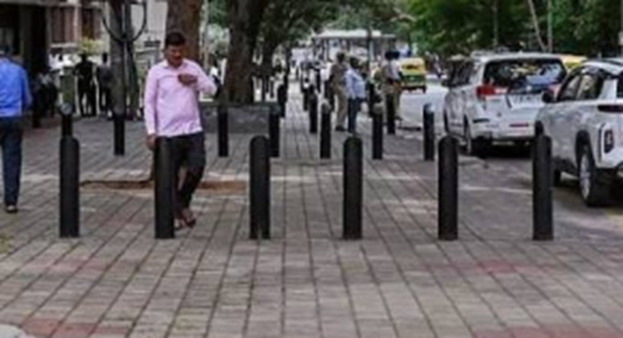
Following the Supreme Court’s recognition of the Right to Walk on safe, obstruction-free footpaths as a Fundamental Right, Karnataka launched Bengaluru’s ‘Safe Footpath Drive’ to remove encroachments. The drive has raised concerns over compliance with the Street Vendors (Protection of Livelihood and Regulation of Street Vending) Act, 2014, which balances pedestrians’ rights with street vendors’ livelihoods
Introduction
The debate over reclaiming footpaths reflects the constitutional challenge of balancing pedestrians’ right to safe public spaces with street vendors’ right to livelihood under Article 19(1)(g).
Why is Street Vending Essential, Yet a Challenge for Urban Governance?
1. Right to Livelihood vs Right to Safe Mobility
Street vending provides employment to millions in the informal sector and is recognised as a legitimate occupation under Article 19(1)(g). At the same time, citizens have the right to safe, obstruction-free footpaths under Article 21, making balanced regulation essential.
2. Affordable Urban Economy vs Public Space Constraints
Street vendors supply affordable goods and services while supporting local economies. However, unregulated vending may obstruct pedestrian movement, emergency access, traffic flow, and universal accessibility.
3. Inclusive Urbanisation vs Rapid Urban Expansion
Indian cities depend on informal livelihoods for economic inclusion, yet increasing urbanisation, population growth, and shrinking public spaces intensify conflicts over the use of footpaths and roads.
4. Urban Development vs Social Justice
Municipal authorities seek to improve urban infrastructure and public convenience, but eviction without due process threatens the livelihoods of economically vulnerable sections and undermines constitutional protections.
Judicial and Legislative Evolution
1. Sodan Singh v. New Delhi Municipal Committee (1989): Recognised street vending as a legitimate occupation protected under Article 19(1)(g), subject to reasonable restrictions in the interest of the public.
2. Maharashtra Ekta Hawkers Union v. Municipal Corporation, Greater Mumbai (2004): Held that hawkers cannot be arbitrarily evicted, and regulation should balance the right to livelihood with public convenience.
3. Gainda Ram v. Municipal Corporation of Delhi (2010): Directed the government to enact a comprehensive law for regulating street vending, laying the foundation for the Street Vendors Act, 2014.
4. Street Vendors (Protection of Livelihood and Regulation of Street Vending) Act, 2014: Provided a statutory framework for regulating street vending through Town Vending Committees, surveys, Certificates of Vending, and protection against arbitrary eviction, balancing livelihood rights with public interest.
5. Recent Supreme Court Judgment (2025–26): Reaffirmed that the Right to Walk on safe, obstruction-free footpaths is an integral part of Article 21, while emphasising that pedestrian rights must be balanced with the statutory safeguards available to street vendors.
Key Features of the Street Vendors (Protection of Livelihood and Regulation of Street Vending) Act, 2014
1. Balanced Rights-Based Framework
The Act balances pedestrians’ right to safe public spaces with street vendors’ right to livelihood through regulated vending.
2. Town Vending Committee (TVC)
The Act establishes a Town Vending Committee (TVC) with at least 40% vendor representation to ensure participatory and transparent decision-making.
3. Mandatory Survey of Street Vendors
The TVC must conduct a survey of all existing vendors before regulating vending or identifying vending and no-vending zones.
4. Certificate of Vending
Eligible vendors are issued a Certificate of Vending, granting legal permission to vend at a specified location without conferring ownership rights over public land.
5. Protection Against Arbitrary Eviction
No street vendor can be evicted or relocated before completion of the survey and issuance of Certificates of Vending, ensuring due process under the law.
Challenges Persisting Despite the Street Vendors Act, 2014
1. Weak Institutional Implementation: Many cities have not constituted functional Town Vending Committees (TVCs) or conducted regular vendor surveys, resulting in poor implementation of the Act.
2. Inadequate Urban Planning: The absence of scientifically demarcated vending zones and the exclusion of street vending from city master plans continue to create conflicts over public spaces.
3. Arbitrary Evictions and Poor Governance: Anti-encroachment drives are often carried out without following the due process prescribed under the Act, reflecting weak institutional coordination and enforcement.
4. Livelihood Insecurity: Millions of street vendors remain vulnerable to frequent eviction, income loss, and lack of social security, despite statutory protection.
5. Legal and Awareness Deficit: Limited awareness of the Act among vendors and local authorities, coupled with the tension between urban beautification and livelihood rights, undermines effective implementation.
Way Forward for Inclusive Urban Footpath Management
1. Strengthen Institutional Mechanisms: Constitute functional Town Vending Committees (TVCs) in every city to ensure participatory, transparent, and accountable regulation of street vending.
2. Scientific Survey and Spatial Planning: Conduct periodic GIS-based vendor surveys and scientifically demarcate vending, restricted, and no-vending zones based on pedestrian and traffic needs.
3. Ensure Rule of Law and Due Process: Implement the Street Vendors Act, 2014 in letter and spirit by completing surveys, issuing Certificates of Vending, and following due process before eviction or relocation.
4. Integrate Street Vending into Urban Planning: Incorporate designated vending spaces into master plans, Smart Cities Mission, and Transit-Oriented Development (TOD) to promote inclusive and accessible public spaces.
5. Leverage Technology for Better Governance: Adopt digital Certificates of Vending, GIS mapping, QR-based identification, and online grievance portals to improve transparency, monitoring, and service delivery.
6. Strengthen Social Protection and Capacity Building: Provide vendors with access to social security, financial inclusion, skill development, and awareness of legal rights to enhance livelihood resilience.
7. Promote Rights-Based and Inclusive Urban Governance: Balance pedestrians’ right to safe public spaces with vendors’ right to livelihood through participatory decision-making and people-centric urban governance.
Conclusion
The Street Vendors Act, 2014 upholds the constitutional balance between safe public spaces and livelihood security. Sustainable urban governance requires rule-based regulation, inclusive planning, and due process, ensuring that cities are both accessible and equitable.
| Important Current to Concept (CTC) from this Article for UPSC Article 19(1)(g) – Freedom to Practice Any Profession |