
After Reading This Article You Can Solve This UPSC Mains Model Question:
The vulnerability of India’s economy to monsoon variability reflects the continued dependence of agriculture and water resources on seasonal rainfall. Examine the challenges posed bya deficient monsoon and suggest a suitable policy response. 15 Marks (GS-1, Geography)
Context
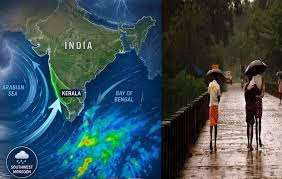
- The southwest monsoon reached Kerala on June 4, 2026, three days past its normal onset date and four days behind the India Meteorological Department’s (IMD) own forecast. This is the first onset misjudgement since 2015.
- The northwest, central India, the peninsula and the monsoon core zone that sustains the bulk of India’s rain-fed farmland are all forecast to fall short; only the northeast is expected to see normal rain.
About the Southwest Monsoon
- The southwest monsoon, active from June to September, is India’s primary freshwater source, accounting for 70 to 80 percent of the country’s annual rainfall.
- With India receiving approximately 1,187 mm of average annual precipitation, season determines crop output, drinking water supply, reservoir levels, groundwater recharge and hydropower generation. It is not merely a weather event but a civilisational lifeline for over a billion people.
Mechanism Associated with Southwest Monsoon
- Differential heating: India’s landmass heats up faster than the Indian Ocean during summer, creating an intense low-pressure zone over the subcontinent that draws in warm, moisture-laden winds from the sea.
- ITCZ migration: The northward shift of the Intertropical Convergence Zone (ITCZ) around June 1 triggers monsoon onset over Kerala. Its arrival marks the official beginning of the kharif growing season.
- Two branches: The monsoon splits into the Arabian Sea branch, entering through Kerala and the Western Ghats, and the Bay of Bengal branch, advancing westward across the Indo-Gangetic plains from the northeast.
- El Nino and ENSO: Anomalously warm sea surface temperatures in the central Pacific, known as El Nino, weaken the pressure gradient between land and ocean, suppressing the moisture-transporting winds that feed the monsoon.
- Indian Ocean Dipole (IOD): A positive IOD, with warmer western Indian Ocean waters, can partly offset El Nino’s suppressive effect. A neutral or negative IOD removes this safety valve entirely.
- Long Period Average (LPA): The LPA, currently 87 cm for June-September, is calculated over a 50-year reference period. Rainfall below 90 percent of LPA is classified as deficient and carries serious consequences for food production and water availability.
Causes Behind the Expected Deficient Monsoon
- El Nino Near-certain through Peak Season: Around 60 percent of El Nino years since 1951 have delivered deficient or below-normal rainfall over India. The droughts of 2002 and 2009 were the century’s worst, with major shortfalls also in 2014 and 2015. With El Nino confirmed for 2026, the government must not count on a late redeeming swing of the IOD.
- Weakened Walker Circulation: El Nino disrupts the Walker Circulation, the large-scale convection system over the tropical Pacific. Its weakening reduces the wind-driven flow of water vapour into the subcontinent, directly suppressing convective rainfall over India.
- Intra-seasonal Dry Spells: Total seasonal rainfall conceals the critical issue of distribution. Prolonged dry spells within the season devastate crops sown on time that are then left unwatered at critical growth stages, making the pattern of rainfall as consequential as its volume.
- Climate Change Intensifying Variability: Research by the Indian Institute of Tropical Meteorology (IITM) confirms that warming is increasing the frequency and intensity of monsoon breaks. Even years with adequate total rainfall are recording more severe dry intervals, raising crop and water stress across the rain-fed belt.
Effects of a Deficient Monsoon
1. Agricultural Distress and Crop Failure
- Lower Kharif Production: Deficient rainfall in the Monsoon Core Zone can reduce the production of paddy, cotton, soybean, pulses, and oilseeds, adversely affecting agricultural output.
- Livelihood Risks: Reduced crop yields can threaten the livelihoods of nearly 600 million people dependent on agriculture and allied activities.
2. Food Security and Inflationary Pressures
- Rising Food Prices: Lower agricultural production can reduce the supply of essential food commodities, leading to higher prices of cereals, pulses, vegetables, and edible oils.
- Pressure on Household Budgets: Rising food prices, coupled with higher energy and import costs, can significantly affect poor and vulnerable households.
3. Water Resource Stress
- Groundwater Depletion: A weak monsoon reduces groundwater recharge while increasing dependence on extraction, worsening existing water scarcity.
- Reservoir Stress: Lower reservoir inflows can affect irrigation, drinking water supply, and hydropower generation, with impacts extending beyond the monsoon season.
4. Intensification of Heatwaves
- Higher Heat Stress: Dry soil conditions and reduced moisture availability can intensify heatwaves and increase surface temperatures.
- Socio Economic Impacts: Severe heat can reduce labour productivity, affect livestock health, increase electricity demand, and create significant public health challenges.
5. Farmer Vulnerability and Rural Distress
- Financial Hardship: Crop losses and rising cultivation costs can increase indebtedness among small and marginal farmers.
- Distress Migration: Reduced agricultural incomes may force rural households to resort to distress migration in search of alternative livelihoods.
6. Greater Fiscal Burden on the State
- Higher Relief Expenditure: Governments may need to increase spending on drought relief, crop compensation, drinking water support, and welfare measures.
- Pressure on Welfare Systems: Greater demand for credit support, relief assistance, and social protection measures can strain administrative and financial resources.
Government Initiatives
- Pradhan Mantri Fasal Bima Yojana (PMFBY): Offers crop insurance at premiums of 1.5 to 2 percent for kharif crops, with the actuarial balance shared between Centre and states. Satellite-assisted yield assessment must be accelerated for timely claim settlement during a drought year.
- Per Drop More Crop under PMKSY: Promotes drip and sprinkler systems that reduce water use by 40 to 50 percent per unit output, providing a structural pathway to sustain productivity even under reduced monsoon rainfall.
- Jal Shakti Abhiyan and Atal Bhujal Yojana: These schemes promote decentralised water conservation and community-level groundwater governance across water-stressed districts, improving aquifer recharge and demand-side regulation during drought periods.
- National Food Security Act and Price Stabilisation Fund: The PDS backed by FCI buffer stocks covers over 800 million beneficiaries. The Price Stabilisation Fund enables procurement and release of pulses and onions to contain price spikes during monsoon-induced supply shocks.
- NDMA Drought Management Manual: Mandates early warning triggers and pre-drought declarations based on district-level rainfall deviation data, ensuring states act before seasonal assessments complete rather than after crop damage has already occurred.
- Promotion of millets: The push for Shree Anna or millets, which need far less water and are climate resilient, was strengthened during the International Year of Millets in 2023 and builds long term resilience by reducing pressure on water heavy crops.
Way Forward
- Coordinated Institutional Response: The Agriculture Ministry, Jal Shakti Ministry, Consumer Affairs Ministry, and National Disaster Management Authority (NDMA) must work in a coordinated manner by activating contingency crop plans, monitoring fertiliser availability, and preparing relief mechanisms well before the peak sowing season.
- Promote Low Water Intensive Crops: Farmers should be encouraged to shift towards short duration pulses, oilseeds, and millets instead of water intensive paddy, supported by assured Minimum Support Price (MSP) procurement and timely availability of quality seeds.
- Ensure Efficient Use of Water Resources: Reservoir operations should be recalibrated to account for lower inflows, while groundwater extraction in over exploited regions must be strictly regulated to prioritise drinking water and essential irrigation needs.
- Ensure Timely Relief and Insurance Support: Crop insurance coverage, institutional credit, and drought relief measures should be strengthened and made readily accessible so that affected farmers receive assistance without delays.
- Expand Micro Irrigation and Forecasting Capacity: Rapid expansion of drip and sprinkler irrigation systems, along with strengthening IMD’s forecasting infrastructure and climate modelling capabilities, can improve water use efficiency and enhance preparedness against future monsoon variability.
Conclusion
A deficient monsoon in 2026 would fall on a farm economy whose nutrients and fuel are both already scarce and costly, so the government must hope for the best while it firmly prepares for the worst. With timely planning, prudent water management and strong relief systems, India can blunt the impact of a weak season and protect the food security and livelihoods of millions of its people.