
After Reading This Article You Can Solve This UPSC Mains Model Question:
The legacy of the Indian Association for the Cultivation of Science (IACS) reflects India’s transition from a knowledge recipient to a knowledge creator. Discuss the role of IACS in promoting scientific self-reliance and shaping modern Indian science. 15 Marks (GS-3, Science & Tech.)
Why in News?
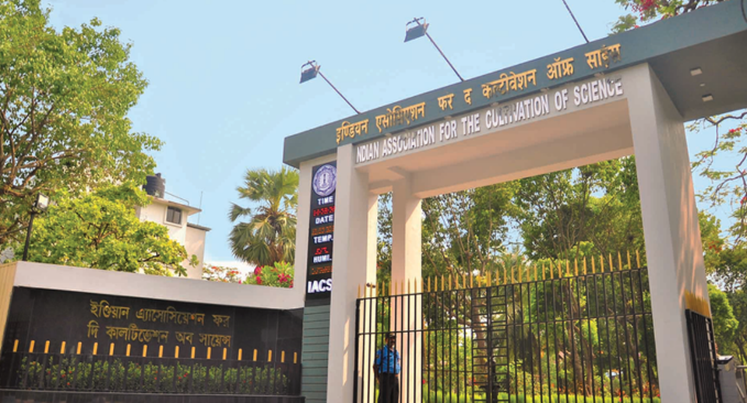
The Indian Association for the Cultivation of Science (IACS) completes 150 years, highlighting its historic role in the development of scientific research in India and Mahendralal Sircar’s vision of scientific self-reliance.
Background: Bengal Renaissance and Scientific Awakening
The Bengal Renaissance was a major intellectual, social and cultural awakening during the 18th and 19th centuries.
- Scientific Temper & Rational Thinking: Encouraged questioning, observation, and evidence-based reasoning over superstition and blind beliefs.
- Modern Education: Promoted Western scientific knowledge, modern schools, colleges, and new approaches to learning.
- Social & Religious Reform: Challenged practices such as caste discrimination, sati, child marriage, and religious orthodoxy.
- Literature, Arts & Philosophy: Stimulated new forms of literature, journalism, painting, philosophy, and intellectual debate.
- Institutional Development: Led to the creation of modern educational, cultural, and scientific institutions that strengthened India’s intellectual foundations.
This growing spirit of rational inquiry and scientific awakening created the intellectual foundation for Mahendralal Sircar’s vision of scientific self-reliance.
Mahendralal Sircar: Vision of Scientific Self-Reliance
- Scientific Self-Reliance: Advocated that Indians should not merely learn science but undertake original scientific research.
- Institutional Support: Highlighted the lack of research opportunities and called for indigenous scientific institutions.
- IACS Initiative: Proposed IACS in 1869, and it was established in 1876 in Calcutta.
- National Development: Linked scientific education and research with intellectual progress, social development and national self-confidence.
IACS: A Landmark in Indian Scientific History
- Colonial Constraint: Limited opportunities and institutional support for Indians to pursue scientific research under colonial rule.
- Scientific Aspiration: Created a growing desire among Indians to develop scientific knowledge through independent inquiry and experimentation.
- Indian Institution: Provided an indigenous platform where Indians could conduct scientific research using their own initiative and resources.
- Original Research: Encouraged Indians to move beyond learning existing scientific knowledge towards experimentation and new discoveries.
- Global Recognition: Demonstrated India’s scientific capabilities through landmark achievements such as C.V. Raman’s discovery of the Raman Effect.
Thus, IACS was not merely a laboratory but an institutional expression of scientific nationalism.
C.V. Raman and the Raman Effect
- Association with IACS: C.V. Raman used the IACS laboratory for research alongside his government job and continued his association after joining the University of Calcutta in 1917.
- Raman Effect: Through experiments on light scattering, he discovered that a small fraction of scattered light changes its wavelength and frequency when passing through a transparent material.
- Global Recognition: Announced on 28 February 1928, the discovery earned Raman the Nobel Prize in Physics in 1930, making him the first Asian scientist to win a Nobel Prize in the sciences.
- Symbol of Scientific Self-Reliance: Raman’s achievement demonstrated that Indian institutions and scientists could produce globally significant original research, fulfilling Mahendralal Sircar’s vision.
Significance of IACS in Modern India
- Institutionalising Scientific Research: Created an indigenous platform for systematic research and strengthened India’s culture of scientific inquiry.
- Promoting Scientific Temper: Encouraged observation, experimentation, rational inquiry and evidence-based thinking.
- Building Scientific Human Capital: Nurtured scientists and demonstrated India’s capacity to produce globally significant scientific discoveries.
- Scientific Nationalism: Linked scientific and technological advancement with national development, intellectual independence and self-confidence.
- Foundation for Scientific Self-Reliance: Strengthened the pursuit of indigenous research, technological capabilities and innovation, while promoting global collaboration.
- Relevance to Modern India: Its legacy supports India’s ambitions in AI, semiconductors, space, biotechnology, quantum technology, clean energy and advanced materials, enabling the shift from knowledge consumption to knowledge creation.
Challenges to Scientific Self-Reliance
- Low R&D Investment: Limited and uneven investment in research constrains India’s ability to undertake cutting-edge scientific work.
- Weak Industry-Academia Linkages: Limited collaboration between universities, research institutions and industries reduces the translation of research into practical applications.
- Brain Drain: Migration of highly skilled researchers and challenges in retaining scientific talent weaken India’s research capacity.
- Unequal Infrastructure: Research facilities and advanced laboratories remain concentrated in select institutions and regions, creating disparities in scientific opportunities.
- Weak Commercialisation: Limited conversion of research outcomes into patents, products and market-ready technologies reduces the economic impact of innovation.
- Basic Research Constraints: Inadequate funding for high-risk, long-term and interdisciplinary research can limit breakthrough discoveries.
Way Forward
- Strengthen Basic Research: Increase sustained funding for fundamental, curiosity-driven and long-term scientific research.
- Empower Young Scientists: Provide better fellowships, research opportunities and institutional autonomy while reducing administrative hurdles.
- Strengthen Industry-Academia Linkages: Promote collaboration between academia and industry to improve technology transfer, innovation and commercialisation.
- Expand Research Infrastructure: Develop world-class laboratories and research facilities across regions, beyond major metropolitan centres.
- Promote Scientific Temper: Embed rational, evidence-based and scientific thinking in education from the school level onwards.
- Build a Global Innovation Ecosystem: Combine indigenous capabilities with international collaboration and connect universities, laboratories, startups, industry and government.
Conclusion
The legacy of IACS reflects India’s journey from a knowledge recipient to a knowledge creator. Mahendralal Sircar and C.V. Raman demonstrated the power of indigenous scientific capability. Its enduring message is: scientific self-reliance means creating, adapting and applying knowledge while remaining globally connected.
| Important CTC from this Article for UPSC Raman Effect |