
After Reading This Article You Can Solve This UPSC Mains Model Question:
Discuss the structural challenges faced by India’s informal urban workforce. Suggest policy measures for achieving “formalisation without exclusion.”15 Marks, (GS 3 Economy)
What is the Urban Informal Sector?
The Urban Informal Sector refers to the segment of the city economy consisting of small-scale, unincorporated enterprises and workers who operate outside the formal regulatory framework. It is characterized by a lack of legal recognition, irregular incomes, and the absence of social security.
Key Characteristics
- Legal Status: Enterprises are typically “unincorporated,” meaning they are not registered under the Companies Act or formal tax regimes (like GST).
- Employment Nature: Relationships are based on casual or oral agreements rather than written contracts.
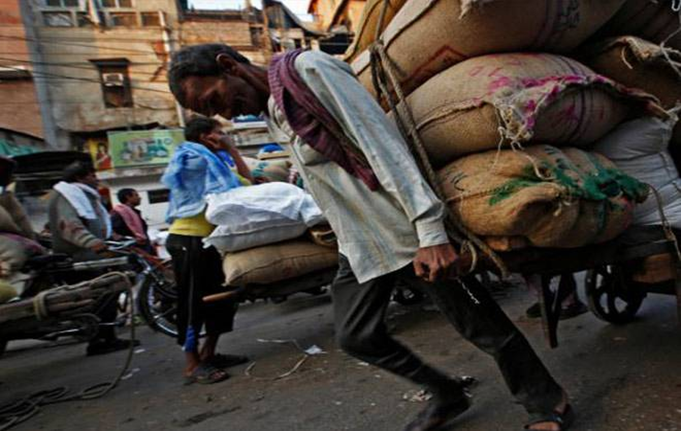
- Workforce: Includes both the self-employed (street vendors, rickshaw pullers) and wage earners in small workshops (garment units, construction).
- Capital & Tech: Operations are usually labor-intensive with low capital investment and traditional technology.
Significance of India’s Urban Informal Sector
1. Economic Weight & GDP Contribution
- The 50% Pillar: Despite its lack of formal registration, this sector contributes nearly half of India’s Gross Domestic Product (GDP).
- Fiscal Resilience: During economic downturns (like the post-2020 recovery), the informal sector acts as a “Shock Absorber,” absorbing labor displaced from the formal sector.
- Cost Efficiency: It provides low-cost intermediate goods and services (logistics, waste management, repair) that lower the operational costs for formal industries.
2. Employment & Poverty Alleviation
- Mass Employment: It employs over 90% of the urban workforce. For millions of rural-to-urban migrants, it is the first point of entry into the city economy.
- Poverty Buffer: By providing immediate, low-barrier employment (e.g., street vending, construction), it prevents millions of urban residents from falling below the extreme poverty line.
3. Social & Urban Functionalism
- Essential Service Providers: Urban life would come to a standstill without informal workers. They manage:
- Urban Logistics: Delivery partners and rickshaws.
- Sanitation: Informal waste pickers who handle a significant portion of urban recycling.
- Food Security: Street vendors provide affordable, nutritious food to the urban poor and middle class.
- Social Mobility: It provides a platform for marginalized communities (SC/ST/OBC and women) to engage in economic activity and achieve a degree of financial independence.
4. Supporting the “Formal” Ecosystem
- The Symbiotic Link: There is a “blurred line” between sectors. Formal companies outsource labor-intensive tasks (packaging, delivery, assembly) to informal units to maintain competitiveness in global markets.
5. Strategic Significance for “Atmanirbhar Bharat”
- Localized Manufacturing: The unincorporated manufacturing sector (MSMEs) is crucial for import substitution and achieving the goal of self-reliance.
- Digital Transformation: The rapid adoption of UPI and digital tools by informal vendors (e.g., the success of PM SVANidhi) is driving India’s goal of becoming a “less-cash” economy.
Challenges Faced by India’s Informal Sector
1. Structural & Economic Challenges
- The “Dwarfism” Trap: Over 60% of unincorporated enterprises are “owner-operated” (single-person units). These “dwarf” firms rarely scale up, lacking the capital to transition into mid-sized, formal companies.
- Stagnant Productivity: While the sector added 74.5 lakh jobs last year, GVA per worker grew by only 4.5%. This suggests the sector is absorbing surplus labor (distress-driven) rather than creating high-value jobs.
- The “Missing Middle”: A lack of mid-sized firms prevents economies of scale, leaving a polarized landscape of a few large formal firms and millions of tiny, informal units.
2. Labor & Social Vulnerabilities
- Absence of “Safety Nets”: Despite the e-Shram portal (31 crore registrations), actual access to insurance, maternity benefits, and pensions remains low due to implementation gaps and lack of employer contribution.
- Occupational Hazards: Workers in construction, waste management, and home-based manufacturing often work in hazardous conditions without protective gear or health coverage.
3. Emerging “Digital” Challenges (Gig Economy)
- Hidden Costs: Workers often bear the entire risk and cost of equipment (bikes, phones, fuel), while their “independent contractor” status denies them labor rights.
- The Gendered Digital Divide: Women in the informal sector face higher barriers to digital literacy, restricting them to low-value, home-based activities.
4. Financial & Regulatory Hurdles
- Credit Starvation: Only about 14% of informal MSMEs have access to formal credit. Most rely on moneylenders with interest rates reaching 30-50% annually.
- Compliance Burden: Even with the GST and Udyam portals, the “cost of formalization” (hiring accountants, filing returns) often exceeds the benefits for small-scale urban units.
Government Initiatives for India’s Urban Informal Sector
- e-Shram Portal (2.0): Acts as a National Database of Unorganized Workers, now integrated as a “One-Stop Solution” to provide a portable Universal Account Number (UAN) for 14+ social security schemes.
- PM SVANidhi Scheme: Provides collateral-free working capital loans to urban street vendors, recently extended to March 2030 with enhanced credit limits and digital payment incentives.
- Pradhan Mantri Awas Yojana – Urban (PMAY-U) 2.0: Focuses on Affordable Rental Housing Complexes (ARHCs) to provide dignified living conditions for migrant workers and the urban poor near their workplaces.
- Code on Social Security (2020/2025): Legally recognizes Gig and Platform workers for the first time, mandating a dedicated Social Security Fund to provide health, disability, and maternity benefits.
- PM-Vishwakarma Scheme: Offers end-to-end support (skill training, toolkit incentives, and credit) to traditional urban artisans and craftspeople to integrate them into the global value chain.
- Deendayal Antyodaya Yojana-NULM: Focuses on poverty alleviation through skill training, supporting Self-Help Groups (SHGs), and creating urban livelihoods via the “City Livelihood Centres.”
Way Forward
- Universal Social Security Portability: Ensure benefits like health (Ayushman Bharat) and pensions follow migrant workers across states by fully utilizing the e-Shram UAN as a “Single Identity.”
- DPI-Linked Credit Access: Use Digital Public Infrastructure (UPI transaction history) to provide “Information Collateral,” allowing informal micro-units to access formal bank loans without physical assets.
- Algorithmic Accountability: Implement the Code on Social Security to protect gig workers from arbitrary platform decisions and ensure a transparent “minimum floor wage.”
- Inclusive Urban Planning: Designate permanent Legal Vending Zones and expand Affordable Rental Housing (PMAY-U 2.0) near work hubs to reduce the high “cost of living” for informal labor.
- Formalizing the Circular Economy: Integrate informal waste pickers into municipal contracts, transforming “survivalist” activities into recognized, safe, and productive “Green Jobs.”
- Gender-Centric Infrastructure: Boost urban female LFPR by providing safe public transport and community crèches near industrial clusters to support working mothers.
Conclusion
The urban informal sector is India’s vital economic stabilizer. Sustainable growth necessitates transitioning from “survival-led” to “productivity-led” informality by integrating digital credit, portable social security, and inclusive urban planning to empower this essential workforce.