
Important for UPSC Prelims: Culture
About
- A National Song is a patriotic song that reflects a nation’s cultural identity, unity, and historical struggles.
- It is distinct from the National Anthem and is not governed by a fixed protocol.
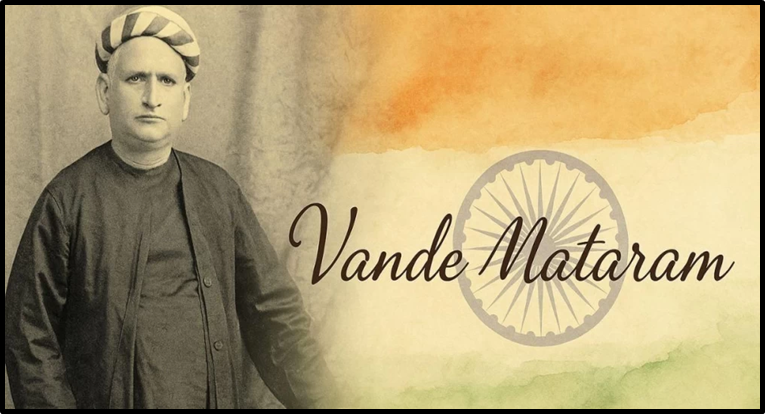
- Written by Bankim Chandra Chattopadhyay in Sanskritised Bengali.
- Celebrates Mother India as a symbol of prosperity, unity, and devotion.
Official Adoption
- 1937: The Congress Working Committee (CWC) adopted the first two stanzas for public use.
- 24 January 1950: Dr. Rajendra Prasad, President of the Constituent Assembly, declared that Vande Mataram would enjoy equal honour with the National Anthem (Jana Gana Mana).
Constitutional Status
- The Constitution does not explicitly mention the National Song.
- Article 51A(a) makes it a Fundamental Duty to respect the National Flag and National Anthem, but not the National Song.
Meaning of Vande Mataram
Original Lines
“Vande Mataram, Sujalam Suphalam, Malayaja Sheetalam, Shasya Shyamalam, Mataram.”
Meaning
- Salutes Mother India as rich in water, fruits, cool breezes, and fertile fields, expressing devotion and gratitude to the motherland.
Historical Background of National Song
- Composition Date: Believed to be written on Akshaya Navami, 7th November 1875.
- Publication: First appeared in the literary journal Bangadarshan (1875) and later incorporated in the novel Anandamath (1882).
- Musical Setting: Set to music by Rabindranath Tagore, enhancing its appeal as a patriotic hymn.
- Role in Nationalism: Served as a battle cry during the Swadeshi movement, inspiring protests against colonial rule.
Key Milestones
- 1896: First publicly sung at the Calcutta Session of the Indian National Congress.
- 1905: Became the slogan of the Swadeshi Movement during the anti-Partition movement.
- Student Movements: Used in nationalist protests in the Hyderabad–Karnataka region despite British restrictions.
- International Influence: Used by Bhikaji Cama (Stuttgart, 1907) and Madan Lal Dhingra (England, 1909) as a symbol of Indian nationalism.
Difference between National Anthem and National Song
| Aspect | National Anthem | National Song |
| Purpose | Reflects India’s sovereignty and unity | Inspires patriotism and emotional attachment |
| Composition | Jana Gana Mana by Rabindranath Tagore (1911) | Vande Mataram by Bankim Chandra Chattopadhyay (1875) |
| Rendition | Fixed tune and protocol | Flexible tune and rendition |
| Constitutional Status | Respect is a Fundamental Duty under Article 51A(a) | No explicit constitutional mention |
| Official Status | National Anthem | National Song |
| Mandatory | Sung on specified official occasions | Not mandatory at official events |
Conclusion
As Vande Mataram marks 150 years since its composition (1875–2025), it continues to embody India’s spirit of patriotism, cultural heritage, and national unity, remaining an enduring symbol of the nation’s freedom movement.
| This Concept has been elaborately discussed in the following article Protecting Vande Mataram: Decoding the Prevention of Insults to National Honour (Amendment) Bill, 2026 |