
Important for GS prelims Environment and Ecology
Introduction
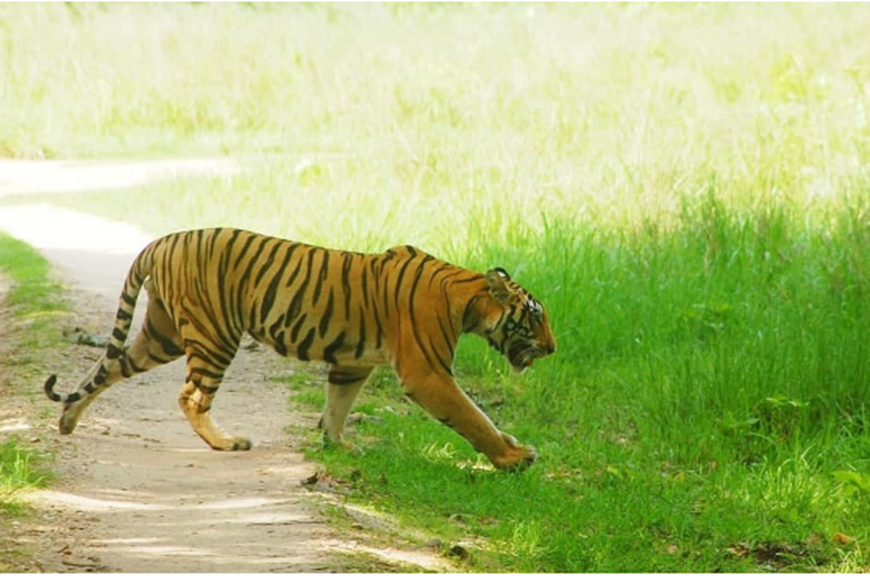
Launched in 1973, Project Tiger is a centrally sponsored conservation initiative of the Government of India aimed at ensuring a viable population of Bengal tigers in their natural habitats while preserving the country’s rich biodiversity. It is implemented under the National Tiger Conservation Authority (NTCA) and has become one of the world’s most successful wildlife conservation programmes.
Key Features
- Objective: Protect tigers, their habitats, and prey species through scientific management and community participation.
- Legal Framework: Backed by the Wild Life (Protection) Act, 1972, with major amendments in 2006 leading to the establishment of the NTCA.
- Core-Buffer Strategy:
- Core Area: Strictly protected, free from human interference.
- Buffer Area: Sustainable coexistence through eco-development and regulated activities.
- Tiger Reserves: India has 58 Tiger Reserves spread across 18 states, covering over 82,800 sq. km. (around 2.5% of India’s geographical area).
- Monitoring: Uses camera traps, M-STrIPES, satellite imagery, and AI-based monitoring for scientific estimation and protection.
- Community Participation: Promotes eco-development, voluntary village relocation, and livelihood support for local communities.
Achievements
- India’s tiger population increased from 1,411 (2006) to 3,682 (2022), accounting for nearly 75% of the world’s wild tiger population.
- Strengthened anti-poaching measures through Special Tiger Protection Force (STPF).
- Improved conservation of forests, water resources, and biodiversity beyond tigers.
- Enhanced eco-tourism and livelihood opportunities in many tiger landscapes.
Conclusion
Project Tiger stands as a global model of wildlife conservation, demonstrating that ecological security and sustainable development can coexist. Sustained scientific management, community participation, and habitat connectivity will be crucial for ensuring the long-term survival of tigers and preserving India’s biodiversity for future generations.
| This concept has been explained in the article India’s New Conservation Frontier (TOTR Initiative) |