
Context
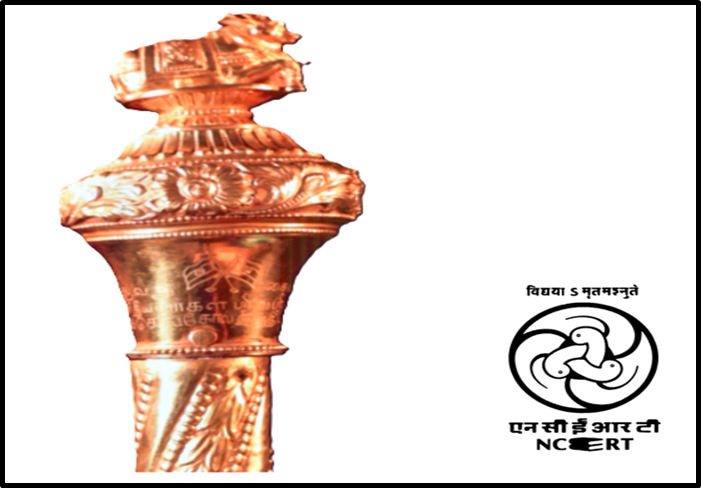
- Recently, NCERT’s new Class 9 Social Science textbook titled Understanding Society: India and Beyond – Part Two mentioned the Sengol as a marker of righteous governance and linked it to the transfer of power in 1947.
Key facts about Sengol
- A sceptre from Tamil Nadu, linked to the Chola tradition of kingship.
- Textbook claim: the tradition of using the Sengol as a symbol of righteous governance goes back over a thousand years, to the Chola dynasty.
- Claim: on the night of 14-15 August 1947, at the stroke of midnight, Jawaharlal Nehru, the first PM, received it from the Adheenam saints (an old Shaivite tradition of Tamil Nadu).
- It was installed in the new Parliament building, inaugurated in May 2023 by PM Narendra Modi.
- The Union Culture Ministry’s website describes it as a symbol of the “ethical responsibilities” of a ruler.
The contested part
- Historian and biographer of C. Rajagopalachari, Rajmohan Gandhi, has said no record in the public domain shows the Sengol as a formal symbol of the “transfer of power”. He cites the personal papers, letters and autobiographies of Nehru and Rajaji.
- Historian Aditya Mukherjee is among those who have criticised the 2023 ceremony and installation, calling it self-glorification rather than celebrating parliamentary democracy.
Sengol and Independence, 1947
- Sengol is associated with the transfer of power from British rule to independent India and was presented to Jawaharlal Nehru on the eve of Independence in August 1947.
- The ceremony is traditionally linked to Tamil religious and cultural figures, particularly the Thiruvavaduthurai Adheenam.
- Its symbolism can be connected with broader Indian ideas of dharma, righteous governance and responsible exercise of authority, reflected in traditions such as Ram Rajya.
National and institutional mottos mentions in the chapter
| Motto | Language and source | Institution |
| Satyameva Jayate (“Truth alone triumphs”) | Sanskrit, Mundaka Upanishad | National motto of India |
| Yato Dharmastato Jayah (“Where there is righteousness, there is victory”) | Sanskrit, Mahabharata | Supreme Court of India |
| Important CTC from this article for UPSC Prelims – NCERT |
Q. With reference to the Sengol, consider the following statements:
1. It is a traditional Tamil ceremonial sceptre associated with Chola-era traditions and symbolises authority, justice and righteous governance.
2. It was installed in the new Parliament building on 28 May 2023 and placed near the Lok Sabha Speaker's seat.
3. The national motto Satyameva Jayate is derived from the Mahabharata, while the Supreme Court's motto Yato Dharmastato Jayah is derived from the Mundaka Upanishad.
Which of the statements given above is/are correct?
(a) 1 and 2 only
(b) 2 and 3 only
(c) 1 and 3 only
(d) 1, 2 and 3
Answer: (a)
Explanation
• Statement 1 is Correct: The Sengol is a traditional Tamil ceremonial sceptre associated with Chola-era traditions. It symbolises authority, justice and righteous governance, reflecting the Indian view of governance as a moral or sacred duty rather than merely the exercise of political power.
• Statement 2 is Correct: The Sengol was installed in the new Parliament building on 28 May 2023, during its inauguration, and placed near the Lok Sabha Speaker's seat.
• Statement 3 is Incorrect: The sources are interchanged. Satyameva Jayate is derived from the Mundaka Upanishad, and Yato Dharmastato Jayah is associated with the Mahabharata.