
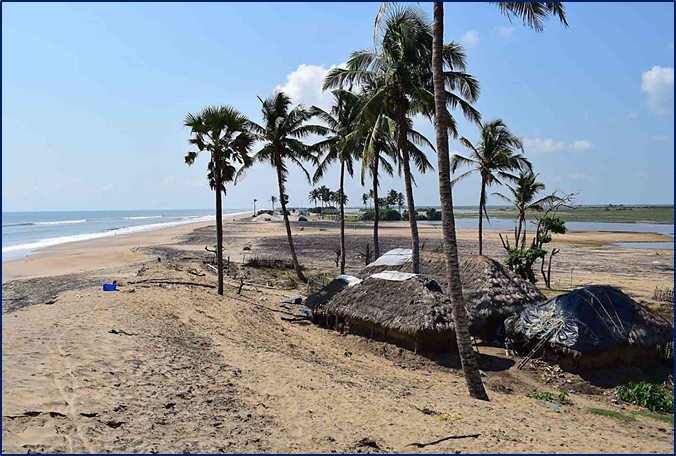
After Reading This Article You Can Solve This UPSC Mains PYQ (2022):
Explain the causes and effects of coastal erosion in India. What are the available coastal management techniques for combating the hazard? 15 Marks (GS-3, Disaster Management)
Context
The Union Minister for Ports, Shipping and Waterways recently informed the Rajya Sabha that 28.3% of Odisha’s 564-km coastline is facing severe erosion, citing a 1990-2022 National Centre for Coastal Research (NCCR) study. demanding urgent structural and policy interventions.
Introduction
Shoreline changes, driven by natural forces and human activities, pose severe threats to coastal ecology and communities. In Odisha, accelerating coastal erosion has displaced vulnerable populations, necessitating an immediate shift toward comprehensive, ecosystem-based shoreline management.
What are the Primary Drivers of Shoreline Changes?
- Natural Hydrodynamic Forces: The dynamic shift between land and water is continuously driven by waves, tides, severe storms, and rising global sea levels.
- Anthropogenic Activities: Unplanned infrastructure, illegal sand mining, and hard coastal structures like sea walls and ports severely modify natural beach morphology.
Extent of Coastal Vulnerability in Odisha
- Severe District Impact: Jagatsinghpur faces the highest erosion at 47.6%, followed closely by Ganjam (45.7%) and Kendrapara (45%).
- Demographic Displacement: Over 16 villages in Kendrapara have submerged, creating climate refugees and prompting India’s first climate resettlement colony.
Significance of Coastal Protection Measures
- Provides an immediate physical barrier to prevent the direct inundation of vulnerable coastal human settlements.
- Dual-purpose infrastructures like sea wall-cum-service roads enhance local connectivity while effectively defending against destructive tidal waves.
- Innovative soft-engineering solutions like geotextile tube embankments absorb wave impact efficiently to minimize coastal scour.
- Preserves critical economic and maritime assets from continuous saltwater intrusion and irreversible structural degradation.
- Establishing dedicated climate resettlement colonies ensures safe and dignified rehabilitation for communities displaced by severe land loss.
Challenges in Managing Coastal Erosion
- Rigid coastal structures like breakwaters disrupt the natural littoral drift and inadvertently accelerate downdrift erosion.
- The increasing frequency of severe cyclonic storms causes recurring structural damage to existing coastal defenses faster than they can be repaired.
- Unregulated and illegal sand mining destabilizes natural beach profiles and severely exacerbates shoreline vulnerability.
- Fragmented, site-specific interventions fail to provide long-term coastal resilience compared to holistic, region-wide shoreline management.
- Sustaining continuous financial investments for expanding and maintaining hard coastal armoring is highly demanding for state exchequers.
Way Forward
- Implement integrated Shoreline Management Plans based on natural sediment transport cells rather than fragmented, localized defenses.
- Prioritize nature-based solutions like extensive mangrove restoration and casuarina plantations to naturally dissipate destructive wave energy.
- Enforce strict Coastal Regulation Zone (CRZ) norms to rigorously curb unscientific port expansion and illegal coastal sand mining.
- Establish robust real-time coastal monitoring frameworks in continuous collaboration with the National Centre for Coastal Research (NCCR).
- Develop a comprehensive national policy framework dedicated to the permanent rehabilitation of climate-displaced coastal populations.
- Mandate strict environmental and hydrodynamic impact audits for all upcoming maritime engineering structures to prevent induced coastal erosion.
Conclusion
Odisha’s eroding coastline demands a swift transition from fragmented structural defenses to sustainable, long-term shoreline management. By effectively combining soft engineering with nature-based solutions and dignified climate rehabilitation, India can holistically mitigate coastal vulnerability and protect its maritime communities.
| Important CTC From This Article For UPSC Ministry of Ports, Shipping and Waterways |