
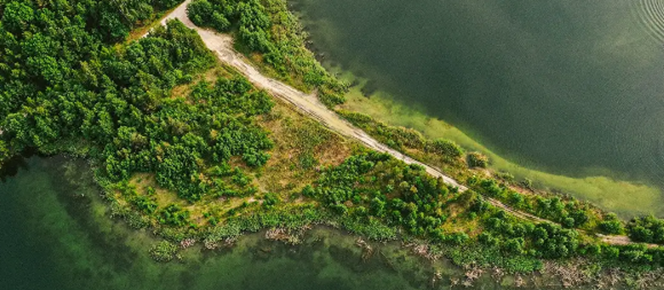
Eco-Sensitive Zone (What is it?)
- Eco-Sensitive Zones (ESZs) are areas around Protected Areas such as National Parks and Wildlife Sanctuaries, notified to regulate activities that could adversely affect their ecosystems.
- They function as a “shock absorber” or transition zone between protected areas and surrounding areas.
Key Features of ESZs
1. Legal Basis
- ESZs are notified by the Central Government, primarily under the Environment (Protection) Act, 1986.
- The framework is based on the need to regulate potentially harmful activities around ecologically important areas.
2. Around Protected Areas
- ESZs are generally designated around National Parks and Wildlife Sanctuaries.
- They are intended to reduce the negative impact of activities occurring outside the protected area.
3. Regulated Activities
- Activities with potential ecological impacts may be regulated or subjected to additional scrutiny within ESZs.
- The objective is to control activities such as certain forms of mining, industries, construction and infrastructure development, depending on the applicable notification.
4. Prohibited, Regulated and Permitted Activities
- ESZ notifications classify activities into categories such as:
- Prohibited activities
- Regulated activities
- Permitted activities
- The exact restrictions depend on the site-specific ESZ notification.
5. ESZ is Not the Same as a Protected Area
- An ESZ does not itself become a National Park or Wildlife Sanctuary merely because it is notified.
- Its primary purpose is to regulate activities around protected areas and minimise ecological pressure.
Why are ESZs Important?
- Habitat Protection: Reduces external pressures on protected ecosystems.
- Pollution Control: Helps limit environmentally harmful activities.
- Wildlife Conservation: Protects habitats and ecological corridors.
- Sustainable Development: Attempts to reconcile conservation with legitimate local economic activities.
- Buffer Function: Provides a transition between strictly protected ecosystems and human-dominated landscapes.
Important Distinction
| Protected Area | Eco-Sensitive Zone |
| Direct conservation of the protected ecosystem | Regulates activities around protected areas |
| Includes categories such as National Parks and Wildlife Sanctuaries | Not itself a separate category of protected area |
| Conservation regime applies within the protected area | Restrictions depend on the specific ESZ notification |
| Primarily focuses on protection of biodiversity | Primarily acts as a regulatory buffer/transition zone |
Conclusion
Eco-Sensitive Zones provide a regulatory layer around protected areas, seeking to minimise harmful external pressures while allowing compatible human activities and promoting ecologically sustainable development.